SCUT Research Team Led by Professor Wei Zhu Publishes in PNAS: Spatially Confined Biosilicification Enables Ambient-Stable Single-Cell Transcriptomics
In nature, fossils can preserve biological structures and molecular information over geological timescales, providing valuable insights into the evolution of life. Inspired by natural fossilization, researchers have explored biomimetic mineralization strategies to construct inorganic protective matrices around biomolecules and cells, aiming to achieve long-term preservation of biological information.
In recent years, single-cell RNA sequencing (scRNA-seq) has emerged as a powerful tool for investigating cellular heterogeneity, tumor microenvironments, and disease mechanisms. However, RNA is highly susceptible to degradation caused by temperature fluctuations, ribonucleases (RNases), and oxidative stress. Consequently, clinical samples generally require immediate processing or cold-chain storage and transportation, limiting the widespread application of scRNA-seq. Developing a reliable method for preserving RNA at ambient temperature while maintaining transcriptomic integrity and accessibility remains a critical challenge.
Recently, a research team led by Professor Wei Zhu from the School of Biology and Biological Engineering at South China University of Technology (SCUT), in collaboration with Guangzhou National Laboratory and the University of New Mexico, published a research article entitled “Si-scRNA-seq: enabling ambient-stable single-cell transcriptomics through spatially confined biosilicification” in the Proceedings of the National Academy of Sciences of the United States of America (PNAS).
The study introduces a novel strategy for ambient-temperature preservation of single-cell transcriptomes based on spatially confined biosilicification (SCB). By precisely controlling intracellular and extracellular silica deposition, the researchers constructed nanoscopic protective layers of amorphous silica around biomolecular interfaces, enabling stable RNA preservation and high-fidelity single-cell transcriptomic analysis. The method extended the predicted RNA half-life at 25 °C to 54.8 days, representing a 685-fold improvement over unprotected samples. Its applicability was further demonstrated in clinical ovarian, lung, and liver cancer specimens, offering a promising approach to reducing cold-chain dependence in single-cell transcriptomics.
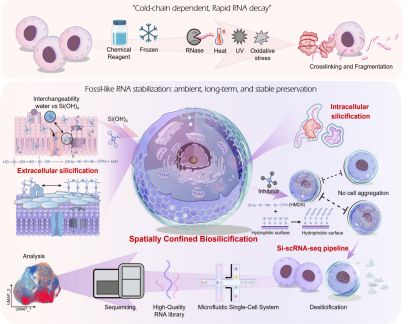
Figure 1. Schematic illustration of ambient-temperature preservation and single-cell transcriptomic analysis enabled by spatially confined biosilicification
Research Highlights
1. Development of the Spatially Confined Biosilicification Strategy
Building on their previous development of cryosilicification and deep silicification for long-term preservation of DNA and genetic information across biological hierarchies, the research team sought to overcome the limitations of conventional silicification, particularly excessive inorganic crosslinking and cell aggregation, which compromise RNA recovery and downstream single-cell sequencing. To address these challenges, the researchers developed an SCB strategy by introducing hexamethyldisilazane (HMDS) as a silicification inhibitor to precisely regulate intracellular and extracellular silica deposition and condensation. This approach prevented excessive crosslinking and cell aggregation while preserving cellular structural integrity and RNA accessibility, establishing a foundation for ambient-temperature preservation and high-fidelity single-cell transcriptomic analysis (Figure 2).
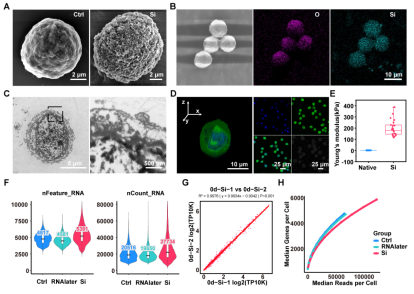
Figure 2. Development of spatially confined biosilicification and characterization of cellular structures
2. Enhanced Stability of Single-Cell Transcriptomes During Ambient Storage
Using the ID8 mouse ovarian cancer cell line as a model, the researchers systematically evaluated the protective performance of SCB in single-cell transcriptomics. Silicified cells achieved median unique molecular identifier (UMI) counts of 27,734 and a median of 5,381 detected genes per cell, demonstrating efficient transcript capture. Compared with unprotected and RNAlater-preserved cells, SCB-treated cells maintained high-quality single-cell transcriptomic profiles after 21 days of ambient storage, with a gene expression correlation of approximately 0.95 between samples stored for 7 days and fresh controls. Furthermore, SCB significantly enhanced RNA resistance to oxidative stress and ultraviolet (UV) irradiation, demonstrating robust preservation performance under environmental stress (Figure 3).
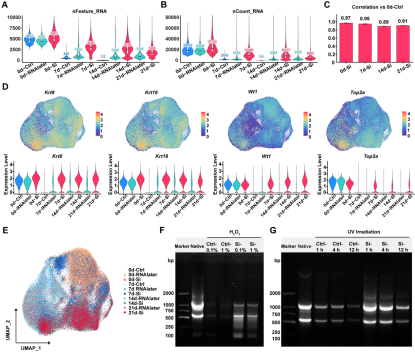
Figure 3. Protective effects of spatially confined biosilicification on single-cell transcriptomic information
3. Mechanisms Underlying Long-Term RNA Stabilization
Through accelerated aging experiments and RNA degradation kinetics analysis, the researchers investigated the mechanisms underlying SCB-mediated RNA stabilization (Figure 4). Extrapolation using an Arrhenius kinetic model predicted an RNA half-life of 54.8 days at 25 °C, representing 685-fold and 228-fold improvements over unprotected and RNAlater-preserved samples, respectively. Characteristic ribosomal RNA (rRNA) bands remained detectable after 60 days of ambient storage, further supporting the long-term protective capability of SCB. Mechanistic investigations suggested that extracellular silica networks act as molecular-sieve barriers against exogenous RNases, while intracellular RNA–protein–silica composites may provide additional stabilization. Together, these complementary protective mechanisms offer new insights into the long-term preservation of biological information.
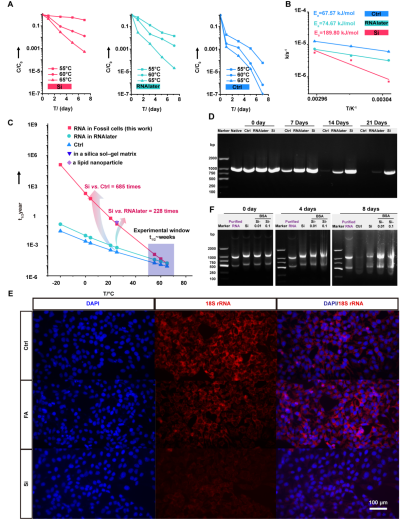
Figure 4. RNA degradation kinetics and molecular mechanisms underlying long-term RNA preservation
4. Broad Applicability to Clinical Tumor Specimens
To evaluate its potential for clinical applications, the research team applied Si-scRNA-seq to human ovarian, lung, and liver cancer specimens. After 14 days of ambient-temperature storage, silicified samples remained suitable for high-quality single-cell transcriptomic analysis, yielding 10,263, 12,210, and 13,013 cells from ovarian, lung, and liver cancer tissues, respectively. Notably, lung cancer samples retained a strong global gene expression correlation with fresh controls (R² ≈ 0.95), while independently analyzed liver cancer samples resolved the same 15 major cell lineages identified in fresh tissues. These findings demonstrate that Si-scRNA-seq effectively preserves cellular heterogeneity and transcriptomic characteristics in complex clinical specimens, supporting its potential for ambient-temperature sample transportation and centralized single-cell sequencing (Figure 5).
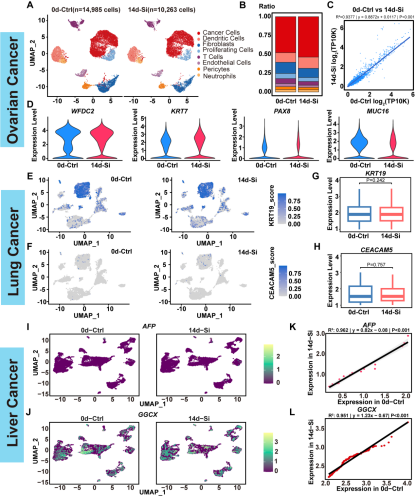
Figure 5. Application of Si-scRNA-seq to clinical ovarian, lung, and liver cancer specimens
5. High-Fidelity Preservation of Tumor Microenvironment and Disease-Associated Molecular Features
To further assess the preservation of complex biological information, the researchers performed an integrated single-cell transcriptomic analysis of adjacent normal lung tissue, fresh lung cancer tissue, and SCB-treated lung cancer tissue stored for 14 days at ambient temperature (Figure 6). Analysis of more than 30,000 single cells identified 18 major cell populations, revealing strong concordance between fresh and silicified tumor samples in cellular composition, malignant cell distribution, and gene expression profiles. Further analyses of copy number variations (CNVs), differentially expressed genes (DEGs), and signaling pathways identified 416 overlapping DEGs in comparisons of the two tumor groups against adjacent normal tissue. These genes were associated with biologically relevant pathways, including non-small cell lung cancer and MAPK signaling. Collectively, these findings demonstrate that Si-scRNA-seq preserves tumor microenvironment characteristics and disease-associated molecular signatures with high fidelity, providing a reliable foundation for investigating tumor biology and disease mechanisms.
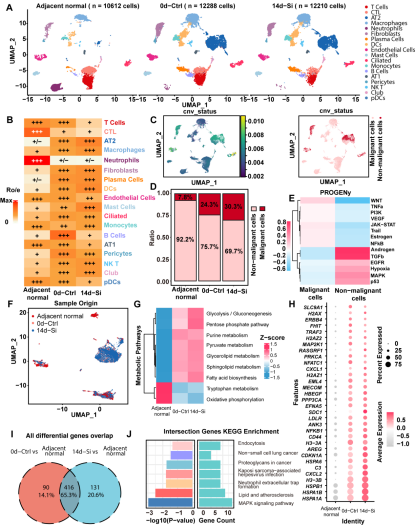
Figure 6. High-fidelity preservation of cellular heterogeneity and disease-associated molecular features in lung cancer tissues using Si-scRNA-seq
Conclusion
This study establishes spatially confined biosilicification as an effective strategy for ambient-temperature preservation of single-cell RNA and high-fidelity transcriptomic analysis by overcoming excessive crosslinking and cell aggregation associated with conventional silicification. The method offers several practical advantages, including operational simplicity, low material cost (approximately RMB 0.1 per sample), and compatibility with mainstream single-cell sequencing platforms.Building on previous advances in cryosilicification and deep silicification for long-term DNA preservation, this work extends biomimetic mineralization to the stabilization of RNA and single-cell transcriptomic information. By reducing reliance on cold-chain logistics, Si-scRNA-seq holds promise for clinical biospecimen preservation, multicenter biomedical studies, biobanking, and large-scale single-cell transcriptomic analysis.
Liang Zhou and Ting Ruan from the School of Biology and Biological Engineering at South China University of Technology are co-first authors of the paper. The corresponding authors are Professor Wei Zhu from South China University of Technology, Ya Liu and Xiaobao Cao from Guangzhou National Laboratory, and Professor C. Jeffrey Brinker from the University of New Mexico. This research was supported by the National Natural Science Foundation of China and other funding programs.
Publication link: https://pubmed.ncbi.nlm.nih.gov/42912787/