Professor Wei Zhu Published Paper in Advanced Powder Materials: Engineering Porphyrinic MOFs via In-Situ N-H Chlorination for HOCl Generation, Detoxification, Photodynamic Theranostics, and Antimicrobial Defense
Recently, Professor Wei Zhu from the School of Biology and Biological Engineering at South China University of Technology (SCUT), in collaboration with Professor Cheng-an Tao from the College of Science at the National University of Defense Technology (NUDT), published an online research paper in the internationally renowned journal Advanced Powder Materials (APM), titled "Engineering Porphyrinic MOFs via In-Situ N-H Chlorination for HOCl Generation, Detoxification, Phototheranostics and Antimicrobial Activity". Yi Ge and Kaibo Li, master's students (Class of 2023) from the School of Biology and Biological Engineering at SCUT, are the co-first authors, while Professor Wei Zhu and Professor Cheng-an Tao serve as the co-corresponding authors.
Microbial defense mediated by reactive chlorine species (RCS, such as hypochlorous acid) represented a highly efficient and evolutionarily conserved oxidative mechanism in innate immunity. Inspired by this natural phenomenon, the research team successfully designed and constructed a novel porphyrin-based zirconium metal-organic framework (MOF) material, designated as PCN-222-Cl. Conventionally synthesized active-chlorine materials typically faced a bottleneck due to their lack of photoresponsiveness, which severely limited their application in precision medicine.
To overcome this challenge, this study introduced a programmable in-situ N-H chlorination strategy. Utilizing a simple and universal room-temperature immersion method, the hydrogen atoms within the macrocyclic porphyrin ligands were substituted with strongly electron-withdrawing chlorine atoms, while the parent framework's morphology and overall structural integrity were preserved. Both theoretical calculations and experimental results demonstrated that this in-situ modification successfully reconfigured the original electronic structure, significantly enhanced the electrophilicity of the porphyrin ring, and endowed the material with a unique photoresponsive mechanism. By reshaping the molecularly engineered framework, this work effectively replicated and upgraded the precise immune defense strategy found in nature, establishing a vital material foundation for the development of next-generation, spatiotemporally controllable, photo-induced precision therapeutics.
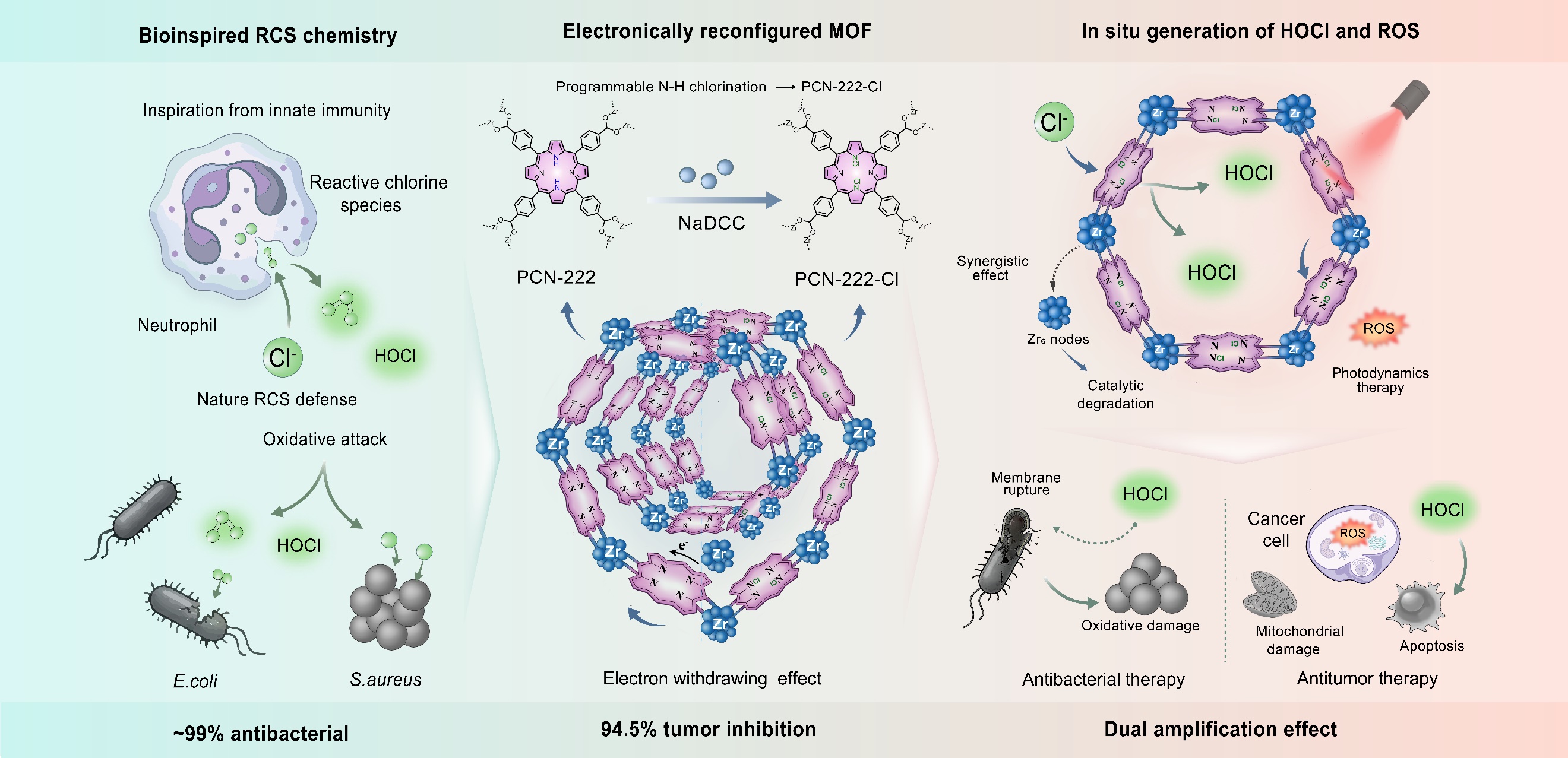
Figure 1. Schematic illustration of porphyrin metal-organic framework-mediated reactive chlorine chemistry for photothermal theranostics and antimicrobial defense.
Mechanistically, this precise molecular modification drove a unique electronic reconfiguration and a "photothermal-oxidation" coupling mechanism. Density functional theory and time-dependent DFT (DFT/TD-DFT) characterizations revealed that chlorination significantly narrowed the material's bandgap from 2.70 eV to 2.44 eV, which greatly facilitated electronic transitions and dramatically accelerated the intersystem crossing (ISC) rate. Consequently, the system exhibited an outstanding capability for generating reactive oxygen species (ROS), such as singlet oxygen (1O2). Within the framework, the electronically activated porphyrin ligands exerted a powerful chemical synergy with the inherently Lewis-acidic Zr6O4OH4 nodes. This synergistic interplay endowed the framework with excellent catalytic degradation activity, successfully overcoming the limitations of conventional RCS systems—such as low catalytic efficiency in biological neutral microenvironments and difficulty in achieving sustained release—thereby enabling the durable and highly efficient release of hypochlorous acid (HOCl) across mildly acidic to neutral conditions. Furthermore, PCN-222-Cl displayed exceptional intrinsic photothermal performance. The elevated temperatures generated under light irradiation markedly accelerated chlorine oxidation kinetics and dynamically exposed additional catalytic active sites, thereby establishing a multi-stage, synergistic ablation model driven by dual "photothermal-oxidative" cytotoxicity.
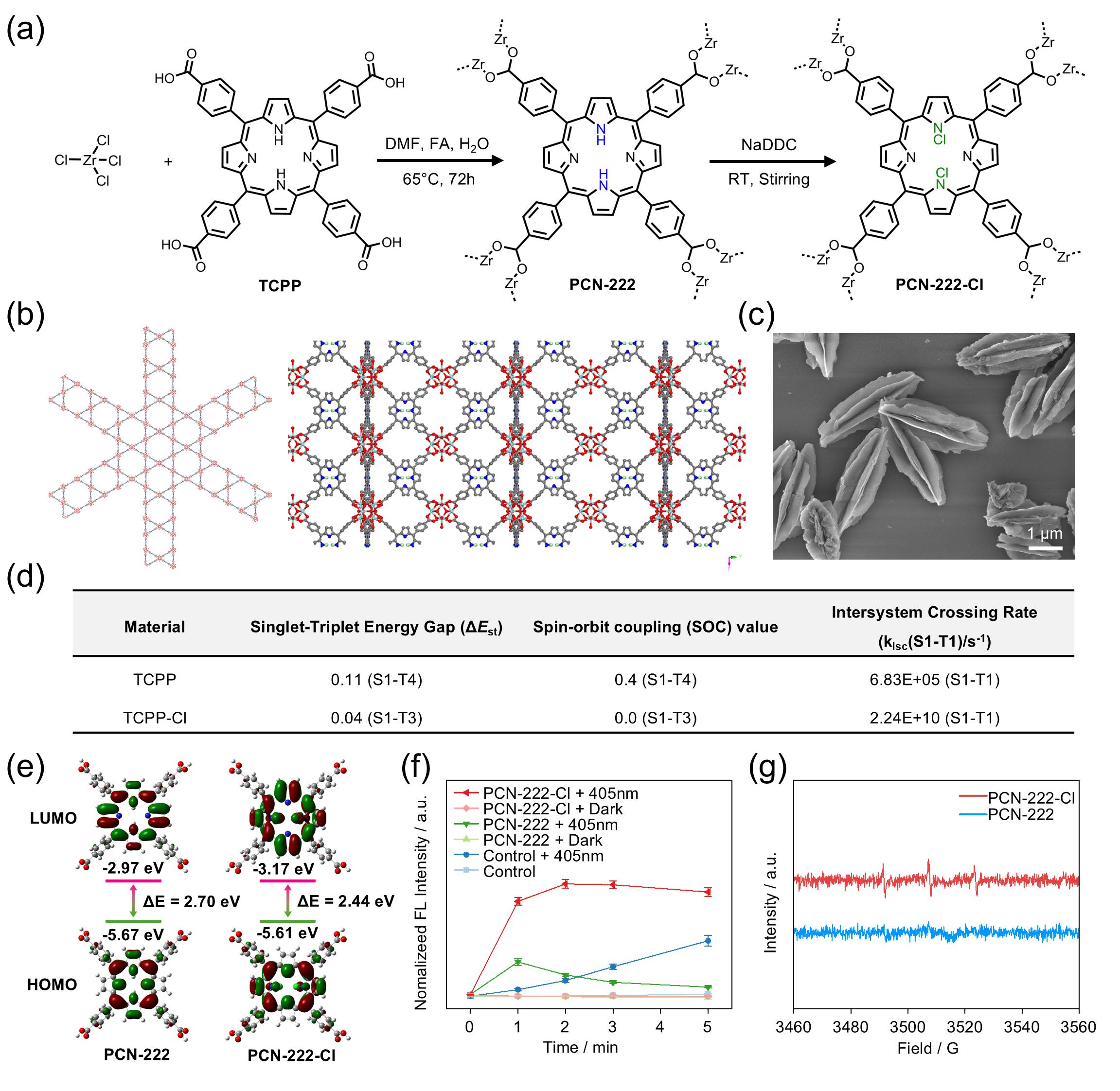
Figure 2. Synthesis, structural characterization, theoretical calculations, and photochemical performance analysis of PCN-222-Cl.
Leveraging this unique synergistic mechanism, this multifunctional platform demonstrated outstanding chemical defense detoxification and broad-spectrum antibacterial activity in comprehensive in vitro performance evaluations. PCN-222-Cl showed superior catalytic degradation and photocatalytic oxidation capabilities. Under light irradiation, it required only approximately 3.4 minutes to convert 50% of the sulfur mustard simulant (2-chloroethyl ethyl sulfide, CEES) and achieved complete elimination within 8 minutes. Benefiting from the long-term, sustained release of HOCl, the material achieved remarkable bactericidal efficiencies of 99.7% against Escherichia coli (E. coli) and 99.9% against Staphylococcus aureus (S. aureus), far exceeding the 21.8% and 50.7% clearance rates of the unmodified parent framework. Scanning electron microscopy (SEM) evaluations clearly revealed severe structural collapse and membrane rupture in the treated bacteria, powerfully validating the material's robust mechanical disruption and oxidative killing effects.
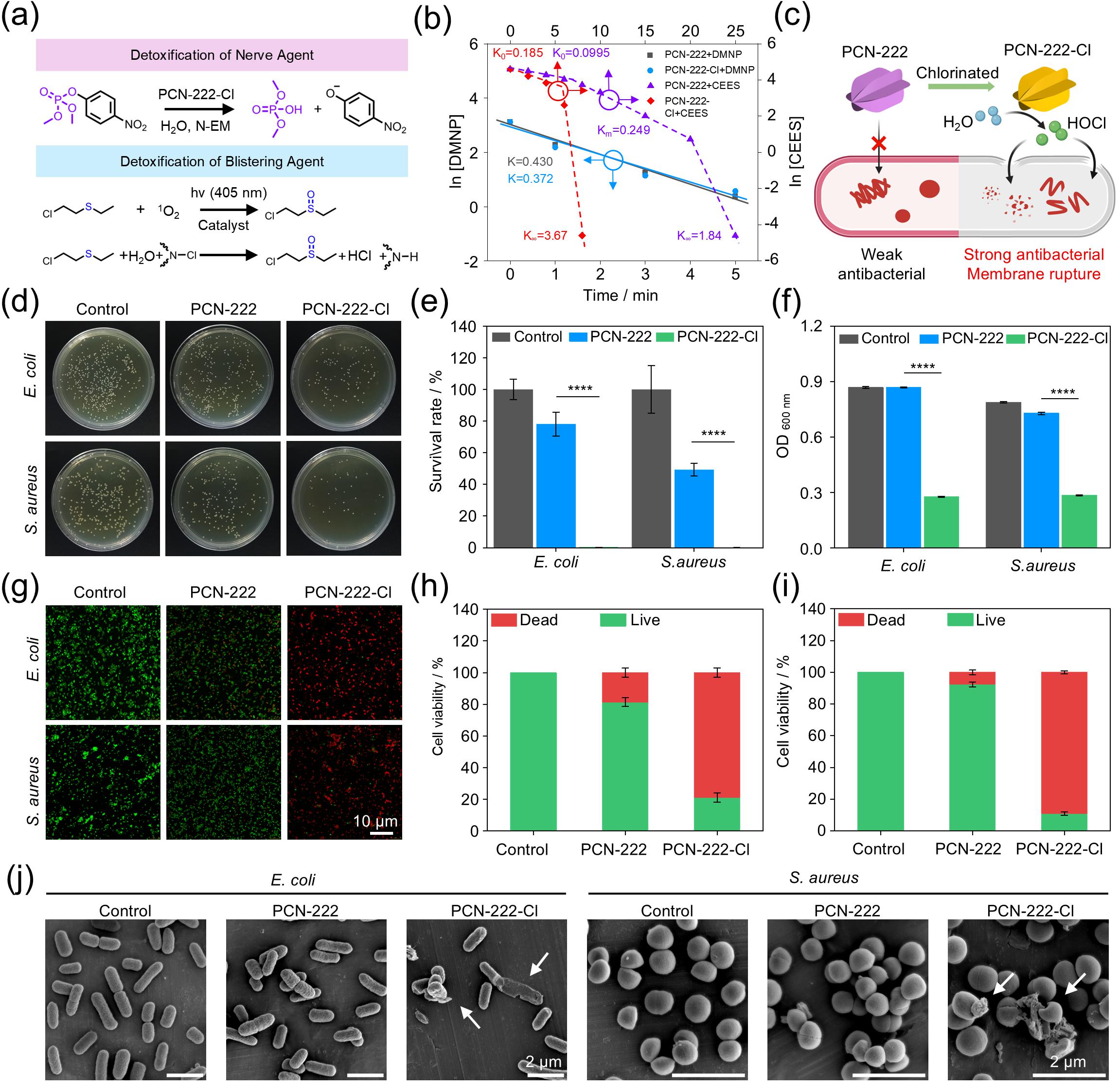
Figure 3. Evaluation of chemical degradation activity and biological antibacterial effects in PCN-222-Cl.
In investigations of in vivo and in vitro antitumor efficacy, the team utilized a 4T1 breast cancer mouse model to confirm the immense potential of this "photothermal-oxidation-photodynamic" three-dimensional, multi-potent, integrated system. In the absence of light, PCN-222-Cl effectively suppressed tumor progression via the spontaneous, slow release of active chlorine. By inducing mitochondrial dysfunction, it successfully achieved a 94.5% tumor growth inhibition rate alongside a 39.1% reduction in the Ki67 proliferation index. Upon introducing phototherapy, the system triggered a dual amplification effect of "active chlorine + reactive oxygen species," which instantly boosted intratumoral ROS levels to 2.4 times the original level, ultimately driving the comprehensive tumor inhibition rate to 99.3% and achieving near-complete tumor ablation. Concurrently, the platform demonstrated exceptional in vivo safety and excellent clinical translation potential. Over the 14-day systemic treatment period, the mice maintained stable body weights, and no abnormalities were detected in serum biochemical indicators, major organ tissue morphologies (H&E staining), or hemolysis assays.
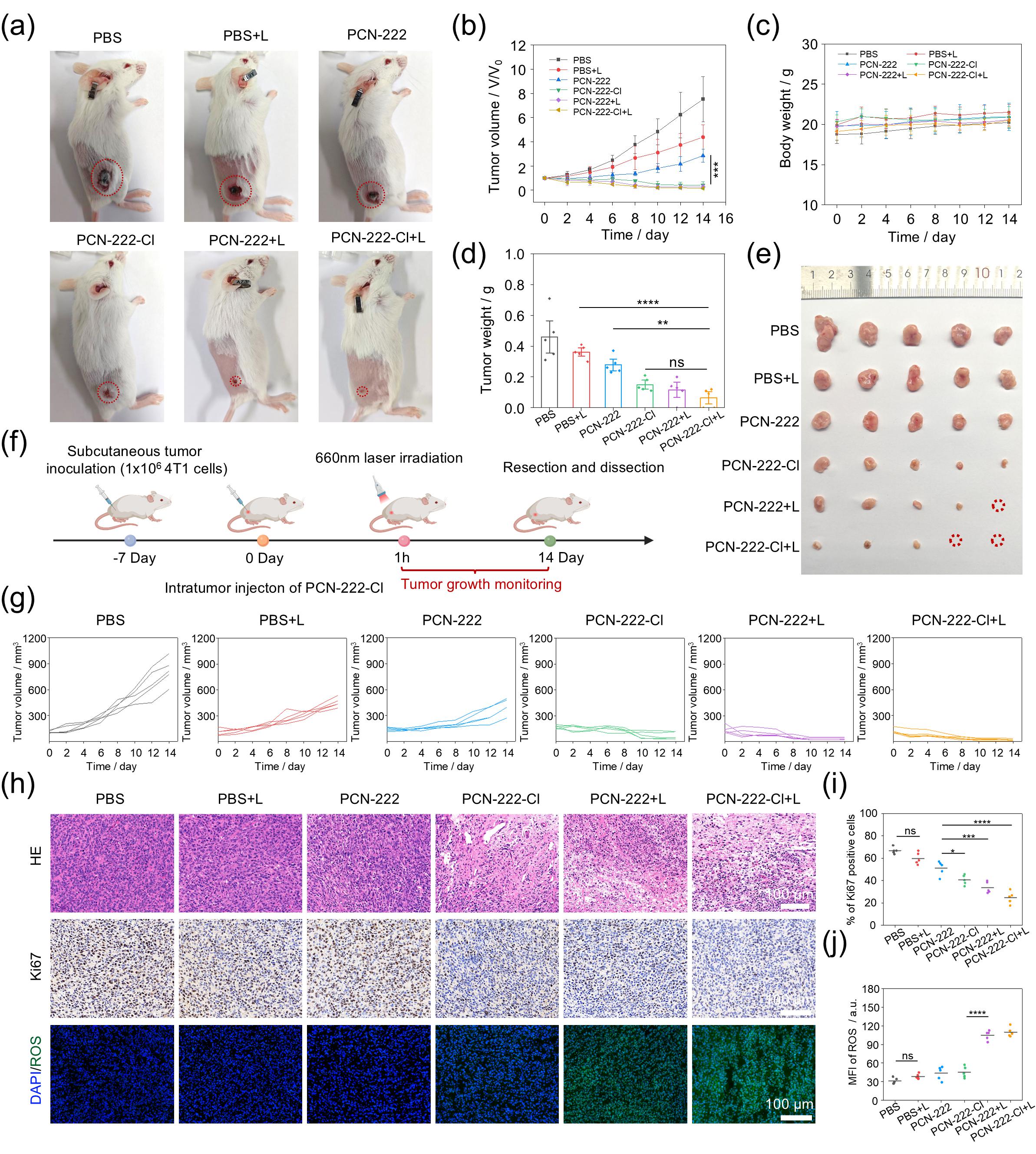
Figure 4. In vivo antitumor efficacy of PCN-222-Cl in 4T1 tumor-bearing mice.
The core innovation of this study lies in reconfiguring the electronic structure of porphyrinic MOFs via a programmable in-situ ligand N-H chlorination technique. This approach successfully integrated bioinspired RCS active chlorine chemistry with multi-modal phototheranostics (photothermal/photodynamic), overcame the challenge of catalytic active chlorine release in neutral environments, and constructed a multifunctional framework platform featuring high catalytic activity, broad-spectrum antibacterial properties, and highly efficient antitumor performance.
This research was jointly supported by the National Natural Science Foundation of China (22472200, 22075319, 22372061, 22572061), the Guangdong Science and Technology Program (2024B1111130002), the Guangzhou Science and Technology Plan Project (No. 2024A03J0163), and the Fundamental Research Funds for the Central Universities of China.