
INFORMATION CENTER

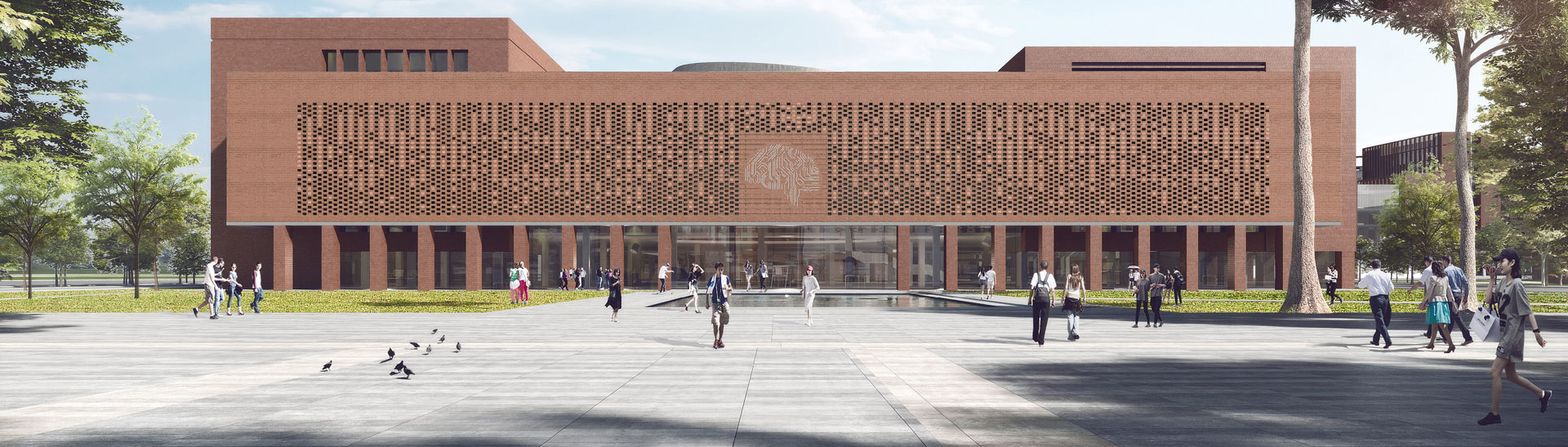
On June 24, a delegation from Monash University, Australia, visited South China University of Technology and toured the Shien‑Ming Wu School of Intelligent Engineering. The group included Professor Yiannias Ventikos, Dean of Engineering at Monash and Fellow of the Royal Academy of Engineering; Ian Burnett, Dean of IT; Aijun Huang, Associate Dean of Engineering and Deputy Dean of the Monash‑Suzhou Joint Graduate School; and Shelley Pawsey, General Manager of the Faculty of Engineering. They were received by Min Yao, Director of SCUT’s Office of International Exchanges, along with School Dean Academician Xiaoqi Chen, Professor Yong Zhong, and Professor Shaofeng Lu.
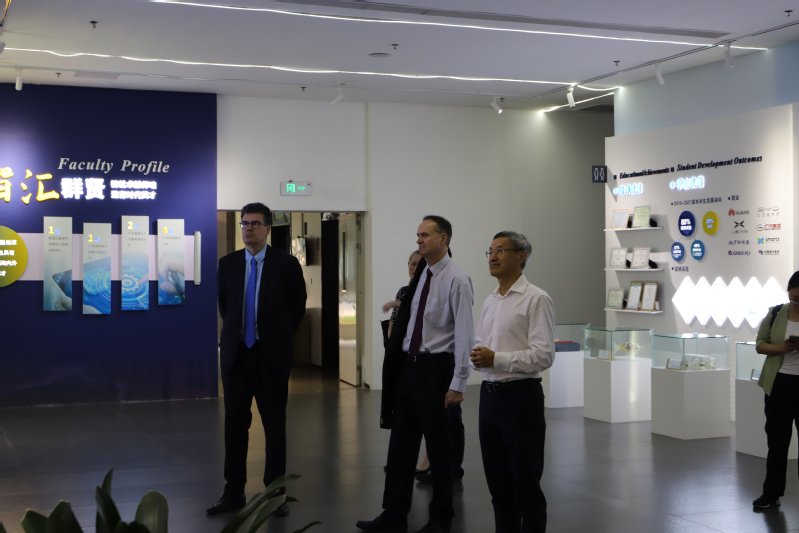
Academician Chen Xiaoqi introduces the School
At the School’s cultural exhibition hall, Academician Chen gave an overview of the School’s operations, covering its history, educational philosophy, faculty strength, research ecosystem, and international partnerships. He highlighted the “156+X” research framework for industrial embodied intelligent robotics and updated the visitors on the School’s International Academic Committee and various exchange programs, offering a clear picture of the School’s development trajectory.
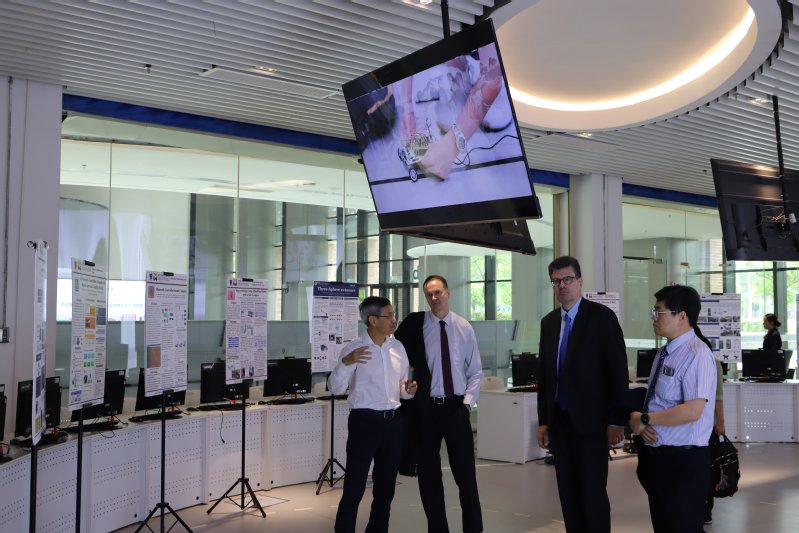
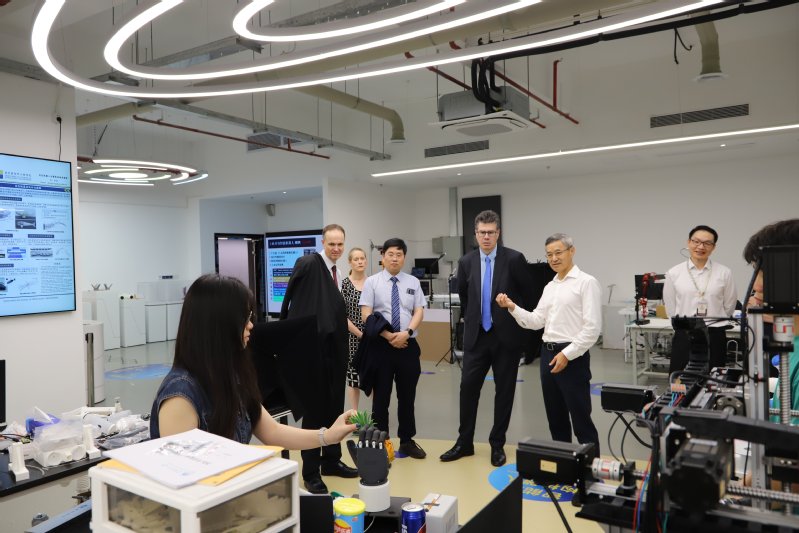
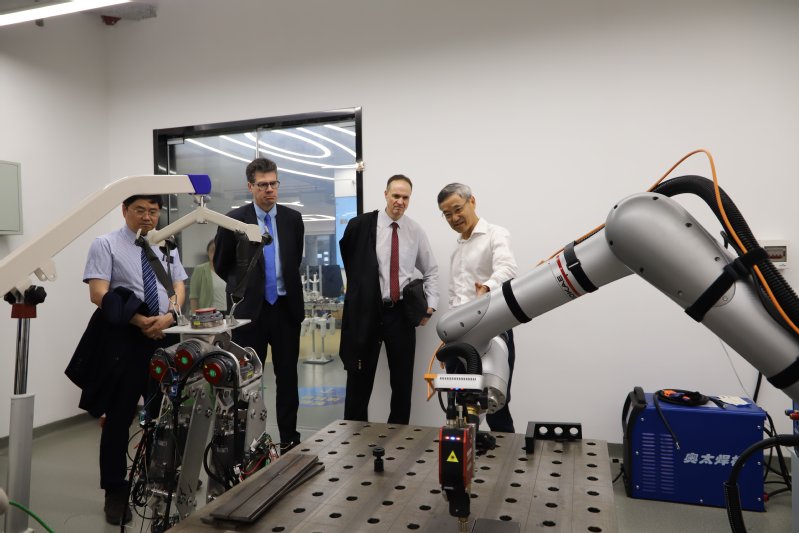
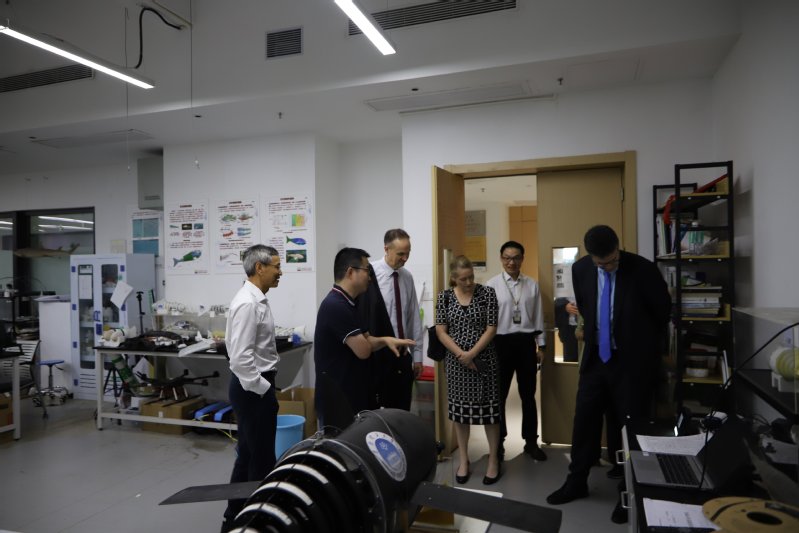
Delegation tours the School's laboratories
The delegation visited both teaching and research labs. In the undergraduate robotics lab, they watched highlights from robotics competitions and reviewed student course projects. Academician Chen elaborated on the School’s distinctive approaches to student development and notable achievements. At the Center for Safe Intelligent Robotics, he showcased research platforms including welding robots, intelligent bionic hands, and telemedicine robots, explaining the School’s key research directions in robotics. Students demonstrated the latest breakthroughs in bionic hand research, vividly illustrating innovations in human‑machine interaction and intelligent control. At the Bionic Robotics and Intelligent Systems Lab, Professor Zhong focused on the team’s work on bionic robotic fish, presenting propulsion mechanisms and high‑agility motion control, which drew strong interest from the visitors.
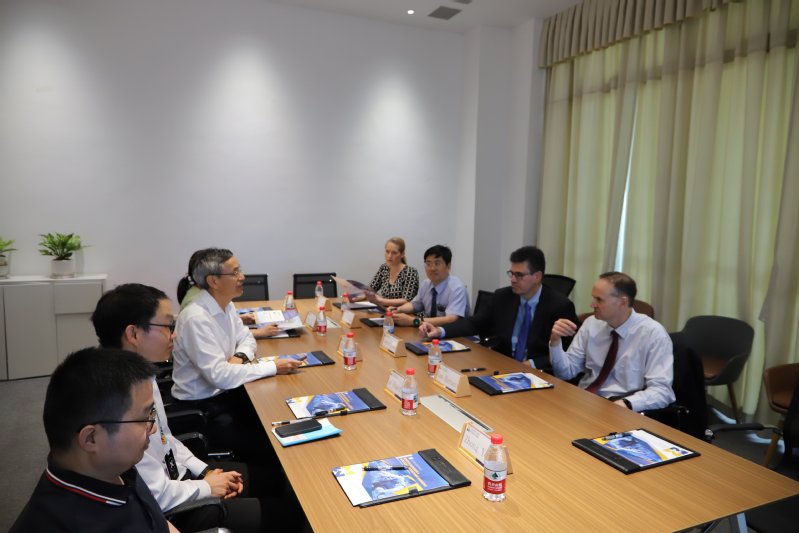
Discussion meeting on site
After the tours, the two sides held a discussion. Academician Chen further elaborated on the School’s talent cultivation model and research priorities, expressing hope that this visit would serve as a springboard for tangible cooperation in joint student training and collaborative research, while broadening avenues for student exchanges abroad. The Monash representatives gave positive feedback on the School’s forward‑looking strategy and research vitality, and explored preliminary possibilities for future collaboration.
The School has been steadily advancing its international engagement, enriching two‑way global partnerships. It has invited multiple international academic experts to serve on its International Academic Committee, who regularly give lectures and courses to students. School leaders have also made frequent visits to New Zealand, Australia, Russia, and other countries, establishing ties with numerous renowned institutions. This visit by the Monash delegation further deepened mutual understanding and laid a solid foundation for deeper cooperation in education and research. Looking ahead, the School will continue to expand its global network, create diverse platforms for student overseas exchanges, enhance its international academic influence, and strive for broader and more substantive breakthroughs in its internationalization efforts. (Text|Photos: the Shien‑Ming Wu School of Intelligent Engineering)
