

FACULTY


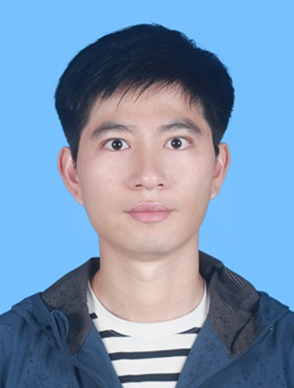
Positional Title: Professor
Email: zhenfu \at$ scut.edu.cn
Zip Code: 510640
Office: D1-b522
Working For: Shien-Ming Wu School of Intelligent Engineering
Graduated School: South China University of Technology
Final Degree: PhD
Telephone:
Mentor Type: Master and PhD supervisor
Dr. Zhenfu Wen is a Tenure-track Professor and Doctoral Supervisor at the Shien-Ming Wu School of Intelligent Engineering, South China University of Technology. He is a recipient of the National Overseas High-Level Young Talent Program. He earned his Ph.D. in Pattern Recognition and Intelligent Systems from the School of Automation Science and Engineering at South China University of Technology, and completed postdoctoral training at New York University. He previously served as an Assistant Professor at New York University and at the University of Texas Health Science Center at Houston. He is the subproject leader of a National Key R&D Program and has participated as a core team member in multiple projects funded by the U.S. National Institutes of Health. In recent years, he has published more than 10 papers as first author or corresponding author in leading international journals, including Nature Communications, PNAS, and JAMA Network Open. His main research interests include multimodal brain signal decoding and brain-computer interfaces related to sleep and emotion. He regularly recruits masters and doctoral students, and welcomes applications from students interested in artificial intelligence and/or brain science. Undergraduate students are also welcome to participate in the research activities of his group.
2025.12 - Present, Shien-Ming Wu School of Intelligent Engineering, South China University of Technology, Professor.
2023.07 - 2025.10, McGovern Medical School, University of Texas Health Science Center at Houston, Assistant Professor.
2022.07 - 2023.06, Grossman School of Medicine, New York University, Assistant Professor.
2022.07 - 2023.06, Grossman School of Medicine, New York University, Postdoc.
2010 - 2014, South China University of Technology, School of Automation Science and Engineering, BSc
2014 - 2019, South China University of Technology, School of Automation Science and Engineering, PhD
Brain computer interface
Sleep and emotion
Brain decoding
Machine learning
Zhang Kai, Klumpp Heide, Jimmy Jagan, Phan K Luan, Milad Mohammed R, Wen Zhenfu*. Functional connectivity predicting transdiagnostic treatment outcomes in internalizing psychopathologies[J].JAMA Network Open, 2025, 8(9): e2530008.(*通讯作者)
Wen Zhenfu, Pace-Schott Edward F, Lazar Sara W, Rosén Jörgen, Åhs Fredrik, Phelps Elizabeth A, LeDoux Joseph E, Milad Mohammed R. Distributed neural representations of conditioned threat in the human brain[J]. Nature Communications, 2024, 15(1): 2231.
Wen Zhenfu, Hammoud Mira Z, Siegel Carole E, Laska Eugene M, Abu-Amara Duna, Etkin Amit, Milad Mohammed R, Marmar Charles R. Neuroimaging-based variability in subtyping biomarkers for psychiatric heterogeneity[J]. Molecular Psychiatry, 2024: 1-10.
Huang Weichen, Wu Wei, Lucas Molly V, Huang Haiyun, Wen Zhenfu, Li Yuanqing. Neurofeedback training with an electroencephalogram-based brain-computer interface enhances emotion regulation[J]. IEEE Transactions on Affective Computing, 2023, 14(2): 998-1011.
Wen Zhenfu, Raio Candace M, Pace-Schott Edward F, Lazar Sara W, LeDoux Joseph E, Phelps Elizabeth A, Milad Mohammed R. Temporally and anatomically specific contributions of the human amygdala to threat and safety learning[J]. Proceedings of the National Academy of Sciences, 2022, 119(26): e2204066119.
Wen Zhenfu, Seo Jeehye, Pace-Schott Edward F, Milad Mohammed R. Abnormal dynamic functional connectivity during fear extinction learning in PTSD and anxiety disorders[J]. Molecular Psychiatry, 2022, 27(4): 2216-2224.
Wen Zhenfu, Marin Marie France, Blackford Jennifer Urbano, Chen Zhe Sage, Milad Mohammed R. Fear-induced brain activations distinguish anxious and trauma-exposed brains[J]. Translational Psychiatry, 2021, 11(1): 46.
Wen Zhenfu, Chen Zhe Sage, Milad Mohammed R. Fear extinction learning modulates large-scale brain connectivity[J]. NeuroImage, 2021, 238: 118261.
Huang Haiyun, Xie Qiuyou, Pan Jiahui, He Yanbin, Wen Zhenfu, Yu Ronghao, Li Yuanqing. An EEG-based brain computer interface for emotion recognition and its application in patients with disorder of consciousness[J]. IEEE Transactions on Affective Computing, 2021, 12(4): 832-842.
