News & Events


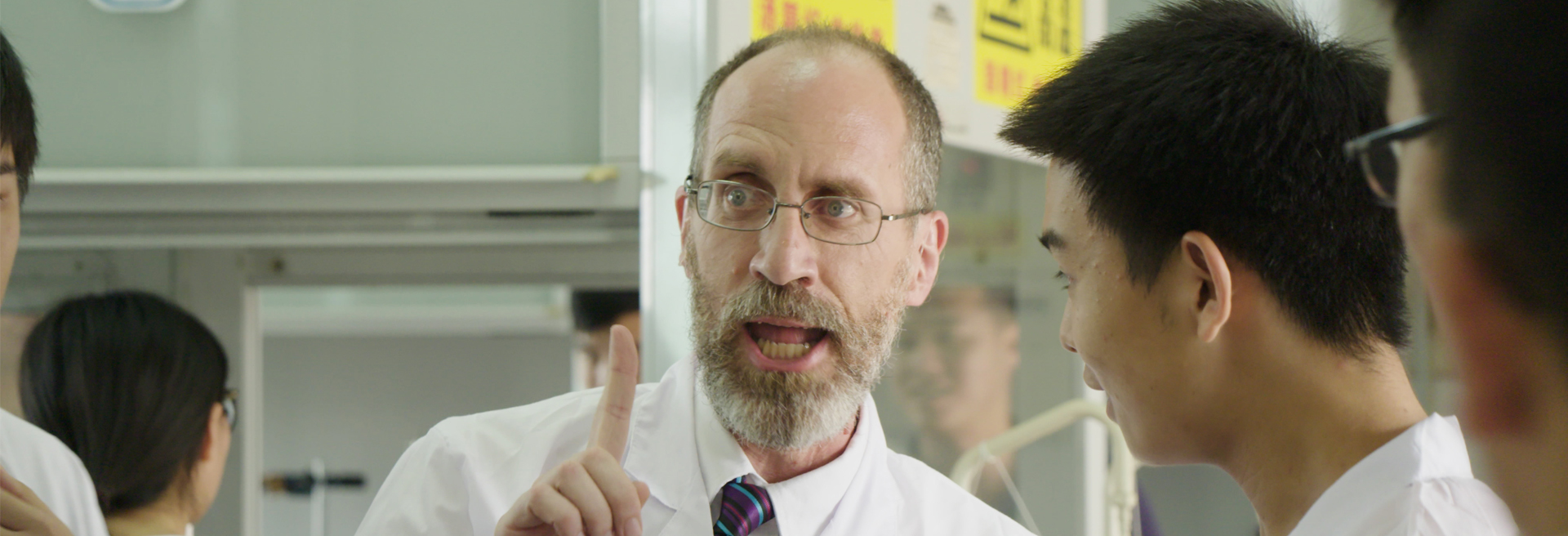
Speaker:Mu-Ping Nieh(University of Connecticut)
Time:9:30 AM, December 19, 2025
Location: C3-c204, GuangzhouInternational Campus,SCUT
Abstract:
Lipid Nanoparticles (LNPs) have been widely used for drug delivery (e.g., mRNA-LNPs during the COVID pandemic). The challenges of LNPs are their stability and reproducibility. In this talk, I will demonstrate how fundamental understanding of molecular properties leads to controlling size-uniform discoidal LNP (also known as “bicelle”), potentially applicable for high-efficacy theranostic nanocarriers. They can entrap other nanoparticles or fluorophores and induce/enhance their emission efficiency. Furthermore, the bicelle can serve as polymerization template to produce size-controllable uniform polymer nanorings. This generalized platform can robustly form and has well-defined structure, thus suitable for scalable production. I will also introduce how small angle X-ray and neutron scattering (SAXS/SANS) can provide detailed structural information, enabling the design of LNPs.
Biography:
Professor Nieh received his BS degree from Taiwan University and PhD degree from University of Massachusetts, Amherst (both in Chemical Engineering). He is currently a full Professor at Chemical and Biomolecular Engineering Department and the director of Polymer Program at the Institute of Materials Science at University of Connecticut. He is also a member of Connecticut Academy of Science and Engineering (CASE). His research mainly focuses on designing self-assemblies of soft materials (e.g., lipids, polymers, surfactants) based on their molecular properties for potential biomedical and pharmaceutical applications and developing structure-function relationships of the materials of interest. He is an expert on neutron, X-ray and light scattering, which are commonly applied to his research for nanostructural characterization.
Guangzhou International Campus: 777 Xingye Avenue East, Panyu District, Guangzhou, 511442
TEL.: +86-20-39381048; +86-20-39381029
© 2025 South China University of Technology. All Rights Reserved.