
LinGe WANG
OFFICE
C3-a812 (Guangzhou International Campus)
EMAIL
lingewang[]scut.edu.cn
Biography
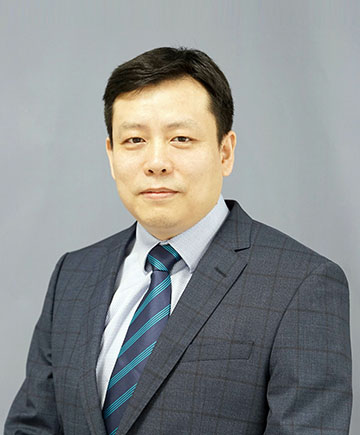
Professor LinGe WANG of South China University of Technology (SCUT) is currently the Secretary of the Party Committee of the School of Emergent Soft Matter (SESM) and the Associate Dean of South China Advanced Institute for Soft Matter Science and Technology (AISMST). LinGe WANG received his PhD in Chemistry from the Institute of Chemistry, Chinese Academy of Science (CAS) in 2003. He had worked at the Guangzhou Institute of Chemistry, CAS as an Assistant Professor (till 2004), Associate Professor (till 2008), and then worked at the University of Sheffield (till 2012) as a Postdoc Research Associate. He was pointed as a full professor at SCUT since Sep 2012. His research has been published more than 100 papers in leading journals in a variety of materials and polymers, such as Advanced Materials, Angewandte Chemie International Edition, Advanced Functional Materials, Nature Communications, Small, Materials Horizons, Acta Biomaterialia, Applied Energy, Chemical Engineering Journal, Macromolecules, ACS Applied Materials & Interfaces, Science China-Chemistry; he has been invited to write 4 book chapters (published by Woodhead, Springer and Elsevier, respectively) and has been granted 40 Chinese/U.S./Japanese invention patents and 10 PCT international phase applications.
Research Interests
Prof. LinGe WANG’s research focuses on Soft Matter & Hybrid Materials, particularly on block copolymer & self-assembly, polymer nanofibers, polymer vesicles, polymeric optical film, tissue engineering, cell therapy, drug delivery, antibacterial materials, thermal energy storage materials, flexible sensor, etc. Consequently, his group strives to develop and exploit the simplest, most efficient and cost-effective chemistry in all syntheses carried out. Subsequently, the group exploits polymers which microphase separate into nanostructured self-assemblies. Behavior at the nanometer length scale is then probed using small-angle X-ray scattering (SAXS) at the Radiation Facilities across world.
Awards & Honors
2020
Innovation Leadership in Sciences and Technologies
2016 & 2020
Outstanding Supervisor awarded by SCUT
2005
Young Scholars Award of Pacifichem 2005 awarded by the 2005 International Congress of Pacific Basin Societies (Pacifichem)
2004
Outstanding Ph.D. Thesis Award of Chinese Academy of Science (CAS) awarded by CAS, August 2004. (one of 50 winner that year from 5,000 Ph.D candidates in CAS)
Award of Outstanding Young Scientist Report of 24th Annual Meeting of the Chinese Chemical Society
2003
Award of Baojie Doctor Scholarship of CAS
The 2003 IUPAC Travel Grant for Young Chemists awarded by the 39th International Union of Pure and Applied Chemistry (IUPAC) Congress
Selected Publications
Polymer Nanofibers: Soft Science, 2026, 6, 5; Int. J. Biol. Macromol. 2025, 286, 138416; ACS Appl. Mater. Inter. 2024, 16, 40787; Giant 2024, 18, 100259; Acta Biomaterialia, 2023, 167, 473; Applied Surface Science, 2022, 605, 165755; Journal of Colloid and Interface Science, 2022, 623, 21; Journal of Colloid and Interface Science, 2022, 606, 248; ACS Appl. Mater. Inter., 2021, 13, 60837; Polymer, 2020, 211, 123097; Acta Biomaterialia, 2019, 92, 60; Soft Matter, 2019, 15, 2490; Applied Surface Science, 2017, 422, 769; Macromol Rapid Comm, 2015, 36, 1437; Advanced Materials, 2007, 19, 3544; Advanced Materials, 2006, 18, 1566.
Polymer Vesicles: Small, 2026, 22, e14671; Small, 2025, 21, 2506077 (Back Cover); Small, 2025, 21, e08262; Langmuir, 2025, 41, 26967; J. Mater. Chem. B, 2025, 13, 8136; Biomater. Sci., 2025, 13, 2925 (Back Cover); Molecules, 2024, 29, 4802; Giant, 2022, 10, 100104; iScience, 2018, 7, 132; Journal of Colloid and Interface Science, 2017, 508, 145-153; Angewandte Chemie International Edition, 2012, 51, 11122-11125; Angewandte Chemie International Edition, 2012, 51, 4448-4451.
Thermal Energy Storage Materials: ACS Appl. Polym. Mater., 2025, 7, 2470; Polymers 2024, 16, 3547; Sol. Energ. Mat. Sol. C. 2023, 256, 112322; Adv. Fiber. Mater. 2022, 4, 1669; J. Colloid. Interf. Sci. 2022, 623, 21; Renew. Energ. 2022, 183, 535; ACS Appl. Mater. Inter., 2021, 13, 60837; J. Mater. Sci., 2018, 53, 16539; Appl. Energ., 2018, 210, 167; Appl. Energ., 2011, 88, 3133; Chem. Eng. J., 2009, 150, 269; Sol. Energ. Mat. Sol. C., 2008, 92, 1382.
Hybrid Materials: Chinese J. Polym. Sci., 2026, 44, 341-351 (Front Cover, Editor Pick); Adv. Funct. Mater., 2026, 36, e13521; Colloid. Surf. B, 2026, 257, 115145; ACS Appl. Polym. Mater., 2025, 7, 16991; Carbon, 2025, 232, 119813; Appl. Surf. Sci., 2025, 708, 163777; Nanoscale, 2025, 17, 16398; ACS Appl. Polym. Mater., 2025, 7, 2470; ACS Appl. Mater. Inter. 2024, 16, 4800; ACS Appl. Mater. Inter. 2024, 16, 19421; ACS Appl. Electron. Mater. 2024, 6, 7013; Sci. China Mater. 2023, 66, 1172; Appl. Phys. Lett. 2023, 123, 243501; Giant 2023, 13, 100144; Colloid. Surface. A 2023, 665, 131231; Giant, 2022, 12, 100121; Appl. Surf. Sci., 2022, 605, 154755; Mater. Horiz., 2021, 8, 2293; J. Mater. Chem. C, 2021, 9, 9042.
Teaching
Undergraduate courses:
Principles of Instrumental Analysis
Soft Matter Materials and Intelligent Manufacturing Ⅱ
Analytical Chemistry and Instrumental Analysis
Graduate courses:
Modern Techniques in Polymer Characterization
Advanced Polymer Physics
Quick Links

Guangzhou International Campus: 777 Xingye Avenue East, Panyu District, Guangzhou, 511442
TEL.: +86-20-39381048; +86-20-39381029
© 2025 South China University of Technology. All Rights Reserved.