
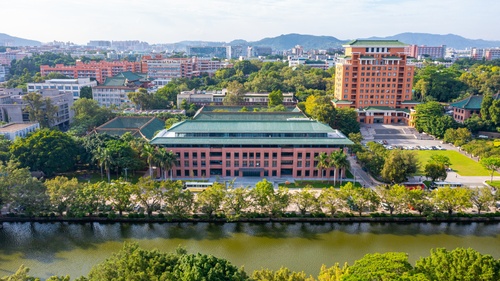
The School of Electronic andInformation Engineering (SEIE), was established in January 2002, by merging theformer Radio Department founded in 1952, the Institute of Radio and AutomaticControl and the Center for Electrical and Electronic Teaching.
The research and teaching at SEIE encompasses awide scope of technologies including microelectronics, wireless communicationsand networking, signal and information, system and automation, biomedicalelectronics, photonics, computer engineering and IC design. SEIE offers astimulating environment for studying electronic and computer engineering. Theschool has amassed a talented group of faculties dedicated to excellence inresearch and teaching. The total number of our permanent faculty, researchstaff, and administrative staff is 136. Among this group, there are 33 professors,49 associate professors, and 96 holders of doctoral degrees. We have equippedour laboratories and classrooms with state-of-the-art facilities for researchand multimedia teaching. Our goal is to prepare students to become capableengineers and future technology leaders in the ever-changing world of hightechnology. We offer a full range of courses leading to a number ofundergraduate and postgraduate degrees.
The college currently has 2 first-level discipline doctoral degreeauthorization points (Information and Communication Engineering, ElectronicScience and Technology), 1 professional doctoral degree authorization category(Electronic Information), 1 professional master's degree authorization category(Electronic Information), 2 undergraduate programs, and 2 postdoctoral researchstations.
The program of Communication and Information Systemis the only state key discipline in the area of communications and informationin South China, one of the earliest disciplines accredited to grant doctoral degree,and in South China University of Technology one of the earliest keyconstruction disciplines into which China makes significant investment in the21st century. The college currently has 3 national-level talent training bases,1 national-level scientific research base, 7 provincial and ministerial-levelscientific research bases, 2 scientific research bases of the Department ofEducation of Guangdong Province, 1 national-level experimental teachingdemonstration center, and 1 integrated circuit training base co-constructed bythe province and the city.