
Title: Progress and Prospect of Artificial Intelligence Enabled Chemical Engineering Research
Speaker: Researcher Mao Ye
Invited by: Prof. Zhenxing Liang
Time: November 5, 2026 (Thursday), 3:00 PM – 4:30 PM
Venue: Conference Room, 4th Floor of the Shaw Engineering Building, Wushan Campus
Organizer: School of Chemistry and Chemical Engineering
Biography
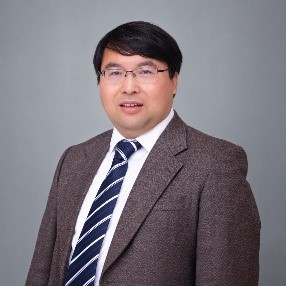
Mao Ye serves as Deputy Director of the Low Carbon Catalysis and Engineering Division and Director of the Artificial Intelligence Center at Dalian Institute of Chemical Physics, Chinese Academy of Sciences. He is also Executive Director of the Chinese Society of Particuology, Vice Chairman of the Process Simulation and Simulation Committee of the Chemical Industry and Engineering Society of China, Member of the National Coal Chemical Standardization Committee, Deputy Director and Group Leader of the Large model Working Group of the Petrochemical and Chemical Industry Digital Transformation Promotion Center, and Co Chair of the Petrochemical Group of the China Artificial Intelligence Industry Development Alliance. His research addresses major national demands in petrochemical and coal chemical industries for developing novel catalytic processes and intelligent technologies. He has undertaken numerous projects including the National Key R&D Program, Major Research Program of the National Natural Science Foundation of China, and Strategic Priority Research Program of the Chinese Academy of Sciences.
He has led the development and industrialization of multiple technologies such as DMTO Ⅱ (Methanol to Olefins), DMTP (Methanol to Propylene), and methanol toluene to para xylene processes. He also presided over the development of China’s first large model for the chemical industry — the Intelligent Chemical Industry Large Model. He has published more than 150 academic papers in journals including Nature, Nature Communications, AIChE Journal, Chemical Engineering Science, Industrial & Engineering Chemistry Research, and Journal of the American Chemical Society. He has filed over 280 patents, among which more than 240 have been granted. His honors include the Outstanding Achievement Award of the Chinese Academy of Sciences, Royal Society Newton Advanced Fellowship, Science and Technology Promotion Award of the Chinese Academy of Sciences, Special grade Prize for Scientific and Technological Progress from China Petroleum and Chemical Industry Federation, and Hou Debang Science and Technology Innovation Award from the Chemical Industry and Engineering Society of China.
Abstract
The new generation artificial intelligence technologies represented by large language models are becoming a core engine driving scientific technological progress and industrial upgrading, ushering in a new era of industrial intelligence. Traditional chemical engineering R&D has long been plagued by three major pain points: trial and error driven scale up, insufficient intrinsic safety of production processes, and heavy reliance on empirical optimization. The chemical industry urgently needs intelligent transformation to achieve green, high end, safe and sustainable development. Dalian Institute of Chemical Physics, Chinese Academy of Sciences released Version 1.0 of the Intelligent Chemical Industry Large Model in March 2024, which has recently been iterated to Version 4.0 with reliable performance in chemical knowledge comprehension, tool invocation and deep reasoning. Centered on model capabilities, the research team has built an agent based platform covering four major business links: catalytic reactions, process development, pilot scale scale up and plant optimization. A series of core functional modules have been developed, including an intelligent robotic catalytic experimental system, catalytic reaction kinetic modeling toolkit, multi functional catalyst particle analysis toolkit, automatic generation of process flowsheets, P&ID generation, 3D chemical plant modeling, and feasibility study report generation, comprehensively covering the core technical chain from fundamental research to industrial applications.
Announced by School of Chemistry and Chemical Engineering.