
Title: Biomedical Photosensitizing Dyes
Speaker: Prof. Wen Sun (Dalian University of Technology)
Invited by: Prof. Zhenxing Liang
Time: October 26, 2026 (Monday), 4:00 PM – 5:00 PM
Venue: Meeting Room 804, Building B13, University Town Campus
Organizer: School of Chemistry and Chemical Engineering
Biography
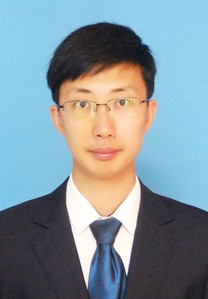
Wen Sun is a Professor and doctoral supervisor at the School of Chemical Engineering, Dalian University of Technology. He earned his PhD degree from the Max Planck Institute for Polymer Research, Germany, in 2017, and joined the faculty of Dalian University of Technology in 2018. He is a recipient of the National Science Fund for Distinguished Young Scholars and the National Science Fund for Excellent Young Scholars. His research focuses on functional dye materials and their applications in biomedical engineering and information materials.
As corresponding author, he has published over 80 SCI-indexed papers in high-impact international journals, including Nature Chemistry, Journal of the American Chemical Society, Angewandte Chemie International Edition, Advanced Materials, Biomaterials, Accounts of Chemical Research, and Progress in Materials Science. His publications have garnered more than 15,000 SCI citations with an H-index of 65. He has been named in the World’s Top 2% Scientists List (Lifetime Scientific Impact). His academic honors include the First Prize of Natural Science Award from the Chinese Society for Imaging Science and Technology, the Gold Medal at the International Exhibition of Inventions of Geneva, the Liaoning Provincial Youth Science and Technology Award, the Hou Debang Youth Award for Chemical Science and Technology, the title of Liaoning Provincial Top Young Talent, and the Nano Research Young Scientist Award (NR45). He serves as a young editorial board member for Smart Molecules, Chinese Chemical Letters, and Chinese Journal of Applied Chemistry.
Abstract
This presentation focuses on biomedical photosensitizing dyes for precise disease diagnosis and therapy, following a hierarchical research framework of “intramolecular regulation – intermolecular interaction – in vivo delivery”. First, at the intramolecular level, a novel design principle for photosensitizing dyes is proposed based on the mechanism of photoinduced intramolecular non-radiative transition enhancement. The structure–property relationships and design strategies of dye molecules with efficient light energy conversion are elucidated, leading to the development of a series of high-performance photosensitizing dyes for photomodulated therapy. Second, at the intermolecular level, an intermolecular energy transfer amplification mechanism with a “dye–mediator–biological target” cascade is established. This mechanism enables efficient labeling or specific ablation of intracellular target substances, addressing the long-standing limitation of poor selectivity in conventional photosensitizing dyes. Third, at the in vivo level, an intelligent targeted delivery technology for dyes in complex biological systems is developed. It achieves efficient accumulation and prolonged retention of photosensitizing dyes at lesion sites, overcoming the technical bottleneck of low delivery efficiency in traditional dye systems. Breakthroughs have been realized in precise fluorescence localization of parathyroid glands and photodriven therapy of malignant tumors. Relevant technologies have been enrolled in the National Catalog of Disruptive Technologies and supported by entrepreneurship funding, advancing their clinical translation.
Announced by School of Chemistry and Chemical Engineering.