
Title: New Frontiers for Membrane Nanomaterials and Their Translation to Large-Scale Fabrication and Application
Speaker: Prof. Vicki Chen (Professor, University of Queensland)
Invited by: Researcher Wei Yanying
Time: June 8, 2026 (Monday), 10:00 AM–12:00 PM
Venue: Conference Room 214, Building 16, School of Chemistry and Chemical Engineering
Organizer: School of Chemistry and Chemical Engineering
Biography:
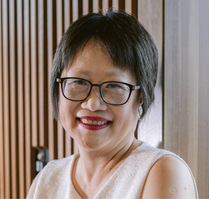
Vicki Chen is a chemical engineer with extensive experience in higher education. She recently served as the Provost and Senior Vice-President at the University of Technology Sydney (2022–2025), providing strategic leadership for seven faculties and academic affairs. Her leadership career includes serving as the Executive Dean of the Faculty of Engineering, Architecture, and IT at the University of Queensland (2018–2022) and Head of the School of Chemical Engineering at UNSW (2014–2018).
Professor Chen's expertise spans membrane technology, water treatment, and bioseparations. She has published over 205 journal articles, amassing more than 20,000 citations with an H-index of 91. She also previously directed the UNESCO Centre for Membrane Science and Technology. A Fellow of the Australian Academy of Technology and Engineering, she holds a Ph.D. from the University of Minnesota and a B.S. from MIT. Currently, she is an Honorary Professor at the University of Queensland.
Abstract:
Over the last two decades, an enormous diversity of nanomaterials (MOFs, COFs, etc.) and the design of complex, multilayer constructs have promised exciting new performance and transport behaviour. Multilayer architecture of the thin-layer structures has demonstrated the impact of asymmetry on nanomaterial performance. This has been complemented by advanced molecular modelling to identify how competing transport mechanisms contribute to the extremely high selectivities recently observed in these new generations of membranes. Greater utilization of molecular modelling tools provides much greater insight into understanding transport behaviour in nanomaterials; however, true a priori nanomaterial design for membrane separation remains aspirational.
Industry applications for critical mineral recovery and energy devices now need to be realized for nanomaterial-augmented membranes. Manufacturing advances have reduced the costs of nanomaterial synthesis. However, major challenges in large-scale fabrication (especially those with complex architecture), chemical and mechanical robustness, and macroscopic design issues such as mass transfer/polarisation constraints remain. Examples of novel application of traditional and nontraditional techniques are now emerging for translation to industrial application in a variety of form factors.
More high-value, unique applications for such membranes remain to be identified beyond highly commodified, large-scale industrial applications where competitive alternatives already exist. Demonstrated chemical and mechanical stability remain key attributes for acceptance in the chemical and energy industry, but less demanding applications may exist in other arenas. Integration of small amounts of nanomaterials into cost-efficient manufacturing processes could provide entry to markets where only expensive or non-optimal options are currently available.
Announced by School of Chemistry and Chemical Engineering