
Title: Dr. Wang Fangjun, Dalian Institute of Chemical Physics, CAS:Extreme-Ultraviolet Laser Dissociation Mass Spectrometry: Instrumentation & Applications
Speaker: Dr. Wang Fangjun (Professor, Dalian Institute of Chemical Physics, Chinese Academy of Sciences)
Time: 10:00 a.m., Monday, 1 December 2025
Venue: Room 445, Building B8, Higher Education Mega Center Campus
Host: Prof. Liu Jinbin
Organizer: School of Chemistry & Chemical Engineering
[Biography]
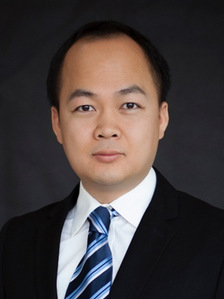
Wang Fangjun is a Professor at the Dalian Institute of Chemical Physics (DICP), CAS, and heads the Research Group for “Novel Methods in Biomolecular Structure Characterization”. He received the National Science Fund for Distinguished Young Scientists (Class A) in 2025. He earned his B.S. from Zhejiang University (2005) and Ph.D. from DICP (2011). Honors include Dalian Leading Talent (2019), DICP Zhang Dayu Outstanding Scholar (2024), and China Young Mass Spectrometrist Award (2025). Dr. Wang leads the CAS “0-to-1” Original Innovation Project “Analysis of Life’s Material Basis with an Extreme-UV Free-Electron Laser” and the National Key Research Program “Analytical Methods for Global Protein Modifications”. He serves on the Mass Spectrometry and Chromatography Committees of the Chinese Chemical Society, the Chinese Proteomics Society, and chaired the “Large-Scale Facilities & Chemical Biology” symposium at the 12th National Chemical Biology Conference.
He designed and built the world’s first tunable 50–200 nm extreme-UV laser dissociation mass spectrometer. By selectively exciting electronic states of protein backbone bonds with high-brightness EUV pulses, and employing picosecond–nanosecond narrow-width excitation to suppress vibrational heating, his method achieves “break strong bonds (covalent), keep weak bonds (non-covalent)”, yielding characteristic fragments that retain non-covalent contacts. A new strategy that maps non-covalent interaction sites via changes in fragment patterns reaches single-amino-acid resolution, providing innovative instrumentation and methodology for elucidating protein–ligand recognition and structural regulation. The instrument operates as an open-access station at the Dalian Coherent Light Source, a major CAS scientific facility. He has authored >80 papers as corresponding/first author in Nat. Protoc., J. Am. Chem. Soc., Cell Chem. Biol., Chem. Sci., Anal. Chem., etc., with >6 000 citations (Google Scholar).
Announced by School of Chemistry and Chemical Engineering