

NEWS & EVENTS

On April 2, the 2025 list of major science and technology projects by the Ministry of Water Resources was released. All three projects led by South China University of Technology (SCUT) were approved, namely, “Research on the Trigger Mechanism and Risk Prevention of Drought-Flood Abrupt Alternation in Humid Areas of South China”, “Embodied Intelligent Robotic Technology and Equipment for Multi-domain (Land-Air-Water) Dynamic Water Ecology Monitoring”, and “Research and Application of Key Technologies for Multi-source Sensing and Intelligent Dispatching in Digital Twin River Basins”.
Led by SCUT, these three projects are anchored by the School of Civil Engineering and Transportation and the Shien-Ming Wu School of Intelligent Engineering, drawing on the collaborative expertise of various other schools. In doing so, SCUT demonstrates its progress in advancing organized research and fostering interdisciplinary synergy, and serves as a vivid example of how scientific innovation underpins discipline development and talent cultivation.
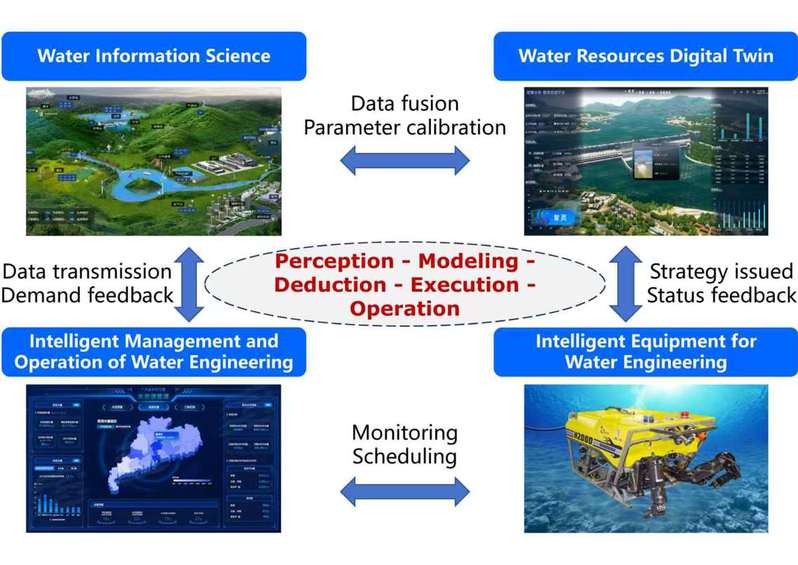
Each project has a distinct focus. The project led by Professor Wang Zhaoli addresses drought–flood abrupt alternation (DFAA) disasters in South China, aiming to uncover formation mechanisms, develop forecasting and early warning technologies, and build an intelligent operational platform. The project led by Professor Zhong Yong leverages embodied intelligent robotics to address constraints in water ecological monitoring and conducts multi-scenario application validation. The project led by Professor Liu Siyuan constructs a digital twin river basin management system and develops a closed-loop platform integrating the “Four Pre-features”: Forecasting, Early Warning, Simulation, and Contingency Planning.
Currently, SCUT is accelerating the development of interdisciplinary programs in water-related fields and is planning to establish the Institute for Future Water Conservancy and Marine Interdisciplinary Research to explore the “Water Conservancy + X” collaborative innovation paradigm. Moving forward, SCUT will strictly implement project management requirements, promote project execution and achievement transformation, and further strengthen interdisciplinary research and talent cultivation to inject innovative momentum into the high-quality development of water conservancy.
Source: SCUT News
For Collaborations, Tel: +86-20-81181636/1631 Email: global@scut.edu.cn
For Study at SCUT, Tel: +86-20-81182580/2585 Email: sieinfo@scut.edu.cn
For Jobs, please click https://www2.scut.edu.cn/gzic_en/2025/0820/c44854a599684/page.htm
to find job vacancies.


2018 © Guangzhou International Campus, SCUT. All Rights Reserved