

NEWS & EVENTS

Speaker: Professor Wang Zhengang
Time: Saturday, December 13 10:30 a.m. - 12:00 a.m.
Abstract
Ionic interactions provide a powerful and tunable means to direct polymer phase behavior, with applications in solid-state batteries and polymer compatibilization. This talk explores two key systems—neutral-charged block copolymers and ion-functionalized polymer blends—using an electrostatic fluctuation-augmented self-consistent field theory.For AB block copolymers with partially charged A-blocks, we demonstrate that ion correlations induce a chimney-like phase diagram, but dielectric contrast between blocks weakens the chimney-like feature. As the A-block charge fraction increases, counterions shift from interfacial accumulation to more uniform distribution within the A-domain. Notably, smaller counterions promote localized ion distributions, leading to hierarchical nanostructures (e.g., alternating layers, concentric cylindrical shells, and spherical shells) in lamellar, cylindrical, and spherical phases, respectively. These findings are in general agreement with literature data on neutral–charged diblock copolymers and salt-dope diblock copolymers. In the second part, we examine polymer blends where each chain is end-functionalized with a single oppositely charged group. Strong ion correlations effectively link the polymers, inducing phase behavior resembling that of neutral block copolymers. However, the order-disorder transition occurs at a significantly lower critical χN than in neutral systems. Additionally, ion localization persists even in fully miscible blends. These findings highlight the critical role of ionic interactions in tailoring polymer self-assembly for advanced materials.
Biography
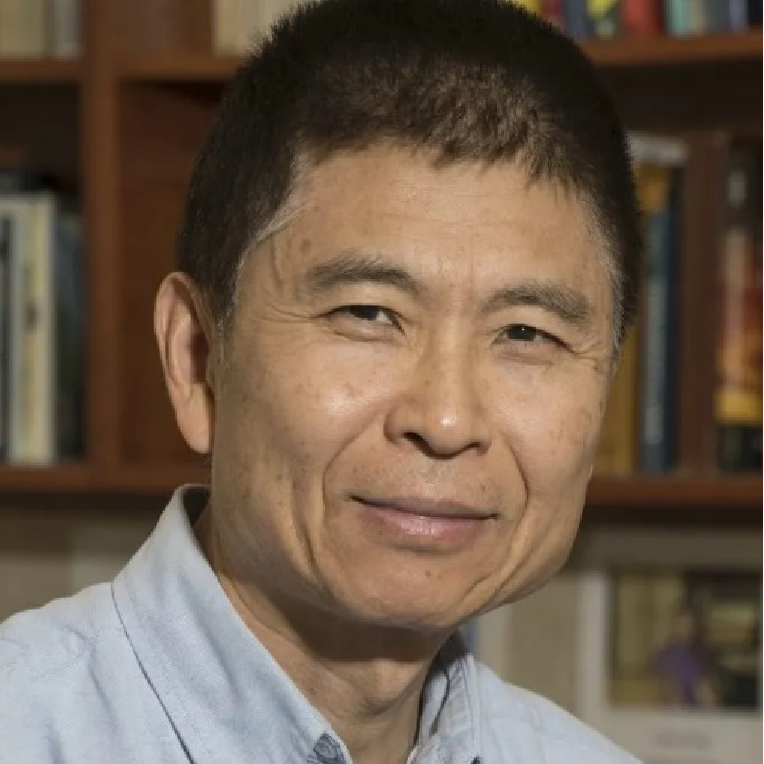
Professor Wang Zhengang graduated from the Department of Chemistry at Peking University in 1982 and obtained his PhD from the University of Chicago in 1987. He subsequently undertook postdoctoral research at ExxonMobil and the University of California, Los Angeles. In 1991, he was appointed to the Division of Chemistry and Chemical Engineering at the California Institute of Technology, where he currently holds the Dick and Barbara Dickinson Professorship. An internationally renowned theoretical physicist specialising in polymers and soft matter, his primary research encompasses: thermodynamics and kinetics of polymer solutions, mixtures, and copolymers; surfaces and interfaces; liquid crystals, colloids, and gels; electrostatic interactions in soft matter systems; biophysics of DNA and RNA and viral self-assembly; and biomembrane physics. Elected a Fellow of the American Physical Society in 2001, he received the Richard P. Feynman Prize for Excellence in Teaching at the California Institute of Technology in 2008 and was elected to the National Academy of Engineering in 2025.
For Collaborations, Tel: +86-20-81181636/1631 Email: global@scut.edu.cn
For Study at SCUT, Tel: +86-20-81182580/2585 Email: sieinfo@scut.edu.cn
For Jobs, please click https://www2.scut.edu.cn/gzic_en/2025/0820/c44854a599684/page.htm
to find job vacancies.


2018 © Guangzhou International Campus, SCUT. All Rights Reserved