

NEWS & EVENTS

Speaker: Professor Virgil Percec
Time: Saturday, December 13 9:00 a.m. - 10:00 a.m.
Abstract
Our laboratory is involved in the development of new synthesis methodologies and new concepts demanded to design complex molecular systems. After a brief discussion of all topics of research from our laboratory, this lecture will present several new synthethic methods elaborated in our laboratory, followed by their use in the design of several new self-organizations. The lecture will conclude with a discussion of the development of amphiphilic Janus densrimers assembling dendrimersomes as mimics of the cell membrane, amphiphilic Janus glycodendrimers with self-assemble glycodendrimersomes, as mimics of the gycans of the cell membranes, and last but not least, the discovery and development of one component systems for the targeted delivery of mRNA as well as the development of therapeutics and vaccines based on one-component delivery systems.
Biography
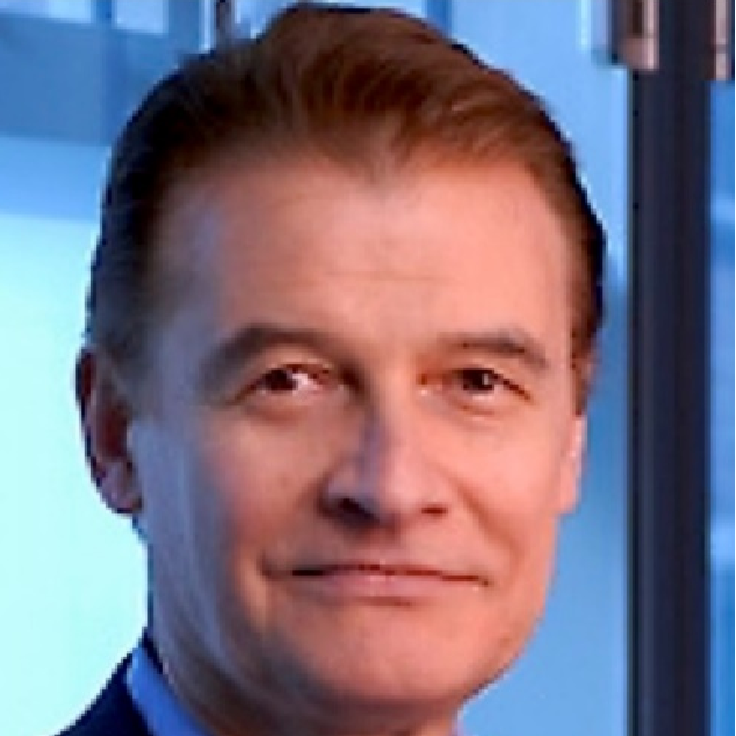
Virgil Percec, Fellow of the American Association for the Advancement of Science, Foreign Member of the Royal Swedish Academy of Sciences, and Foreign Member of the Romanian Academy, currently holds the Vagelos Chair Professorship at the University of Pennsylvania. Professor Percec is a leading authority in polymer chemistry and supramolecular chemistry, spanning organic and polymer synthesis, supramolecular chemistry, self-assembly, biomimicry, complex systems, biomembranes, the origin, amplification and transmission of chirality, supramolecular chirality, liquid crystals, supramolecular electronics, nanoscience and other interdisciplinary research areas. He has published over 844 peer-reviewed papers. Complex systems, biomembranes, the origin, amplification and transmission of chirality, supramolecular chirality, liquid crystals, supramolecular electronics, nanoscience and other interdisciplinary research fields, with over 844 peer-reviewed papers, 220 patents and 20 books published. Recipient of numerous prestigious awards including the Polymer Chemistry Award from the Chemical Society (2004), the National Science Foundation Creative Research Award (1990, 1995, 2000, 2016), the Alexander von Humboldt Research Award (1997), and the Staudinger-Dürr Medal (2005). He has supervised over 300 doctoral and postdoctoral students, 75 of whom have become university professors, with several serving as university presidents and company chief executive officers worldwide.
For Collaborations, Tel: +86-20-81181636/1631 Email: global@scut.edu.cn
For Study at SCUT, Tel: +86-20-81182580/2585 Email: sieinfo@scut.edu.cn
For Jobs, please click https://www2.scut.edu.cn/gzic_en/2025/0820/c44854a599684/page.htm
to find job vacancies.


2018 © Guangzhou International Campus, SCUT. All Rights Reserved