Faculty: School of Food Science and Engineering
Degree: PhD
Specialty: Food Science and Engineering
Objectives:
1. Master solid and broad basic theories, systematic and in-depth professional knowledge, and proficient practical skills within the discipline; be familiar with the development trends and the status of the frontier fields of the discipline; be capable of independently completing research topics that represent the frontier level of the discipline or have innovative value by utilizing theories and experimental techniques of this discipline and related disciplines; possess an international perspective and the ability to independently conduct scientific research, and be able to make innovative achievements in the field of science or professional technology, thus becoming advanced talents.
2. Doctoral dissertations should have significant academic value and certain social significance, and must have innovation in a certain research direction within the discipline, and make creative achievements in theory or engineering.
Years of Study:
Four years. The maximum study period is seven years.
Language:
Chinese、English
Major Research Fields:
1. Food Biotechnology
Food biotechnology is a discipline that applies biotechnology in the production, processing and manufacturing of food raw materials. It includes technologies such as cell engineering, enzyme engineering, fermentation engineering and protein engineering, and runs through the entire process of food manufacturing.
2. Food Science
Food science is the study of the physical, chemical and biological properties of food, as well as the theories, techniques and methods related to the changes in components and structure of food during processing, manufacturing, storage, preservation, packaging and circulation. It focuses on analyzing the relationship between food quality changes and raw material production and processing.
3. Food Safety
Food safety is a discipline that studies the risks to human health from possible hazards in food during the processes of raw material production, processing, storage, circulation, and their prevention and control.
4. Food Nutrition
Food nutrition is the study of theories, techniques and methods related to food nutrients and functional components, digestion and absorption metabolism laws, nutrition and health mechanisms, as well as the preservation and activity enhancement of nutrients.
5. Grain, Oil and Plant Protein Engineering
Grain, oil and plant protein engineering is the study of the theories, methods, technologies and engineering related to the physical and chemical properties, edible quality, nutritional value, processing technology and comprehensive utilization of grains, oils and plant proteins.
6. Green Processing and Intelligent Manufacturing of Food
Green processing and intelligent manufacturing of food is a discipline that studies green processing methods, processes and equipment used in the food industry, involving green, efficient and intelligent processing technologies for grains, oils, animal foods, etc.
Cultivation Mode:
The training of doctoral students with academic degrees mainly adopts a combination of course study, scientific research, academic exchanges and teaching practice, and is implemented under the responsibility system of supervisors (supervisor groups). The training focuses on scientific research work, aiming to cultivate the ability to independently engage in creative scientific research, master scientific methods and develop a rigorous style. Doctoral students should, under the guidance of their supervisors, formulate a training plan within two weeks after enrollment.
Dissertation:
The graduate student's application for the graduation defense and the application for the degree defense are conducted together. They should be applied for in accordance with the requirements and procedures for the degree defense. For detailed requirements, please refer to the Detailed Rules for Degree Awarding of South China University of Technology (Revised in 2025).
Credit Requirements:
Minimum Total Credits: 11.0
Minimum Compulsory Course Credits: 7.0
Minimum Optional Course Credits: 4.0
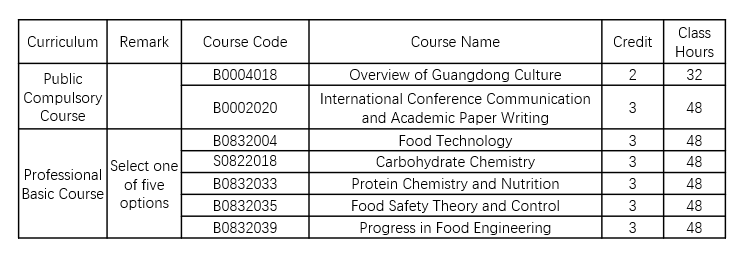
Curriculum: