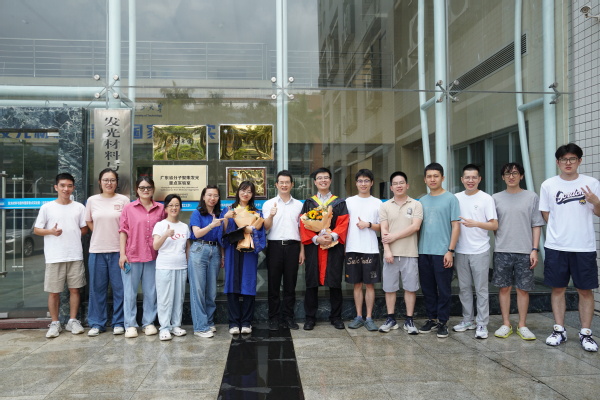
Laboratory Overview
Since 2011, the Wu Hongbin team has been relying on the construction of the National Key Laboratory of Luminescent Materials and Devices to carry out basic scientific research on organic semiconductor optoelectronic devices in response to the country's major strategic needs in the fields of new displays, renewable energy, infrared luminescence and detection. Focusing on solving interdisciplinary common scientific problems, achieving original breakthroughs, and promoting the intersection and integration of disciplines such as organic optoelectronic functional materials, optoelectronics, and semiconductor device physics.
Currently in Nature Photonics, Nature Review Physics, Nature Energy, Advanced Materials, Energy & Environmental Science, Publish multiple papers in top international journals. The achievement has been cited over 27000 times, with the highest single article being cited over 3900 times. More than 20 doctoral graduates, over 10 master's graduates, and 5 postdoctoral fellows have been trained cumulatively.
research field
Organic semiconductor optoelectronic devices (light-emitting diodes, solar cells, photodetectors, and lasers).
Main research features and advantages
Combining theory with experiment, study the detailed equilibrium principle, carrier and exciton dynamics, optical mode distribution, exciton dynamics, and photo generated carrier dynamics in organic optoelectronic devices. Equipped with complete semiconductor device preparation and characterization equipment, such as inert gas glove box, transient optoelectronic testing system, Fourier transform infrared photocurrent spectrometer, impedance analyzer, and fiber optic spectrometer (350-1700 nm), etc.
Main research achievements
1. Propose a novel inverted device structure that enhances the photon absorption and photogenerated carrier collection efficiency of polymer solar cells, breaking the world record for energy conversion efficiency reported in scientific literature [1,2].
2. It is proposed to suppress the non radiative recombination loss of organic semiconductors by reducing energy disorder, so as to reduce the photon energy loss of organic photovoltaic devices to a level equivalent to the optimal monocrystalline silicon devices. The optimal research cell efficiency table of the National Renewable Energy Laboratory (NREL) in the United States has been refreshed multiple times, and the relationship between energy disorder, a micro material property parameter, and device open circuit voltage, a macro device parameter, has been elucidated [3-4].
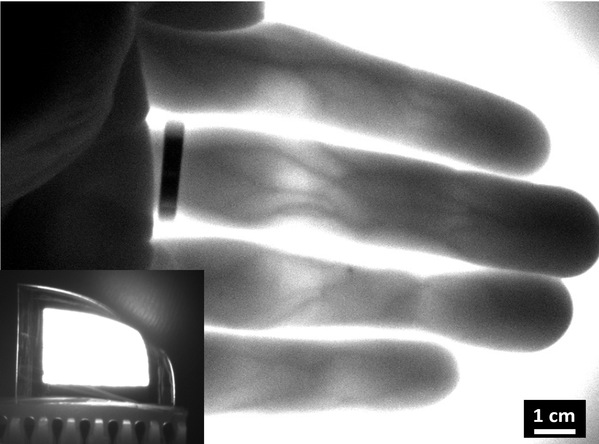
3. Based on the semiconductor absorption emission reciprocal relationship, excellent short wave infrared electroluminescence properties of organic condensed ring electron acceptor materials have been discovered. The prepared luminescent device has a radiation flux density 60 times higher than the optimal value reported in previous literature [5], leading to a new chapter in organic infrared photoelectron research.
Future Development Plan
In the next few years, we will focus on organic infrared light electronics, especially high brightness organic semiconductor infrared light-emitting devices and their basic and applied research in biomedical imaging, night vision, optical communication, and sensing, exploring scientific approaches to realizing electrically pumped organic laser diode devices.
References
[1] He, Z. et al. Enhanced power-conversion efficiency in polymer solar cells using an inverted device structure. Nat. Photonics 2012, 6, 591-595.
[2] He, Z. et al. Single-junction polymer solar cells with high efficiency and photovoltage. Nat. Photonics 2015, 9, 174-179.
[3] Liu, S. et al. High-efficiency organic solar cells with low non-radiative recombination loss and low energetic disorder. Nat. Photonics 2020, 14, 300-305.
[4] Wang, J. et al. Physical insights into non-fullerene organic photovoltaics. Nat. Rev. Phys. 2024, 6, 365-381.
[5] Xie, Y. et al. Bright short-wavelength infrared organic light-emitting devices. Nat. Photonics 2022, 16, 752-761.