The Laser Spectroscopy Laboratory was established in 2005 and took shape in early 2007. After years of continuous construction, it now has various types of lasers, spectrometers, and weak signal detection instruments. It is a modern laboratory capable of conducting research on laser-induced breakdown spectroscopy (LIBS) and laser-induced fluorescence spectroscopy. Over the years, we have undertaken multiple research projects including the Key Research Program of the Ministry of Science and Technology and the National Natural Science Foundation of China.
The main research direction of the laboratory is LIBS research, based on which elemental analysis of solid, liquid, and gas samples is carried out. Various techniques have been proposed and developed to improve the spectral analysis sensitivity of LIBS, including spark discharge assisted enhancement, laser-induced fluorescence, high repetition rate excitation, novel target enhancement, solid surface microstructure enhancement technology, etc., which have effectively solved the problem of low sensitivity inherent in LIBS and are at the forefront of research in this field both domestically and internationally. Optics Express, an important academic journal in the fields of optics and spectroscopy over the years; Spectochimica Acta Part B:Atomic Spectroscopy; Journal of Analytical Atomic Spectrometry; Applied Spectroscopy; Published over 50 academic papers and applied for more than 10 related patents in journals such as Physics and Optics.
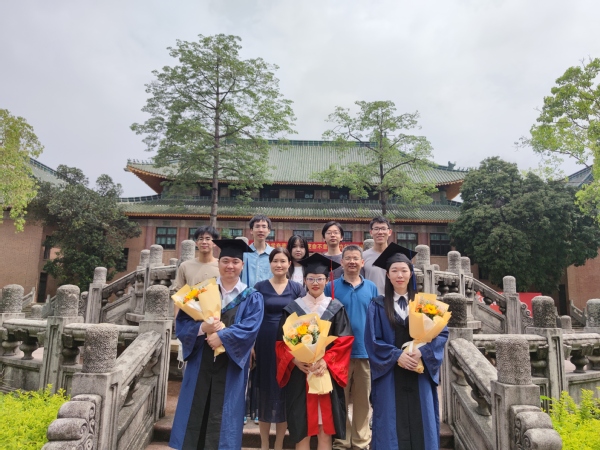
Our laboratory has trained 6 doctoral students and over 30 master's students, cultivating a group of professional scientific and technological innovation talents for the country. In the future, the laboratory will continue to conduct high-sensitivity elemental analysis of different samples based on the new LIBS technology, providing new impetus for the development of environmental monitoring, new materials, and new energy technologies in China.