Over the past decade, the field of spin electrocatalysis has flourished. By regulating electronic spin states to optimize the intrinsic activity of catalysts, it is regarded as one of the important approaches to break through the limitations of scaling relations in heterogeneous catalysis. However, the highly coupled complex physicochemical processes at the surface and interface greatly restrict the in-depth analysis of spin-related mechanisms. There is still widespread controversy regarding the mechanism of magnetic field enhancement effect—whether it originates from mass transport optimization, magnetoresistance effect reduction, or spin polarization bonding (Figure 1). Therefore, there is an urgent need to develop advanced methodologies to obtain reliable experimental observation data, thereby promoting the improvement and development of related theories.
Since 2022, Professor Ju Wenbo's team, funded by the National Natural Science Foundation of China, has been conducting research on spin electrocatalytic characterization methods. The team independently built a spin electrocatalytic flow reaction system with coupled electric field-magnetic field-flow field, effectively suppressing reaction rate fluctuations caused by magnetohydrodynamic effects through forced convection of the electrolyte. Verification experiments using a gold electrode as a model system revealed complex mass transfer behavior under an external magnetic field and fully demonstrated the system's keen ability to capture subtle potential differences (Figure 2). Leveraging the advantages of this system, the research team first captured the butterfly-like hysteresis behavior of reaction potential modulated by magnetic field during a complete magnetization cycle and confirmed that potential changes are independent of reaction kinetics regulation (Figure 3). Furthermore, through the design of magnetically anisotropic catalysts, the linear response region of potential to magnetic field was extracted from the butterfly-like hysteresis response, which was defined as the intrinsic property (κ value) of the catalyst and can be used to judge the composition of the catalyst and its magnetic response characteristics (Figure 4). Related work has been published in Small Methods, a well-known journal in the field of methodology [Small Methods 2025, 9, e01068; Small Methods 2026, 10, e70641]. Since its introduction, this method has been systematically introduced by major teams in the international spin electrocatalysis research field in their latest review papers [Adv. Energy Mater. 2026, 16, e70485].
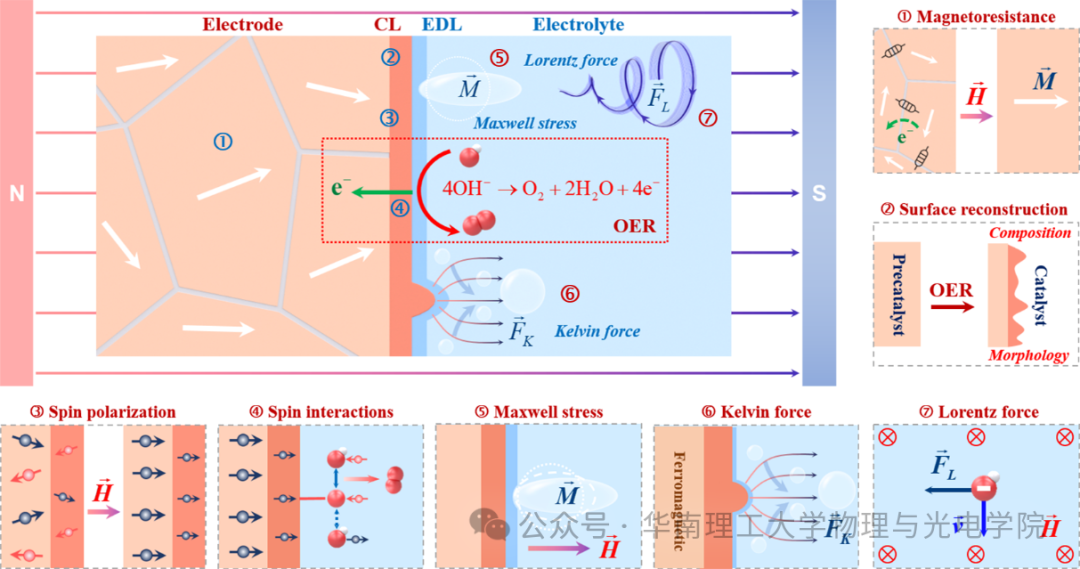
Figure 1 Multiple physicochemical processes at the electrocatalytic interface under an external magnetic field.
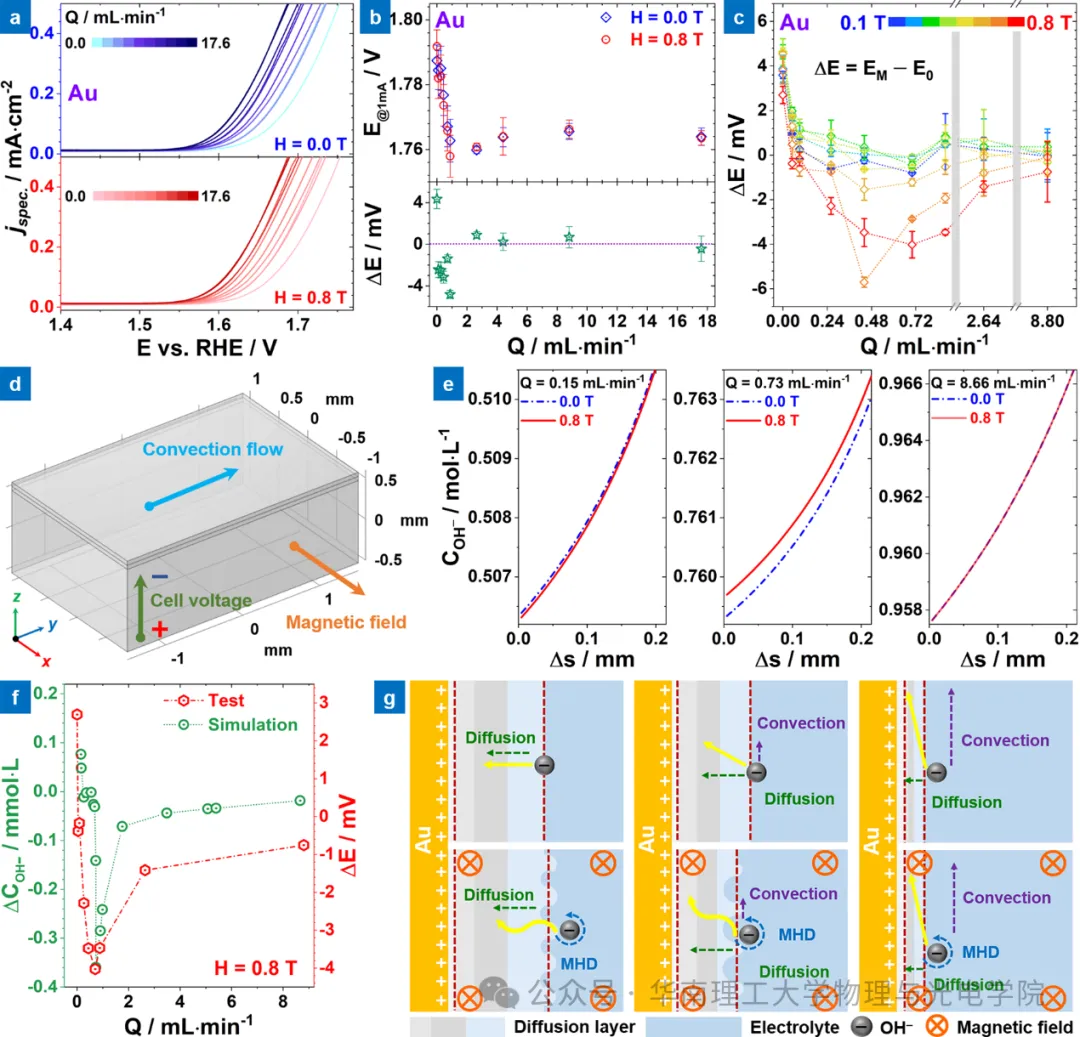
Figure 2: The spin electrocatalytic flow reaction system reveals the complex mass transfer behavior on the surface of the gold electrode under the regulation of an external magnetic field
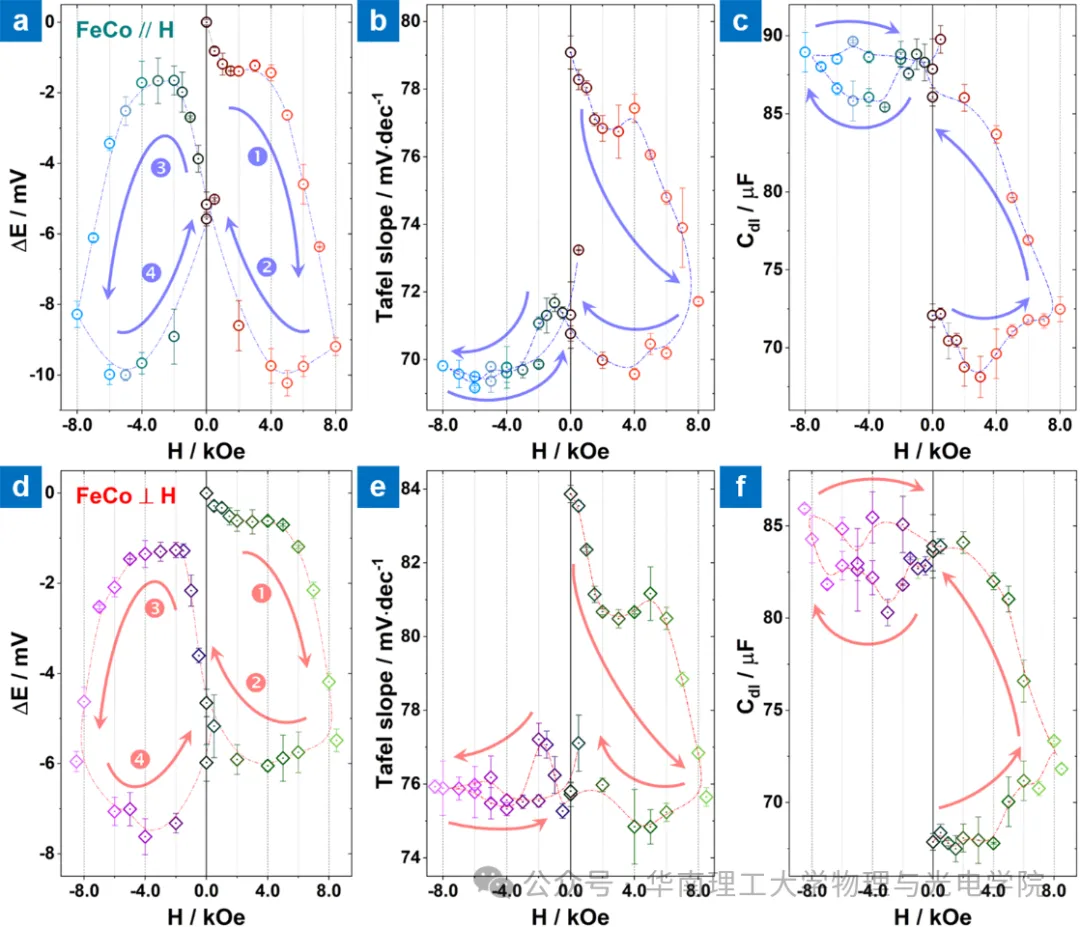
Figure 3 Butterfly-like hysteresis behavior of the response potential of magnetic field regulation during the complete magnetization cycle
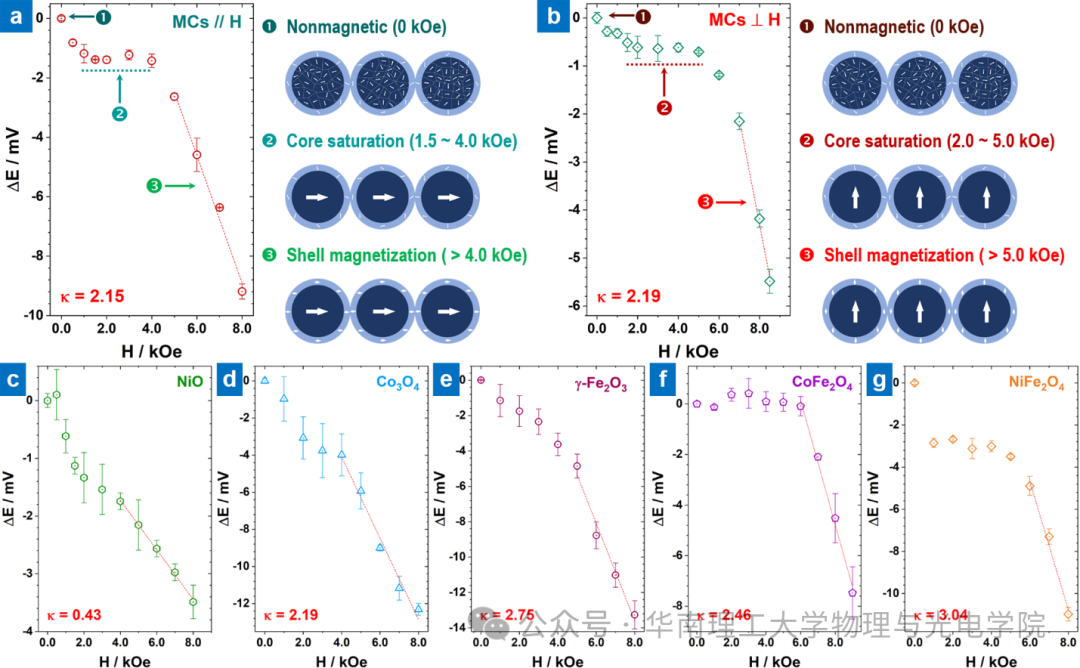
Figure 4: Extraction of the linear response region of potential to magnetic field and the intrinsic parameter κ value, used to characterize the catalyst components and magnetic response characteristics