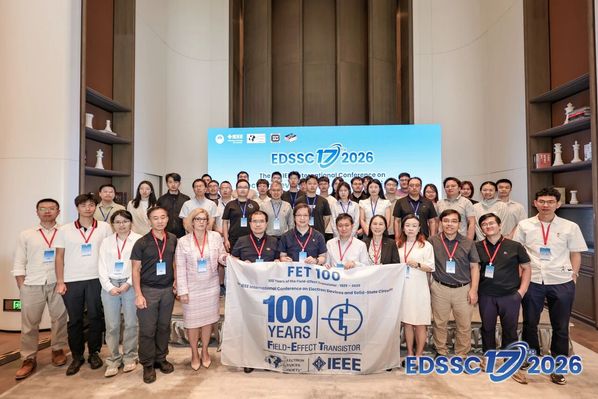
The 17th IEEE Electron Devices and Solid-State Circuits International Conference (EDSSC 2026) took place in Guangzhou from June 9 to 12, 2026. The conference was jointly organized by the IEEE Guangzhou Section, South China University of Technology, and the IEEE Hong Kong Joint Chapter of Electron Devices and Solid-State Circuits, and hosted by the School of Microelectronics/Integrated Circuits of South China University of Technology. Nearly 300 experts and scholars from universities, research institutes, and the integrated circuit and electronic device fields around the world attended the conference. They conducted in-depth exchanges on cutting-edge directions such as nanoelectronics, memory technology, RF and microwave devices, power devices, analog/digital circuits, bioelectronics, EDA, and artificial intelligence, sharing the latest research achievements, exploring technical challenges and industry trends, and providing a high-level international academic exchange forum for the field.
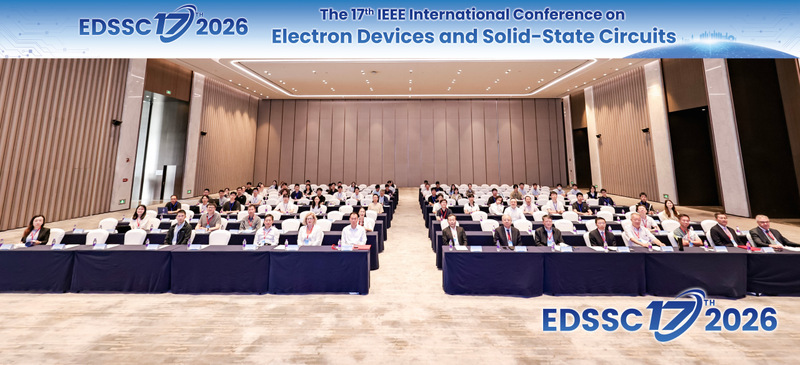
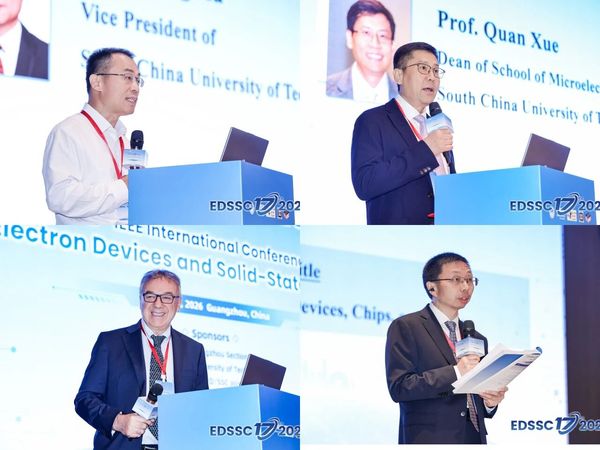
The opening ceremony and keynote speeches were held on the morning of the 10th, chaired by Professor Ioannis (Yiannis) Vardaxoglou, Academic Dean of the School of Microelectronics/Integrated Circuits at South China University of Technology, and Professor Zhang Xiuyin, Executive Vice Dean. Professor Xu Yong, Vice President of South China University of Technology, and Professor Xue Quan, Dean of the School of Microelectronics/Integrated Circuits at South China University of Technology, delivered opening speeches and expressed sincere gratitude to the organizing committee, technical program committee, participants, and volunteers.
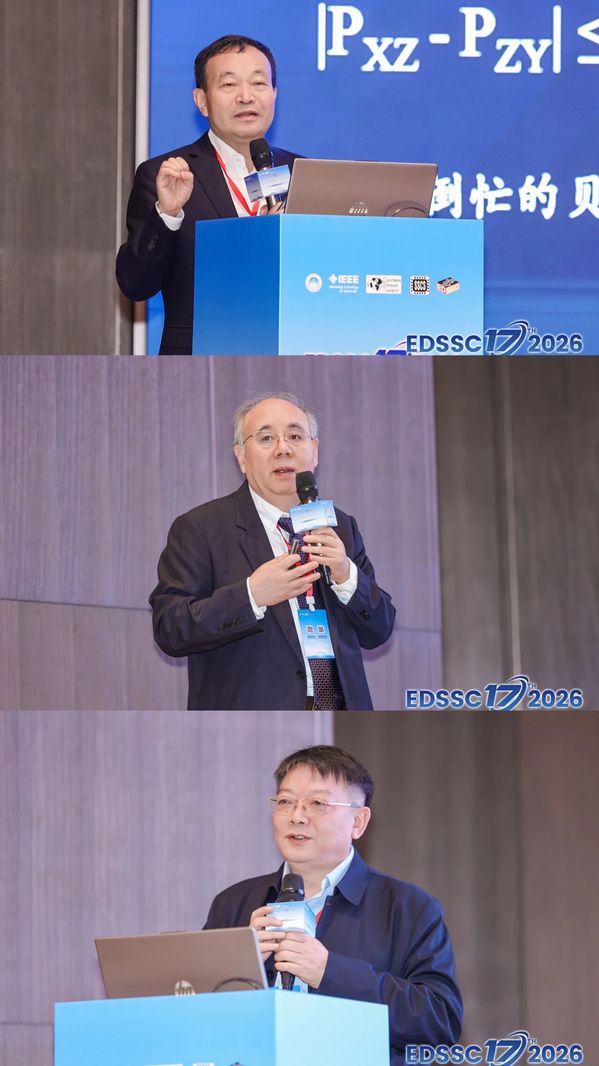
In the keynote session, three leading experts delivered in-depth presentations on three core fields: quantum computing, terahertz chips, and advanced integrated circuit manufacturing processes.
Dapeng Yu, Academician of the Chinese Academy of Sciences, deliveredEverything is Quantizable: Quantum Computing is Everyone's Responsibility. He pointed out that quantum computing, as a disruptive computing technology, will lead a new round of industrial transformation. High-precision scientific instruments and independent core technologies are key to the steady and long-term development of China's quantum industry, and he called on the entire industry to collaboratively promote the implementation of quantum computing.
Wei Hong, Academician of the Chinese Academy of Sciences, presented Research Progress in Terahertz Devices, Chips, and Systems. He reviewed the research progress of terahertz devices, chips, and integrated systems, which can support 6G communications, high-precision radar, non-destructive testing, and other applications.
Tianchun Ye of the Chinese Academy of Sciences spoke on Technology Innovation in Integrated Circuit Transistor Process. He introduced the team's breakthroughs in advanced processes such as 22nm high-k/metal gate, 14nm FinFET, and next-generation GAA transistors, and demonstrated the large-scale application of China's independent transistor technology system in high-end chip mass production.
On the morning of the 11th, the FET 100 special forum commemorating the 100th anniversary of the invention of the transistor continued with exciting sessions, chaired by Professor Mansun Chan of the Hong Kong University of Science and Technology. Three renowned scholars from home and abroad delivered special speeches on the evolution of transistor technology and future development trends in microelectronics, analyzing the current state of the industry and innovation directions from different dimensions.
Professor Tian-Ling Ren of Tsinghua University presented Novel Device and Chip Technologies Driving Moore's Law. Drawing on the research achievements of his team, he analyzed the physical limits of Moore's Law and several breakthrough technologies.
Professor Han Wang of the University of Hong Kong spoke on CMOS Technology in the Nanoscale Era. He reviewed the key process of CMOS evolution from planar structures to FinFETs, highlighting key milestones.
Professor Pui-In Mak of the University of Macaupresented The Frontiers of Microelectronic Engineering over the Next Decade. He discussed the convergence of integrated circuits and artificial intelligence and predicted how microelectronics may change over the next decade.
After the keynote speeches, Associate Professor Ma Zichao of the School of Microelectronics/Integrated Circuits at South China University of Technology moderated a special Panel discussion. Dr. Eleni Makarona from NCSR Demokritos in Greece, Professor Yang Chai from the Hong Kong Polytechnic University, Professor Han Wang from the University of Hong Kong, and Professor Pui-In Mak from the University of Macau were invited as guests to share opinions and conduct in-depth discussions on three topics: The Evolution of FETs in a System-Driven Era, What Will Guide the Next Phase of Semiconductor Innovation, and Advice for Early-Career Researchers.
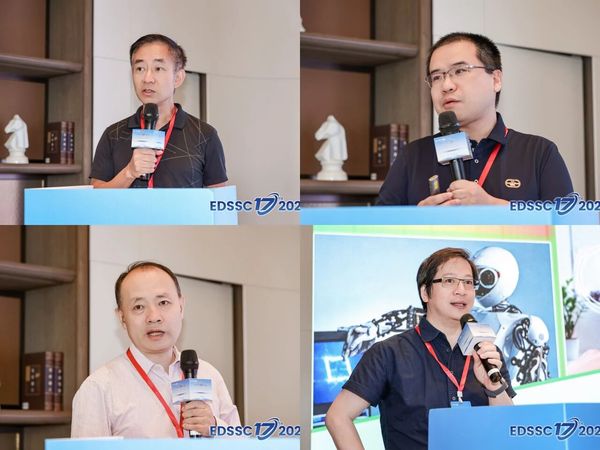
The conference featured a total of 20 parallel thematic sessions, two poster exchange sessions, and an industry exhibition and exchange area throughout the event. The sessions covered all subfields of electronic devices and solid-state circuits. A total of 31 invited experts and 72 oral presentation scholars took the stage, addressing topics such as digital and memory circuits, ADC and power management circuits, nanoelectronics, memory devices and technology, bio and sensing circuits and devices, analog and communication circuits, RF and microwave circuits, integrated silicon photonics and high-performance photodetectors, wide-bandgap semiconductors, novel sensors and neuromorphic devices, nanoelectronics, and process design and device modeling. They presented the latest research achievements, exchanging solutions to technical challenges, and sparked new academic ideas. The sessions were highly interactive.
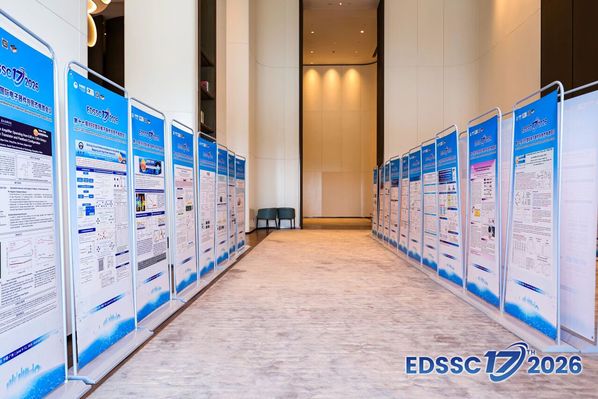
The poster sessions displayed the latest research achievements of 105 scholars, covering RF chips, memories, photodetectors, electrostatic protection, and hardware acceleration architectures. Attendees stopped by, talked with the authors, and discussed experimental methods, simulation results, and technical details, sharing information and expanding cooperation.
More than 10 well-known enterprises in the industry appeared in the industry exchange area. Exhibiting companies brought full-chain products and overall solutions such as semiconductor probe stations, high- and low-temperature testing systems, micro-nano processing equipment, optical inspection instruments, EDA software, 12-inch wafer foundry services, and academic publishing services. Participating scholars, researchers, and enterprise technical backbones conducted face-to-face exchanges and in-depth discussions on topics such as scientific research equipment selection, core technology transformation, project cooperation, and talent cultivation, effectively breaking down barriers between academic research and industrial application and promoting collaborative development among industry, academia, and research.
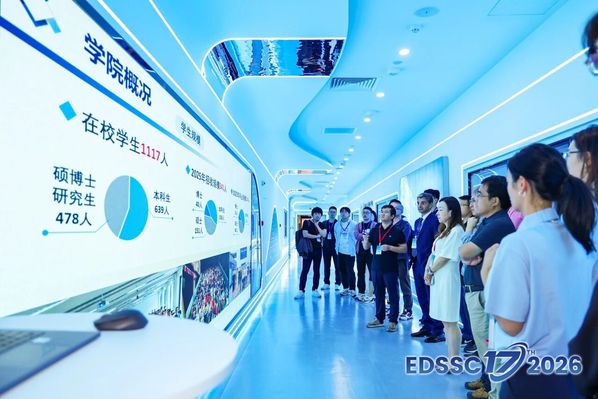
During the conference, the organizer South China University of Technologyarranged visits for experts and scholars to the Micro-Nano Electronics Platform at its Guangzhou International Campus, to learn about the university research platform construction, cutting-edge research and development, and industry-academia-research integration. In addition, facing the frontier directions of integrated circuit design, flexible electronics, and EDA, the conference also invited Professor Pan Jiangpeng from the Chinese University of Hong Kong, Professor Zhang Min from the Chinese University of Hong Kong (Shenzhen), and Professor Zhang Lining from Peking University to conduct Tutorial lectures, helping participants consolidate their professional foundation and broaden their research perspectives.
At the end, the organizing committee selected 18 awardees for Outstanding Paper Nomination, Outstanding Paper, and Outstanding Poste,based on paper innovation, presentation performance, academic value, and poster displays. A closing award ceremony was held to commend the young researchers who performed outstandingly at this conference. The conference encouraged young scholars in electronic devices and solid-state circuits to keep exploring, innovate boldly, and contribute to the field.
The four-day 17th IEEE Electron Devices and Solid-State Circuits International Conference then came to a close. The conference offered a rich and varied program covering cutting-edge technologies across the entire industrial chain of electronic devices, solid-state circuits, and integrated circuits, fully demonstrating the latest research achievements and innovative vitality in this field worldwide. It provided an effective forum for academic exchange among scholars worldwide and promoted cross-regional, cross-institutional research collaboration and industry-academia-research cooperation.
Going forward, the EDSSC series of conferences will remain committed to its academic mission, continue to bring together global research expertise, focus on technological frontiers, address industry challenges, and support high-quality development of the microelectronics, integrated circuit, and electronic device industries in China and worldwide. We look forward to the next EDSSC.