Report Title: Calcium Ion Batteries: New Insights in Multivalent Metal Ion Electrochemistry
Time and Venue: October 23, 2025, 3:00 PM – 5:00 PM, B1-c101
Report Abstract:The growing demand for electric vehicles and stationary energy storage systems calls for the development of next‑generation batteries that combine high energy density, high power, and low cost. Among various post‑lithium‑ion battery technologies, calcium rechargeable batteries utilizing divalent Ca²⁺ ions as charge carriers are expected to offer clear advantages in affordability and potential high energy density. This is due to the abundance of calcium in the Earth’s crust (46,600 ppm compared to 20 ppm for lithium) and the low redox potential of Ca/Ca²⁺ (−2.9 V vs. the standard hydrogen electrode). However, the lack of suitable electrodes remains the Achilles’ heel of calcium rechargeable battery technology. The relatively large ionic radius and divalent nature of Ca ions generally lead to sluggish insertion kinetics in intercalation hosts. Moreover, significant Ca²⁺ intercalation can cause substantial volume changes, triggering premature degradation of electrode structures. In this talk, I will present our recent work on exploring conventional or established electrode materials as high‑performance calcium battery electrodes through novel electrochemical reactions, and discuss the outlook for non‑aqueous calcium rechargeable batteries.
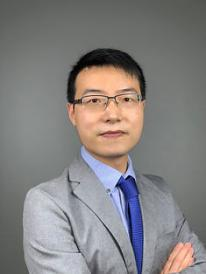
Speaker: Professor Zhenglong Xu
Host: Associate Professor Huaxing Jiang
Biography:Dr. Zhenglong Xu is an Associate Professor in the Department of Industrial and Systems Engineering at The Hong Kong Polytechnic University, a Ph.D. supervisor, and a core member of the University’s Research Institute for Smart Energy and the State Key Laboratory of Ultra‑precision Machining Technology. He also serves as a management committee member of the Deep Space Exploration Research Centre. His research group focuses on advanced energy materials and electrochemical mechanisms, with an emphasis on calcium‑ion batteries, sodium‑ion batteries, lithium‑sulfur batteries, and related fields. He has published over 100 research papers in prestigious international journals such as Chem. Soc. Rev., Nat. Commun., Angew. Chem. Int. Ed., Adv. Mater., Energy Environ. Sci., Adv. Energy Mater., Prog. Mater. Sci., and Nano Today. His work has been cited more than 8,000 times with an h‑index of 46. He has received several honors, including the J. Mater. Chem. A Emerging Investigator Award (2022), the Korea Research Fellowship Award (National Research Foundation of Korea, 2017), Stanford University’s World’s Top 2% Scientists (2021‑2023), and the Best Youth Scholar Award by Microstructures (2024). As principal investigator, he has led more than 20 research projects funded by the National Natural Science Foundation of China, the Hong Kong Research Grants Council, the Hong Kong Innovation and Technology Fund, the Hong Kong Environmental Protection Department, and the Shenzhen Natural Science Fund, among others. He also serves as an (early‑career) editorial board member for several journals in the field of electrochemical energy storage, including EcoMat, Journal of Energy Chemistry, Battery Energy, and Materials Futures.