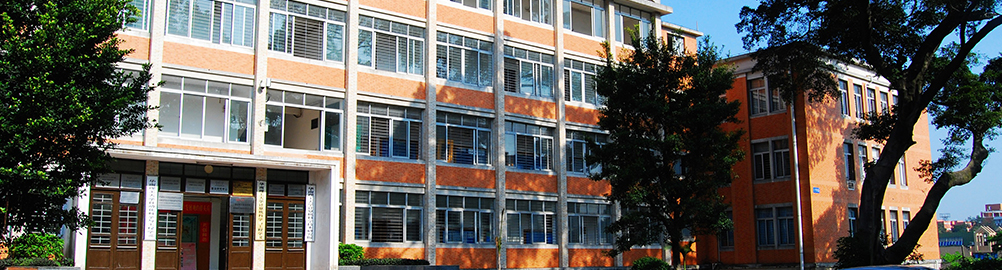
At 9:00 a.m. on November 7, 2026, the 1st Academic Seminar (2026) of the Engineering Research Center of Ministry of Education for Precision Electronic Manufacturing Equipment and the 25th Automatic Control Academic Forum of our college kicked off as scheduled in Room 501, Building 2, South China University of Technology. The seminar was chaired by Professor Yu Liu. Three distinguished experts from home and abroad, Professor Youmin Zhang from Concordia University in Canada, Professor Juan Jose Rodriguez-Andina from the University of Vigo in Spain, and Professor Mo-Yuen Chow from Shanghai Jiao Tong University, were invited as keynote speakers. They delivered a series of high-level academic reports for faculty and students of the college, covering low altitude economy, scientific paper writing, and microgrid energy management.
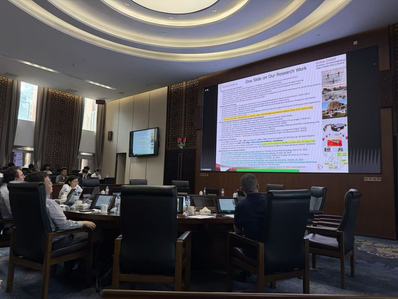
Online talk by Prof. Youmin Zhang
Professor Youmin Zhang delivered a report entitled Low Altitude Economy and Its Key Technical Challenges? Against the backdrop of the rapid global development of the low altitude economy, he analyzed the technical challenges for safe and autonomous flight of unmanned systems. His presentation highlighted secure control of intelligent systems and integrated remote sensing solutions for low altitude economy applications, presented the latest research progress of his team in forest fire detection and suppression scenarios, and systematically illustrated practical approaches of key technologies including fault-and-cyber-attack detection and diagnosis, fault-and-attack-tolerant control, as well as fault-and-attac-tolerant cooperative control for security monitoring missions of unmanned systems. Fellow of IEEE and CSME, Professor Youmin Zhang has long been engaged in research on monitoring and diagnosis, as well as fault-and disturbance-tolerant control for unmanned systems and smart grids. He has been listed among Stanford University’s World’s Top 2% Scientists and recognized as a Clarivate Highly Cited Researcher. His academic achievements rank among the world’s leading levels in research fields such as fault tolerance, aircraft systems and unmanned aerial vehicles. Rooted in real-world industrial demands, the whole report closely combined theories with engineering cases and demonstrated cutting-edge research insights in the field of low altitude unmanned systems.
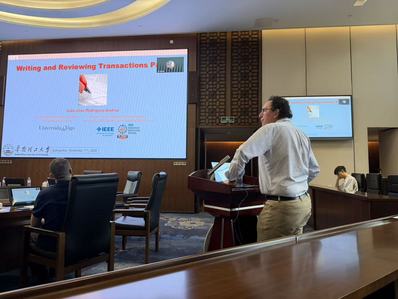
Talk by Prof. Juan Jose Rodriguez‑Andina
Professor Juan Jose Rodriguez-Andina gave a special presentation entitled Writing and Reviewing Transactions Papers. He pointed out that writing high-quality journal papers involves far more than simply presenting research findings, and numerous key points deserve careful consideration throughout the whole workflow ranging from preliminary conception and content drafting to peer review. Centering on core topics such as readers’ expectations for journal papers, target-audience positioning, alignment between journal aims & scope and readership profiles, as well as ethics in academic publishing, the report provided detailed elaborations. From the dual perspectives of manuscript authors and paper reviewers, he shared valuable experience on writing and evaluating high-quality IEEE Transactions papers. A Fellow of the IEEE, Professor Juan Jose Rodriguez-Andina currently serves as President of the IEEE Industrial Electronics Society. He has previously held the position of Editor-in-Chief for several top-tier journals including*IEEE Transactions on Industrial Electronics, and boasts extensive practical experience in journal operation and paper review. His sharing offers highly instructive guidance for faculty and students in writing and publishing high-level scientific and technical papers.
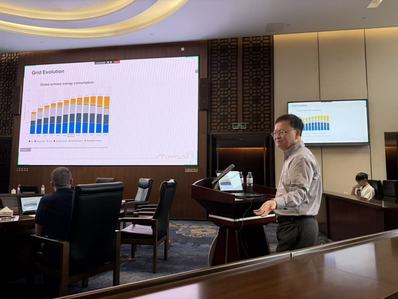
Talk by Prof. Mo-Yuen Chow
Professor Mo-Yuen Chow delivered a report entitled Advanced Dynamic Energy Management Systems (AD-EMS) in Microgrid Distributed Energy Resources Integration. His presentation focused on practical challenges of microgrid energy management in disaster-relief scenarios. Addressing pain points including rapidly changing operating conditions, unpredictable disturbances and stringent timing constraints in disaster-stricken environments, he introduced the Advanced Dynamic Energy Management System for distributed energy resources, illustrated the technical implementation scheme integrated with an AI-driven digita-twin framework, shared relevant research achievements from the ADAC Laboratory at Shanghai Jiao Tong University, and presented the development of the university’s Advanced Interdisciplinary Energy Research Center.
An IEEE Life Fellow and Distinguished Professor at Shanghai Jiao Tong University, Professor Mo-Yuen Chow has long devoted himself to distributed control, microgrids and battery management. Many of his research outcomes have been put into practical application. He is listed among Stanford University’s World’s Top 2% Scientists and ranks among the world’s top 0.05% high-ranking scholars in the field of smart grids. Closely oriented toward emergency-energy application scenarios, his report offers new insights for research on distributed-energy-resource integration in microgrids.
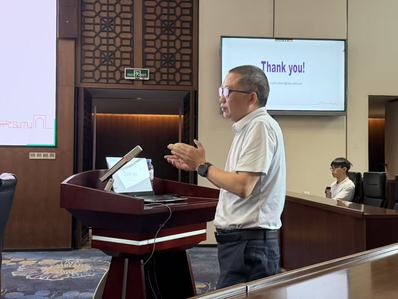
Prof. Yu Liu chaired the seminar
Following the presentations, faculty and students in the audience raised questions enthusiastically. They engaged in in-depth discussions with the three experts covering multiple topics including the engineering implementation of fault-tolerant control for low-altitude unmanned systems, strategies for journal submission, and algorithm optimization for dynamic energy management in microgrids. The experts provided thorough answers to each question raised by the attendees, creating a vibrant and vigorous atmosphere for academic exchange.
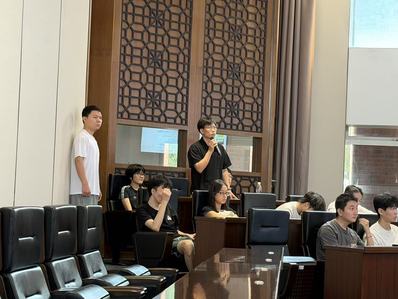
Q&A session by the students
This academic seminar, held in conjunction with the Automatic Control Academic Forum, has built a high-quality platform for face-to-face exchanges between faculty and students of our college and world-leading international experts. Balancing cutting-edge scientific research, improvement of paper writing capabilities and engineering-technology applications, the event helps participants keep abreast of the latest advances in intelligent unmanned systems, microgrid energy systems and academic publishing, thus effectively broadening their academic horizons. It also lays a solid foundation for the Engineering Research Center of Ministry of Education for Precision Electronic Manufacturing Equipment to carry out international academic exchanges and enhance the domestic and global influence of the automatic control discipline. Moving forward, the college together with the Engineering Research Center will continue to focus on frontier directions in automatic control, regularly organize high-level academic events, further improve the construction of academic exchange platforms, strive to foster innovative research-oriented talents, and continuously empower discipline development, scientific-research innovation and the high-quality growth of the Engineering Research Center.