讲座预告 | 俄罗斯科学院泽林斯基有机化学研究所Valentine P. Ananikov院士:Catalysts Activation and Degradation: A Mechanistic Study
报告题目:Catalysts Activation and Degradation: A Mechanistic Study
报 告 人:Valentine P. Ananikov 院士(俄罗斯科学院泽林斯基有机化学研究所、俄罗斯科学院院士)
邀 请 人:秦安军 教授
报告时间:2026年10月31日(周六)上午9:30-11:00
报告地点:北区发光材料与器件全国重点实验室501学术报告厅
报告摘要
Mechanistic analysis of catalytic reactions is often used merely to explain a result that has already been obtained. A more productive approach is to use knowledge of mechanisms for prediction: to trace the transformation of a precatalyst into active forms, to establish their interconversions, and at the same time to identify deactivation pathways. Activation and degradation are interrelated processes that determine the concentration and lifetime of catalytically competent states. The “catalyst” introduced into the reaction mixture is often only the starting point of a dynamic ensemble of molecular complexes, clusters, nanoparticles, ligandless and reservoir forms.
This dynamics is clearly manifested in several types of systems. Metal complexes with phosphine or N-heterocyclic carbene ligands are capable of cleaving the metal–ligand bond and forming condition-dependent “cocktails” of particles. A ligand may accelerate or inhibit the reaction or may not participate in the catalytic cycle; therefore, without establishing the dominant active state, its role may be misinterpreted. In adaptive dynamic homogeneous catalysis, controlled evolution is, by contrast, used functionally: the system adjusts to the reacting molecules and ensures the formation of new C(sp2)–heteroatom and C–C bonds under predictable conditions.
报告人简介
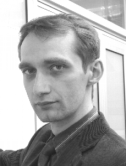
Prof. Dr. Valentine P. Ananikov is Head of Laboratory at the N. D. Zelinsky Institute of Organic Chemistry, Russian Academy of Sciences, and a Professor at Lomonosov Moscow State University. He is an Academician of the Russian Academy of Sciences and a member of Academia Europaea. His research spans organometallic chemistry, catalysis, and the mechanistic understanding of chemical reactions, combining experimental and theoretical approaches to explore complex chemical transformations. His contributions have been recognized through numerous prestigious honors, including the Zelinsky Prize and the International Markovnikov Prize. He also serves on the editorial and advisory boards of leading chemistry journals.