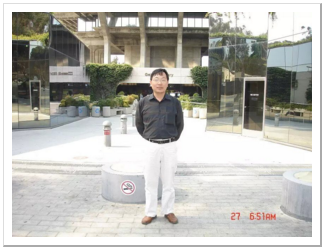
Shenquan Liu
Position: Professor, Doctoral Supervisor Email: mashqliu@scut.edu.cn Research Interests Main Research Focus on nonlinear dynamics, bifurcation, and chaos in neuroscience; neural computation and decision-making. Education and Work Experience Education Experience: 1995 - 1998: Beihang University, School of Science, Ph.D. 1986 - 1989: Nanjing University of Science and Technology, Department of Applied Mathematics, M.S. 1982 - 1986: Henan Normal University, Department of Mathematics, B.S.
Work Experience: 2011 - Present: South China University of Technology, School of Mathematics, Professor, Doctoral Supervisor 2005 - Present: South China University of Technology, School of Mathematics, Professor 2004 - 2005: Beijing Language and Culture University, English Training; University of Sydney, Department of Mathematics, Visiting Scholar 2000 - 2004: South China University of Technology, School of Mathematics, Associate Professor 1998 - 2000: South China University of Technology, School of Mathematics, Lecturer 1989 - 1995: Henan University of Technology, Basic Courses Department, Lecturer
Research Achievement 1997
(1) Liu Shenquan, Lu Qishao. Solving the eikonal equation using the Fife scaling method. Acta Physica Sinica. 1997. Vol.46. 1457-1463. (In Chinese) 1998
(2) Liu Shenquan, Lu Qishao. The spiral wave tip motion in excitable media. Acta Physica Sinica. 1998. Vol.47. 1058-1063. (In Chinese) 1999
(1) Shenquan Liu, Qishao Lu. The motion of organization center of scroll waves in excitable media with single diffusion. Applied Mathematics and Mechanics. 1999. Vol.20(4). 418-425.
(2) Liu Shenquan, Lu Qishao. Gibbs-Thompson relation for the anisotropic phase-field model. Acta Mathematicae Applicatae Sinica. 1999. Vol.22. 107-114. (In Chinese) 2002
(1) Liu Shenquan. Neuronal models of cardiac rhythm. Journal of Medical Biomechanics. 2002. Vol.17(3). 169-173. (In Chinese) 2003
(1) Liu Shenquan, Fan Tao. Action potential on the cardiac surface. Journal of Medical Biomechanics. 2003. Vol.18(4). 222-225. (In Chinese) 2004
(1) Liu Shenquan, Song L. Numerical analysis of the lobster stomatogastric ganglion system. Acta Biophysica Sinica. 2004. Vol.20(3). 217-224. (In Chinese)
(2) Liu Shenquan. Structure of wave front and organization center in excitable media. Applied Mathematics and Mechanics. 2004. Vol.25(8). 911-916. 2005
(1) Shenquan Liu, Tao Fan, Qishao Lu. The Spike Order of the Winnerless Competition (WLC) Model and Its Application to the Inhibition Neural System. International Journal of Nonlinear Sciences and Numerical Simulation. 2005. Vol.6(2). 133-138.
(2) Shenquan Liu, Le Song. The curvature relation of wave front and wave changing under external stimulus. Applied Mathematics and Mechanics. 2005. Vol.26(7). 911-916.
(3) Yan Chuankui, Liu Shenquan. Numerical analysis of a dynamic IP3-Ca oscillation model. Acta Biophysica Sinica. 2005. Vol.21(5). 339-344. (In Chinese) 2006
(1) Liu Shenquan. Chaotic characteristics of the statocyst nervous system in sea snail. Journal of Medical Biomechanics. 2006. Vol.21(1). 38-42. (In Chinese) 2007
(1) Yan Chuankui, Liu Shenquan. Transitional function of DG to CA3 in the hippocampus. Progress in Natural Science. 2007. Vol.17(12). 1436-1444.
(2) Liu Shenquan, Zhang Wanqin. Numerical analysis of the stomatogastric nervous system in crustaceans. Journal of Medical Biomechanics. 2007. Vol.22(1). 1-8. (In Chinese) 2008
(1) Yan Chuankui, Liu Shenquan. A Stochastic Resonance Memory Mechanism of Hippocampus. Advances in Cognitive Neurodynamics ICCN 2007, part I. 2008. 103-107.
(2) Liu Shenquan, Chen Shuchun, Wang Rubin. WLC Analysis of Lamprey Neural System. Advances in Cognitive Neurodynamics ICCN 2007, part III. 2008. 559-563.
(3) Lu Qishao, Liu Shenquan, Liu Feng, Wang Qingyun, Hou Zhonghuai, Zheng Yanhong. Dynamics and function of biological neural network systems. Advances in Mechanics. 2008. 38(6). 766-793. (In Chinese) 2009
(1) Xie Bin, Liu Shenquan, Li Yanfeng, Chen Shuchun. Coding properties and small-world characteristics of biological neural systems. Journal of Biomathematics. 2009. 24(3). 507-512. (In Chinese)
(2) Huang Jiangtao, Liu Shenquan, Ma Zaiguang. Synchronized firing phenomena of neurons in the visual cortex. Chinese Journal of Biomedical Engineering. 2009. Vol.28(2). 238-243. (In Chinese) 2010
(1) Zhang Tongbin, Liu Shenquan, Meng Xiangxiang. Mathematical modeling of tumor angiogenesis. Journal of Biomathematics. 2010. 25(2). 1-11. (In Chinese)
(2) Wang Lei, Liu Shenquan. Comparison of potential firing in neural circuits of the brain. Journal of Dynamics and Control. 2010. Vol.8(3). 1-7. (In Chinese)
(3) Liu Lihua, Liu Shenquan. Numerical study on firing patterns of CA1 pyramidal neurons in the hippocampus. Beijing Biomedical Engineering. 2010. 29(3). 256-260. (In Chinese) 2011
(1) Wang Lei, Liu Shenquan. Neural circuit and its functional roles in cerebellar cortex. Neuroscience Bulletin. 2011. 27(3). 173-184.
(2) Wang Lei, Liu Shenquan, Ou Shanxing. Numerical simulation of neuronal spike patterns in a retinal network model. Neural Regeneration Research. 2011. 6(16). 1254-1260.
(3) Duan Lixia, Yang Zhuoqin, Liu Shenquan, Gong Dunwei. Bursting and two-parameter bifurcation in the Chay neuronal model. Discrete and Continuous Dynamical Systems - Series B. 2011. 16(2). 445-456.
(4) Jiang Rong, Liu Qiang, Liu Quan, Liu Shenquan. A proposal for the morphological classification and nomenclature of neurons. Neural Regeneration Research. 2011. 6(25). 1925-1930.
(5) Ma Dan, Liu Shenquan, Wang Lei. Bifurcation phenomena in a two-compartment neuron model. Beijing Biomedical Engineering. 2011. 30(6). 567-573. (In Chinese) 2012
(1) Liu Xuanliang, Liu Shenquan. Codimension-two bifurcation analysis in two dimensional Hindmarsh Rose model. Nonlinear Dynamics. 2012. 67. 847-857.
(2) Zeng Yu Chao, Han Zengxin, Zeng Wencong, Liu Shenquan. Morphology cluster and prediction of growth of human brain pyramidal neurons. Neural Regeneration Research. 2012. 7(1). 36-40.
(3) Wang L, Liu S, Zhang J, Zeng Y. Burst firing transitions in two-compartment pyramidal neuron induced by the perturbation of membrane capacitance. Neurological Sciences. 2012. 33(3). 595-604.
(4) Wang L, Liu S, Zhang J, Zeng Y. Temperature-dependent transitions of burst firing patterns in a model pyramidal neuron. Neurophysiology. 2012. 44(4). 265-273. 2013
(1) Wang Lei, Liu Shenquan, Zeng Yanjun. Diversity of firing patterns in a two-compartment model neuron: using internal time delay as an independent variable. Neural Network World. 2013. 23(3). 243-254.
(2) Wang Lei, Liu Shenquan, Zhang Linlin, Zeng Yanjun. Dynamical properties of firing patterns in ELL pyramidal neuron under external electric field stimulus. Neurological Sciences. 2013. 34. 1517-1522.
(3) Ye W, Liu S Q, Zeng Y J. Peculiarities of the Tail-Withdrawal Reflex Circuit in Aplysia: a Model Study. Neurophysiology. 2013. 45(5/6). 379-387.
(4) Jiang Xiaofang, Liu Shenquan, Zhang Xuchen. Analysis of a multi-compartment model for medium spiny neurons. Acta Biophysica Sinica. 2013. 29(7). 527-542. (In Chinese)
(5) Li Min, Liu Xuanliang, Liu Shenquan. Bifurcation analysis of a class of Hodgkin-Huxley models. 2013. 28(1). 71-76. (In Chinese) 2014
(1) Ren H, Liu S Q, Zhang X, Zeng Y J. Spike Timing-Dependent Plasticity in CA1 Pyramidal Neuron-Controlling Hippocampal Circuits: a Model Study. Neurophysiology. 2014. 46(4). 300-307.
(2) Ye W, Liu S Q, Liu X L. Synchronization of two electrically coupled inspiratory pacemaker neurons. Science China Technological Sciences. 2014. 57(5). 929-935.
(3) Liu Congmin, Liu Xuanliang, Liu Shenquan. Bifurcation analysis of a Morris-Lecar neuron model. Biological Cybernetics. 2014. 108(1). 75-84.
(4) Guan Y Z, Liu S Q, Zeng Y J. Gradient Trigger Mechanisms Related to Bistability Regimes in a Leech Heartbeat Model. Neurophysiology. 2014. 46(2). 108-114.
(5) Wang Jing, Liu Shenquan, Liu Xuanliang. Quantification of synchronization phenomena in two reciprocally gap-junction coupled bursting pancreatic β-cells. Chaos, Solitons & Fractals. 2014. 68. 65-71.
(6) Zhang X C, Liu S Q, Zeng Y J, Zhan G X. Analysis of Long-Term Depression in the Purkinje Cell Circuit (a Model Study). Neurophysiology. 2014. 46(1). 25-32. 2015
(1) Zhang X C, Liu S Q, Ren H X, Wen Y, Zeng Y J. Dynamic Properties of Purkinje Cells Having Different Electrophysiological Parameters: a Model Study. Neurophysiology. 2015. 47(1). 2-10.
(2) Wang Jing, Liu Shenquan, Liu Xuanliang, Zeng Yanjun. Bifurcation and Firing Patterns of the Pancreatic β-cell. International Journal of Bifurcation and Chaos. 2015. 25(9). 11 pages.
(3) Wang J, Liu S, Wang H, Zeng Y. Dynamical Properties of Firing Patterns in the Huber-Braun Cold Receptor Model in Response to External Current Stimuli. Neural Network World. 2015. 25(6). 641-655.
(4) Ren H X, Liu S Q, Zhang X C, Zeng Y J. Spike Timing-Dependent Plasticity in the CA1 Pyramidal Neuron in a Modeled Hippocampal Circuit. Neurophysiology. 2015. 47(4). 264-270. 2016
(1) Ju N, Liu S Q, Lu B, Jiang X X. Patterns of Leech Heart Interneurons under External Current Stimulation: a Model Study. Neurophysiology. 2016. 1-8.
(2) Wang Jing, Liu Shenquan. The Role of Ions Channels in Firing Dynamic of a Two Compartment Purkinje Cell Model. Advances in Cognitive Neurodynamics. 2016. Chapter 115. 855-860.
(3) Wang Jing, Liu Shenquan, Wang Hong, Ju Niansheng, Zeng Yanjun. A model-based analysis of physiological properties of the striatal medium spiny neuron. Neurological Research. 2016.
(4) Ye Weijie, Liu Shenquan, Yu Yuguo. A neural model of the frontal eye fields with reward-based learning. Neural Networks. 2016. 81. 39-51.
(5) Lu Bo, Liu Shenquan, Liu Xuanliang, Wang Xiaohui. Bifurcation and Spike Adding Transition in Chay-Keizer Model. International Journal of Bifurcation and Chaos. 2016. 26(5). 13 pages.
(6) Wang Jing, Ye Weijie, Liu Shenquan, Jiang Xiaofang. Qualitative and quantitative aspects of synchronization in coupled CA1 pyramidal neurons. Chaos, Solitons & Fractals. 2016. 93. 32-38.
(7) Jiang Xiaofang, Liu Shenquan, Lu Bo, Zeng Yanjun. High-Frequency Stimulation for Parkinson’s Disease and Effects on Pathways in Basal Ganglia Network Model. Journal of Medical and Biological Engineering. 2016. 36(5).
(8) Lu Bo, Liu Shenquan, Liu Xuanliang. Research progress on mixed-mode oscillation dynamics in neuron models. Journal of Dynamics and Control. 2016. 14(6). 481-491. (In Chinese) 2017
(1) Wang Jing, Lu Bo, Liu Shenquan, Jiang Xiaofang. Bursting Types and Bifurcation Analysis in the Pre-Bötzinger Complex Respiratory Rhythm Neuron. International Journal of Bifurcation and Chaos. 2017. 27(1). 1750010.
(2) Lu Bo, Liu Shenquan, Jiang Xiaofang, Wang Xiaohui. The mixed-mode oscillations in Av-Ron-Parnas-Segel model. Discrete and Continuous Dynamical Systems - Series S. 2017. 10(3). 487-504.
(3) Wang, Jing; Liu, Shenquan; Lu, Bo; Zeng, Yanjun. The role of relative membrane capacitance and time delay in cerebellar Purkinje cells. Biomedical Engineering / Biomedizinische Technik. 2017. 62(5). 529-536.
(4) Zhan, Feibiao; Liu, Shenquan. Response of Electrical Activity in an Improved Neuron Model under Electromagnetic Radiation and Noise. Frontiers in Computational Neuroscience. 2017. 11.
(5) Ye, W.; Liu, S.; Liu, X. Transition Modes Between Spiking and Bursting in a Pacemaker Neuron. Neural Network World. 2017. 27(2). 247-258.
(6) Zhang, Xiaohan; Liu, Shenquan; Zhan, Feibiao; Wang, Jing; Jiang, Xiaofang. The Effects of Medium Spiny Neuron Morphological Changes on Basal Ganglia Network under External Electric Field: A Computational Modeling Study. Frontiers in Computational Neuroscience. 2017. 11. 2018
(1) Ye Weijie; Liu Shenquan. A learning-based multi-objective brain decision model. Journal of Dynamics and Control. 2018. 16(1). 72-79. (In Chinese)
(2) Zhang Y, Liu S Q, Xiong D. Respiratory Rhythm in a Simplified Respiratory Network Model. Neurophysiology. 2018. 50(2). 83-92.
(3) Zhang X H, Liu S Q. Stochastic resonance and synchronization behaviors of excitatory-inhibitory small-world network subjected to electromagnetic induction. Chinese Physics B. 2018. 27(4). 040501.
(4) Zhang, Yingteng; Liu, Shenquan. Analysis of structural brain MRI and multi-parameter classification for Alzheimer's disease. Biomedizinische Technik / Biomedical Engineering. 2018. 63(4). 427-437.
(5) Zhan Feibiao; Liu Shenquan; Wang Jing; Lu Bo. Bursting patterns and mixed-mode oscillations in reduced Purkinje model. International Journal of Modern Physics B. 2018. 32(5). 1850043.
(6) Zhang, Ying Teng; Liu, Shen Quan. Individual identification using multi-metric of DTI in Alzheimer's disease and mild cognitive impairment. Chinese Physics B. 2018. 27(8). 088702.
(7) Zhan Feibiao, Liu Shenquan, Zhang Xiaohan, et al. Mixed-mode oscillations and bifurcation analysis in a pituitary model. Nonlinear Dynamics. 2018. 94(2). 807-826. 2019
(1) Zhan Feibiao, Liu Shenquan. A Hénon-like map inspired by the generalized discrete-time FitzHugh–Nagumo model. Nonlinear Dynamics. 2019. 97(4). 2675-2691.
(2) Zhang Xiaohan, Liu Shenquan. Nonlinear delayed feedback control of synchronization in hybrid small-world neuronal networks. Nonlinear Dynamics. 2019. 96(4). 2509-2522.
(3) Wang V Q, Liu Shenquan. A General Model of Ion Passive Transmembrane Transport Based on Ionic Concentration. Frontiers in Computational Neuroscience. 2019. 12. 110.
(4) Yang Shihua, Liu Shenquan, Zhan Feibiao, Zhang Xiaohan. Characteristics of retinal neural circuits based on the STDP learning rule. 2019. 17(2). 127-135. (In Chinese)
(5) Cheng Yuanfen, Liu Shenquan. Firing patterns in a model of mammalian cortical neurons. Chinese Journal of Medical Physics. 2019. 36(7). 846-852. (In Chinese) 2020
(1) Zhang Yingteng, Liu Shenquan, Yu Xiaoli. Individual identification for different age groups using functional connectivity strength. Neurological Sciences. 2020. 41. 417-426.
(2) Liu Yaru, Liu Shenquan, Zhan Feibiao, Zhang Xiaohan. Firing patterns of the modified Hodgkin–Huxley models subject to Taylor’s formula. Physica A: Statistical Mechanics and its Applications. 2020. 547. 124405.
(3) Liu Yaru, Liu Shenquan. Canard-induced mixed-mode oscillations and bifurcation analysis in a reduced 3D pyramidal cell model. Nonlinear Dynamics. 2020. 101. 531-567.
(4) Liu Yaru, Liu Shenquan. Firing patterns of the CA1 pyramidal neuron with geometric singular perturbation a model study. International Journal of Modern Physics B. 2020. 34(32). 2050316.
(5) Song Jian, Liu Shenquan, Zang Jie. An action decision model based on the mechanism of the basal ganglia. Journal of Dynamics and Control. 2020(4). 1-31. (In Chinese)
(6) Zang Jie, Liu Shenquan. The Adjustment of Anterior Forebrain Pathway (AFP) to Birdsong Is Phased during Song Learning and Maintenance. Neural Plasticity - Large-Scale Neuroscience and Neural Plasticity. 2020. 2020. 6647389.
(7) Lin Hui, Liu ShenQuan. Circuit dynamics in lobster stomatogastric ganglion based on winnerless competition network. Physica A: Statistical Mechanics and its Applications. 2020. 560(15). 125107. 2021
(1) Zhang Xiaohan, Liu Lu, Long Guodong, Jiang Jing, Liu Shenquan. Episodic memory governs choices: an RNN-based reinforcement learning model for decision-making task. Neural Networks. 2021. 134. 1-10.
(2) Liu Yaru, Liu Shenquan. Characterizing mixed-mode oscillations shaped by canard and bifurcation structure in a three-dimensional cardiac cell model. Nonlinear Dynamics. 2021. 103. 2881-2902.
(3) Wang Qiqian, Liu Shenquan. Analysis of Hemichannels and Gap Junctions: Application and Extension of the Passive Transmembrane Ion Transport Model. Frontiers in Cellular Neuroscience. 2021. 15. 596953.
(4) Liu Yaru, Liu Shenquan, Bo Lu, Jürgen Kurths. Mixed-mode oscillations for slow-fast perturbed systems. Physica Scripta. 2021. 96(12).
(5) Liu Yaru, Liu Shenquan, Juergen Kurths. Computational singular perturbation method for nonstandard FitzHugh–Nagumo system. EPL (Europhysics Letters). 2021.
(6) Zhang Xiaohan, Liu Shenquan, Chen Zhe Sage. A Geometric Framework for Understanding Dynamic Information Integration in Context-Dependent Computation. iScience. 2021. 24(8). 102919. 2022
(1) Song Jian, Liu Shenquan, Wen Qixiang. Geometric analysis of the spontaneous electrical activity in anterior pituitary corticotrophs. Chaos, Solitons & Fractals. 2022. 161. 112305.
(2) Song Jian, Liu Shenquan, Lin Hui. Model-based Quantitative optimization of deep brain stimulation and prediction of Parkinson's states. Neuroscience. 2022. 498.
(3) Huang Xiaoshan, Liu Shenquan, Meng Pan, Zang Jie. Firing patterns and bifurcation analysis of Purkinje cell dendrite model. International Journal of Modern Physics B. 2022. 36(2).Xiaohan Zhang, Shenquan Liu. Nonlinear delayed feedback control of synchronization in hybrid small-world neuronal networks. Nonlinear Dynamics, 2019, 96(4): 2509-2522.
Others(Awards、Research Grants…etc) Research Grants (Presided over National Natural Science Foundation of China Projects): Grant Number: 19902005 Research Period: 2000-01-01 to 2002-12-31 Funding: 90,000 CNY Grant Number: 10872069 Research Period: 2009-01-01 to 2011-12-31 Funding: 300,000 CNY Grant Number: 11172103 Research Period: 2012-01-01 to 2015-12-31 Funding: 580,000 CNY Grant Number: 11572127 Research Period: 2016-01-01 to 2019-12-31 Funding: 560,000 CNY Grant Number: 11872183 Research Period: 2019-01-01 to 2022-12-31 Funding: 630,000 CNY Awards & Honors: Co-authored books: (1) Wang Qiqian, Liu Shenquan. A Brief Analysis of Mathematical Modeling Approaches. Guangdong Science and Technology Press, 2012. (2) Liu Zhengrong, Yang Qigui, Liu Shenquan, Hong Yi. Mathematical Analysis. Science Press, 2012. (3) Wu Min, Hong Yi, Liu Shenquan. Complex Variables and Functions. South China University of Technology Press, 2009. (4) Hong Yi, Liu Shenquan, Lu Ziqiang, Ma Dongkui. Linear Algebra. South China University of Technology Press, 2005.
Translated (Principal Translator): (1) Liu Shenquan, Hong Yi, Ma Dongkui, Guo Guoxiong, Liu Yongping, et al. (Trans.). Linear Algebra and Its Applications (Original Author: Lay, D.C.). China Machine Press, 2005. (2) Liu Shenquan, Zhang Wanqin, Zhang Tongbin, et al. (Trans.). Calculus (Original Author: Purcell, J.). China Machine Press, 2011.
|
|

