Professor
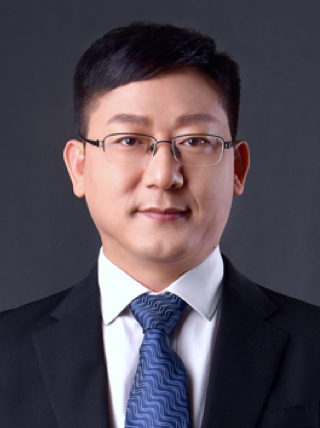
Professor Wang Jun
Tel:020-81182182
E-mail:
mcjwang@scut.edu.cn
Office address:
C1c-808, Guangzhou International Campus, SCUT
Profile
Professor Jun Wang is an internationallyrecognized researcher in biomaterials, precision medicine, drug delivery, andimmunotherapy. His research focuses on developing advanced biomaterial-enabledtechnologies for molecular and cellular engineering, with the goal of creatingnext-generation therapeutic strategies for cancer, autoimmune diseases, andother major health challenges.
He is a recipient of the National ScienceFund for Distinguished Young Scholars and serves as a principal investigator ofa National Key R&D Program of China project. He is a Fellow of theInternational Union of Societies for Biomaterials Science and Engineering(IUSBSE), a Fellow of the Royal Society of Chemistry, and an inaugural Fellowof the Chinese Society for Biomaterials. He has been recognized throughprestigious national talent programs, including the National High-Level TalentsSpecial Support Program, the Ministry of Science and Technology's InnovationLeading Talent Program, and the Chinese Academy of Sciences Hundred Talents Program.
Education and Work Experience:
2018-present: Professorand Founding Dean, School of Biomedical Sciences and Engineering, South ChinaUniversity of Technology
2018-present: DeputyDirector, National Engineering Research Center for Tissue Restoration andReconstruction
2019-2021: Director,Guangdong Provincial Key Laboratory of Biomedical Engineering
2016-2020: Professor,Institutes for Life Sciences, South China University of Technology
2006-2016: Professor,School of Life Sciences, University of Science and Technology of China (USTC);Research Professor, Hefei National Laboratory for Physical Sciences at theMicroscale (under construction); Deputy Director, CAS Key Laboratory of InnateImmunity and Chronic Disease; Deputy Director, USTC Medical Center
Jun-Aug 2006: SeniorVisiting Professor, Faculty of Medicine, University of Rostock, Germany
2004-2006: Professor,Department of Polymer Science and Engineering, University of Science andTechnology of China
2002-2004: PostdoctoralFellow, Department of Biomedical Engineering, Johns Hopkins University Schoolof Medicine
1999-2002: PostdoctoralFellow, Johns Hopkins Singapore
1993-1998: PhD in PolymerChemistry and Physics, Wuhan University
1989-1993:BSc in Chemistry, with a minor in Cell Biology,Wuhan UniversityResearch Directors:
·Biomaterial-enabledreprogramming of therapeutic molecules and cells for precision medicine
·Nanomedicine and Drug deliverysystems
·Immunotherapy and in vivo cellengineering
Research Achievement:
Professor Wang’s research focuses on biomaterial-enabled precisionmedicine, macromolecular therapeutics, and molecular and cellular engineering.His group has pioneered a series of innovative platforms for overcomingbiological barriers and precisely regulating therapeutic molecules and cells,including tumor microenvironment-responsive delivery systems, the CLAN platformfor nucleic acid therapeutics, Nano-Adaptor technologies for modular antibodyengineering and FVLP technologies for in vivo cell engineering. Thesetechnologies have enabled advances in precision cancer therapy, immunemodulation, gene regulation, and in vivo engineering of therapeutic immunecells.
Professor Wang has published more than 280 peer-reviewed papers inleading journals, including Nature Biomedical Engineering, NatureNanotechnology, Science Translational Medicine, Nature Communications,Proceedings of the National Academy of Sciences of the United States ofAmerica, Angewandte Chemie International Edition, Journal of the AmericanChemical Society, Advanced Materials and Science Bulletin. His work hasreceived more than 25,700 citations, with an h-index of 91. He has beenrecognized as a Clarivate Highly Cited Researcher and an Elsevier Highly CitedChinese Researcher.
Professor Wang has filed more than 60 invention patent applications,including nine PCT applications and four U.S. patent applications, with 33granted patents, including one granted U.S. patent.
Graduate Programs and Student Recruitment:
Professor Wang recruits master's anddoctoral students in the following programs:
· Biomedical Engineering(research master's and PhD)
· Materials and ChemicalEngineering (Doctor of Engineering)
· Biology (research master's andPhD)
· Biology and Medicine(professional master's and Doctor of Engineering)
Selected Honors and Awards:
· Second Prize, National NaturalScience Award (2025, 2015)
· First Prize, GuangdongProvincial Science and Technology Award (2021, 2014)
· First Prize, Ministry ofEducation Natural Science Award (2014)
· Second Prize, Science andTechnology Award, Chinese Society for Biomaterials (2019)
· Outstanding Contribution Awardon Polymeric Biomaterials, Second Conference on Biomedical Polymer Materials ofChinese Society for Biomaterials (2023)
· First Prize, GuangdongProvincial Award for Outstanding Teaching Achievement in Higher Education(Postgraduate Education) (2025)
Academic and Professional Service:
· Associate Editor, Biomaterials
· Editorial Board Member,Advanced Healthcare Materials, Acta Biomaterialia, Journal of ControlledRelease, Polymer Science & Technology and Aggregate
·Advisory Editorial BoardMember, Biomaterials Science and ChemNanoMat
· Executive DeputyEditor-in-Chief, book series Biomaterials Science and Engineering
· Deputy Editor-in-Chief,inaugural Editorial Board on Drug Regulatory Science and Modern PharmaceuticalAdministration, China Health Standard Management
· Executive Council Member,Chinese Society for Biomaterials
· Chair, Branch of Intelligentand Biomimetic Biomaterials, Chinese Society for Biomaterials
· Founding Member, ChineseAmerican Society of Nanomedicine and Nanobiotechnology
List of representative papers:
1.Ya-Nan Fan, LongZhu, Yu-Xin Qing, Si-Yi Ye, Qian-Ni Ye, Xiao-Yi Huang, Dong-Kun Zhao, Tai-YuTian, Fang-Chao Li, Guan-Rong Yan, Xian-Zhu Yang, Song Shen*, Jun Wang*, Engineering Multi-SpecificNano-Antibodies for Cancer Immunotherapy, Nature Biomedical Engineering, 2025 9, 2124–2140
2.Shi-Kun Zhou#,Jing-Tong Luo#, Yi-Fang Chen, Zi-Dong Lu, Qiu-Hong Jian, Shui-QingJiang, Jing Li, Xue-Qin Zhang, Xin-Yu Tan, Xian-Zhu Yang, Cong-Fei Xu*, JunWang*, Muscle-specific Gene Editing Therapy via Mammalian Fusogen-DirectedVirus-Like Particles, NatureCommunications, 2025, 16, 9145.
3.Yue Wang#,Min Yang#, Bao-Yue Zhang, Gui Zhao, Shi-Kun Zhou, Zi-Dong Lu,Cong-Fei Xu*, Jun Wang*, Leveraging T-Cell-Specific Fusogenicity of HIVfor invivo mRNA Delivery to Produce Human CAR-T Cells, Cell Biomaterials, 2025, 1, 100011
4.Yueqiang Zhu,Chaoran Chen, Junbin Chen, Miao Su, Wanling Huang, Sichen Liu, Mingda Yang, ChengqiongMao, Song Shen*, Xianzhu Yang*, JunWang*, In Vivo Generation and Manipulation of CAR-T-mimicking Cells viaMagnetic Bispecific Nano-antibody for Solid Tumor Therapy, Advanced Materials, 2026, 10.1002/adma.202520493
5.Qian-Ni Ye, LongZhu, Jie Liang, Dong-Kun Zhao, Tai-Yu Tian, Ya-Nan Fan, Si-Yi Ye, Hua Liu,Xiao-Yi Haung, Zhi-Ting Cao, Song Shen*, Jun Wang*, Orchestrating NK and T cells via tri-specific nano-antibodies forsynergistic antitumor immunity, Nature Communications, 2024, 15, 6211
6.Gui Zhao#, Yue Zhang#, Cong-Fei Xu*, Jun Wang*, In Vivo Production of CAR-T Cells Using Virus-mimetic FusogenicNanovesicles, Science Bulletin, 2024, 69, 354-366
7.Yansong Dong#,Ye Liu#, Yalan Tu, Youyong Yuan*, Jun Wang*, AIEgens Cross-linked Iron Oxide Nanoparticles Synchronously AmplifyBimodal Imaging Signals in Situ by Tumor Acidity-Mediated Click Reaction, Angewandte Chemie International Edition, 2023, 62, e202310975
8.Yue Wang#,Shi-Kun Zhou#, Yan Wang, Zi-Dong Lu, Yue Zhang, Cong-Fei Xu*, Jun Wang*, Engineering Tumor-SpecificGene Nanomedicine to Recruit and Activate T Cells for Enhanced Immunotherapy, Nature Communications, 2023, 14, 1993
9.Mingdong Liu#, Liangqi Huang#, Weinan Zhang#,Xiaochuan Wang, Yuanyuan Geng, Yuhao Zhang, Li Wang, Wenbin Zhang, Yun-JiaoZhang, Shiyan Xiao*, Yan Bao*, Menghua Xiong*, Jun Wang*, ATransistor-Like pH-Sensitive Nanodetergent for Selective Cancer Therapy, Nature Nanotechnology, 2022, 17, 541-551
10.Shasha He#, Jing Liu#, Chi Zhang, Jun Wang*, Kanyi Pu*, SemiconductingPolymer Nano-regulators with Cascading Activation for Photodynamic CancerImmunotherapy, Angewandte Chemie International Edition, 2022, 61, e202116669
11.Jing Liu#, Shasha He#, Yingli Luo, Yue Zhang,Xiaojiao Du, Cheng Xu, Kanyi Pu*, Jun Wang*, Tumor-Microenvironment-Activatable Polymer Nano-Immunomodulator forPrecision Cancer Photoimmunotherapy, Advanced Materials, 2022, 34, 2106654
12.Jing Liu, Si Si Liew, Jun Wang*,Kanyi Pu*, Bioinspired and Biomimetic Delivery Platforms for Cancer Vaccines, AdvancedMaterials, 2022, 34,2103790
13. Cheng-Tao Jiang#,Kai-Ge Chen#, An Liu, Hua Huang, Ya-Nan Fan, Dong-Kun Zhao, Qian-NiYe, Hou-Bing Zhang, Cong-Fei Xu, Song Shen*, Meng-Hua Xiong, Jin-Zhi Du,Xian-Zhu Yang, Jun Wang*, ImmunomodulatingNano-Adaptors Potentiate Antibody-Based Cancer Immunotherapy, Nature Communications, 2021, 12, 1359
14.Shuya Li#, Min Li#, Shaohu Huo, QinWang, Jing Chen, Shenggang Ding, Zhutian Zeng, Wenchao Zhou, Yucai Wang*, JunWang*, Voluntary-Opsonization-Enabled Precision Nanomedicinesfor Inflammation Treatment, Advanced Materials, 2021, 33,2006160
15. Yansong Dong, Yalan Tu, Kewei Wang, Congfei Xu, YouyongYuan*, Jun Wang*, A General Strategy for Macrotheranostic Prodrug Activation: Synergybetween the Acidic Tumor Microenvironment and Bioorthogonal Chemistry, Angewandte Chemie International Edition, 2020, 59, 7168-7172
16.Jin-Zhi Du*,Hong-Jun Li, Jun Wang*, Tumor-Acidity Cleavable Maleic Acid Amide (TACMAA): A Powerful Tool forDesigning Smart Nanoparticles to Overcome Delivery Barriers in CancerNanomedicine, Accounts ofChemical Research, 2018, 51,2848-2856
17.Cong-Fei Xu#, Zi-Dong Lu#, Ying-LiLuo, Yang Liu, Zhi-Ting Cao, Song Shen, Hong-Jun Li, Jing Liu, Kai-Ge Chen,Zhi-Yao Chen, Xian-Zhu Yang, Zhen Gu,Jun Wang*, Targeting of NLRP3 Inflammasome withGene Editing for the Amelioration of Inflammatory Diseases, Nature Communications, 2018, 9, 4092
18.Hong-Jun Li#, Jin-Zhi Du#,Xiao-Jiao Du#, Cong-Fei Xu, Chun-Yang Sun, Hong-Xia Wang, Zhi-TingCao, Xian-Zhu Yang, Yan-Hua Zhu, Shu-MingNie*, Jun Wang*, Stimuli-responsive Clustered Nanoparticles for Improved Tumor Penetrationand Therapeutic Efficacy, PNAS, 2016, 113, 4164-4169
19.Chun-Yang Sun#, Yang Liu#, Jin-ZhiDu#, Zhi-Ting Cao, Cong-Fei Xu, JunWang*, Facile Generation of Tumor pH-Labile Linkage-BridgedBlock Copolymers for Chemotherapeutic Delivery, Angewandte Chemie International Edition, 2016, 128,1022-1026
20.Chun-Yang Sun#, Song Shen#,Cong-Fei Xu, Hong-Jun Li, Yang Liu, Zhi-Ting Cao, Xian-Zhu Yang, Jin-Xing Xia, Jun Wang*, TumorAcidity-Sensitive Polymeric Vector for Active Targeted siRNA Delivery, Journal of the American Chemical Society, 2015, 137, 15217–15224
21.Xian-Zhu Yang#, Xiao-Jiao Du#, YangLiu, Yan-Hua Zhu, Yang-Zhong Liu, Ya-Ping Li, Jun Wang*, Rational Design of Polyion ComplexNanoparticles to Overcome Cisplatin Resistance in Cancer Therapy, Advanced Materials, 2014, 26, 931-936
22.You-Yong Yuan#, Chen-Qiong Mao#,Xiao-Jiao Du, Jin-Zhi Du, Feng Wang, JunWang*, Surface Charge Switchable Nanoparticles based onZwitterionic Polymer for Enhanced Drug Delivery to Tumor, Advanced Materials, 2012, 24, 5476-5480
23.Yuan-Zeng Min, Cheng-Qiong Mao, Si-Ming Chen, Guo-Lin Ma,Jun Wang*, Yang-Zhong Liu*, Combating theDrug Resistance of Cisplatin Using a Platinum Prodrug Based Delivery System, Angewandte Chemie-International Edition, 2012, 51, 6742-6747
24.Yan-Dan Yao#, Tian-Meng Sun#,Song-Yin Huang, Shuang Dou, Ling Lin, Jia-Ning Chen, Jian-Bin Ruan, Cheng-QiongMao, Feng-Yan Yu, Mu-Sheng Zeng, Jian-Ye Zang, Qiang Liu, Feng-Xi Su, PeterZhang, Judy Lieberman*, Jun Wang*,Erwei Song*, Targeted Delivery of PLK1-siRNA by ScFv Suppresses Her2+Breast Cancer Growth and Metastasis, Science Translational Medicine, 2012, 4, 130ra48
25.Meng-Hua Xiong#, Yan Bao#, Xian-ZhuYang, Yu-Cai Wang, Bao-Lin Sun*, JunWang*, Lipase-Sensitive Polymeric Triple-Layered Nanogel for“On-Demand” Drug Delivery, Journal of the American Chemical Society, 2012, 134, 4355-4362
The Detail information of articles:http://www.researcherid.com/rid/F-9033-2011
