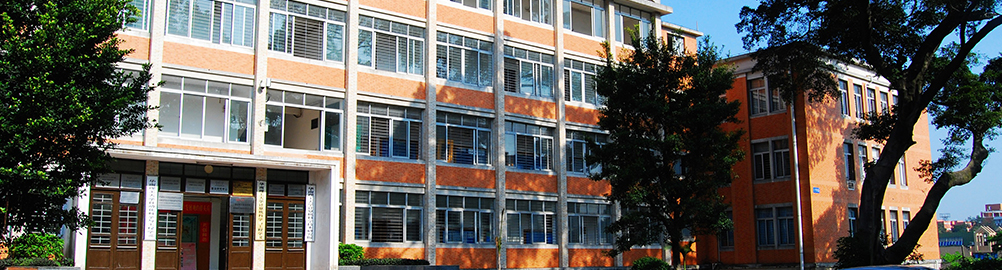
At 4 p.m. on October 15, 2026, the 23rd Academic Forum of our college was held as scheduled in the meeting room on the 6th floor of Building 3. The forum specially invited Yan Wu, Chief Scientist and Deputy Director of the Robotics and Autonomous Systems Department, Institute for Infocomm Research, Agency for Science, Technology and Research (A*STAR), Singapore, to deliver a keynote speech. He presented a high-quality academic sharing on the frontiers of robotics and intelligence to faculty and students of the college. The lecture was hosted by Assistant Professor Junwu Weng.
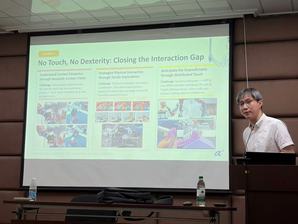
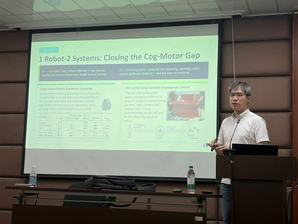
Entitled Mind the Gap: between the Brain and the World, Yan Wu’s presentation systematically interpreted key technologies and latest research advances in robotic cognitive interaction and physical manipulation. He pointed out that enabling seamless and efficient interaction between the intelligent system, the “brain”, and the complex and dynamic physical environment, the “world”, stands as a core challenge to be addressed in the field of robotics. Centering on this issue, combined with his team’s research achievements in service and assistive robots, dexterous manipulation and robot learning, he elaborated on technical approaches to realizing deep human-robot collaboration and autonomous learning via tactile perception. The whole report featured clear logic and solid case studies. He translated sophisticated frontier theories into accessible knowledge, demonstrating profound academic attainments and abundant research experience.
After the report, faculty and students actively raised questions. They engaged in in-depth discussions with Yan Wu on topics including the balance between precision and efficiency of tactile sensors, and discrepancies between simulated data and real-world data in practical tasks. Yan Wu responded carefully to each query from a professional perspective, fostering a vibrant atmosphere of academic exchange.
This academic forum has built a high-quality platform for our faculty and students to communicate face-to-face with world-leading experts. It helps participants keep abreast of cutting-edge trends in robot learning and human-robot interaction and broadens their academic horizons. Meanwhile, it lays a solid foundation for the college to further international academic cooperation and raise the domestic and global influence of the automation discipline. Moving forward, the college will keep a close eye on the frontiers of automation, regularly organize high-level academic events, continuously optimize academic exchange platforms, strive to cultivate innovative research talents, and fuel the disciplinary development and research innovation.