


South China University of Technology·Guangzhou·China
2025.12.28–2026.01.02
Sponsor: Fractional System and Control Professional Committee of Chinese Association of Automation
Organizer: South China University of Technology
Symposium Program List· 2025.12.29 |
Opening Ceremony Time GMT+8: 9:00-9:10 Location: 11th Floor, Center Conference Room, Liwu Building | Host
Ying Luo |
Time GMT+8 | Presenter | Presentation Title |
09:10-09:55 | Prof. YangQuan Chen, University of California. Merced, USA | Roughness-informed machine learning by fractal and fractional calculi |
09:55-10:40 | Prof. Xiaohong Wang, South China University of Technology, China | Disturbance and Vibration Suppression of A Dual-Inertia Servo System with Fractional-Order Model |
10:40-10:55 | Break |
10:55-11:40 | Dr. Shaohua Wang The Chinese University of Hong Kong, China | Fractional-order resetting-based active disturbance rejection control for permanent magnet synchronous motors |
12:00-02:00 | Lunch |
14:15-15:05 | Prof. Stephane Victor, University of Bordeaux, France | From system identification to optimal and robust control of fractional systems: Application to thermal systems |
15:05-15:50 | Prof. Ying Luo, South China University of Technology, China | Fractional order Motion Systems and Control with Application Prospects in Exoskeleton Robotics |
15:50-16:00 | Closing ceremony |
Keynote Report 1:Roughness-informed machine learning by fractal and fractional calculi
Abstract: This talk advocates that machine learning ought to be not only “physics informed”but also “complexity-informed” so that smarter machine learning becomes possible. After introducing the triangle of “inverse power law - complexity -fractional calculus” we show that both fractal calculus and fractional calculus are mathematical vehicle for tail behavior characterization therefore the exponential law (EL, integer order calculus), stretched exponential law (SEL, fractal calculus) and
inverse power law (IPL, fractional calculus) are in a unified view. We then show that roughness concept is important in machine learning when loss landscape roughness is considered. Roughness in the sense of statistics, manifold, geometrical etc. can be quantified by using fractal and fractional calculi. Machine learning algorithms that are aware of roughness and are informed by roughness can perform much better than
those conventional machine learning algorithms that do not respect the complexity or roughness information. The take home message is simple: AI/machine learning and fractional calculus should marry.
Speaker Biography:
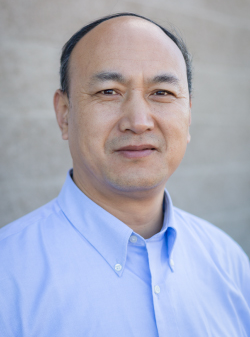 Prof. YangQuan Chen earned his Ph.D. from Nanyang Technological University, Singapore, in 1998. He had been a faculty of Electrical Engineering at Utah State University (USU) from 2000-12. He joined the School of Engineering, University of California, Merced (UCM) in summer 2012 teaching “Mechatronics”, “Engineering Service Learning” and “Unmanned Aerial Systems” for undergraduates; “Fractional Order Mechanics”, “Linear Multivariable Control”, “Nonlinear Controls” and “Advanced Controls: Optimality and Robustness” for graduates. His research interests include mechatronics for sustainability, cognitive process control (smart control engineering enabled by digital twins), small multi-UAV based cooperative multi-spectral “personal remote sensing”, applied fractional calculus in controls, modeling and complex signal processing; distributed measurement and control of distributed parameter systems with mobile actuator and sensor networks. He received Research of the Year awards from USU (2012) and UCM (2020). He was listed in Highly Cited Researchers by Clarivate Analytics from 2018-2021. His lab websites are
http://mechatronics.ucmerced.edu/
http://www.TheEdgeAI.com
http://methane.ucmerced.edu/
Keynote Report 2:Disturbance and Vibration Suppression of A Dual-Inertia Servo System with Fractional Order Model
Abstract: To enhance the control accuracy of servo systems, this paper proposes a novel control strategy based on a dual-inertia servo model, incorporating a fractional-order approach to improve modeling precision and system performance. First, a sliding mode observer (SMO) is constructed to estimate the system’s state variables. Then, a compensation method is designed to transform the system into a triple-integrator form. Finally, a cascade controller is developed to suppress disturbances and mitigate vibrations. The effectiveness of the proposed strategy is validated through simulation results, which illustrate its superior ability to reduce system disturbances and vibrations.
Speaker Biography:
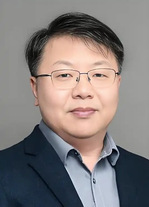 Prof. Xiaohong Wang is currently Professor and Doctoral Supervisor at the School of Automation Science and Engineering, South China University of Technology. Concurrently, he serves as Member of the Technical Committee on Fractional-order Control, Chinese Association of Automation (CAA), Member of the Academic Group on Internet Plus Power System Automation, Chinese Society for Electrical Engineering (CSEE), and Member of the Academic Committee, Guangdong Key Laboratory of Core Technologies for Small Household Appliances.
His primary research interests lie in motor drive technology and its industrial applications in robotics and motion control systems, as well as power electronics technology and its implementations in new energy generation and energy efficiency sectors. Over the past decade, he has authored and co-authored more than 100 peer-reviewed papers published in prestigious domestic and international journals and conference proceedings, and secured over 50 granted patents and software copyrights. He also acts as regular reviewer for more than 20 renowned academic publications and conferences, including International Journal of Electrical Power and Energy Systems, ISA Transactions, journals sponsored by the International Federation of Automatic Control (IFAC), conferences organized by the American Society of Mechanical Engineers (ASME), and Control Theory & Applications. He has led over 20 research projects at national, provincial, municipal, and industrial levels, including projects funded by the National Natural Science Foundation of China (NSFC), Major Science and Technology Special Projects of Guangdong Province, Key Program of Natural Science Foundation of Guangdong Province, Major Science and Technology Special Projects of Guangzhou Municipality, and collaborative projects with leading industrial partners. His research achievements have been recognized with one First-Class Award of Guangdong Technical Invention Prize, one First-Class Award of Guangdong Higher Education Teaching Achievement Prize, and one First-Class Award of Dongguan Science and Technology Progress Prize. Through deep industry-academia collaboration, a portfolio of his technological innovations has been successfully transferred and commercialized by partnering enterprises.
Keynote Report 3:Fractional Order Reset Active Disturbance Rejection Control for Permanent Magnet Synchronous Motors
Abstract: Permanent magnet synchronous motors (PMSMs) are widely used in high-performance servo systems, yet conventional linear controllers are constrained by fundamental linear trade-offs, making it difficult to satisfy competing requirements simultaneously. This talk presents a fractional-order full-reset active disturbance rejection control strategy for PMSM speed regulation (FOFR-ADRC). The core design is a novel fractional-order full-reset Clegg integrator, which is embedded into the ADRC framework together with a parameter optimization and tuning procedure. The proposed approach mitigates oscillation issues commonly encountered in fractional-order reset integrators and avoids the limit-cycle behavior often associated with reset control. Frequency-domain analysis indicates reduced phase lag with increased control bandwidth. Experiments on a PMSM platform show consistent improvements over representative baseline controllers in transient response, overshoot suppression, disturbance rejection, and robustness to parameter variations. Overall, FOFR-ADRC advances PMSM speed control toward higher bandwidth, lower overshoot, and stronger disturbance rejection.
Speaker Biography:
 Dr. Shaohua Wang received the B.Eng. degree in Vehicle Engineering from Hunan University in 2017, the M.Eng. degree in Mechanical Engineering from Hunan University in 2020, and the Ph.D. degree in Mechanical Engineering from Huazhong University of Science and Technology in 2024. Since 2025, he has been a Postdoctoral Researcher at the Hong Kong Centre for Logistics Robotics (The Chinese University of Hong Kong). His research focuses on PMSM servo drives and control, high-performance motion control, active disturbance rejection control (ADRC), fractional-order control, and nonlinear reset control. He has participated in multiple projects, and has led R&D on both hardware/software design and control algorithm development for PMSM servo drives. He has published several first-author papers in journals including IEEE Transactions on Industrial Electronics, ISA Transactions, and Asian Journal of Control. His research interests include drive systems for industrial/service and logistics robots, high-performance servo and motion control, and the engineering application and further development of fractional-order/ADRC/nonlinear reset control theories for electromechanical systems.
Keynote Report 4:From system identification to optimal and robust control of fractional systems: Application to thermal systems
Abstract: The general theme of the work enables to handle a fractional system, from system identification to robust control. Flatness principles tackle path planning unless knowing the system model, hence the system parameter identification necessity. The principal contribution of this conference deals with system identification by non-integer models and with robust path tracking by the use of flatness principles for fractional models. First, the definitions and properties of a fractional operator and also the various representation methods of a fractional system. The stability theorem is also brought to mind. Fractional polynomial and fractional polynomial matrix algebras are introduced for the extension of flatness principles for fractional systems.Then, non-integer model identification is proposed after a state of the art on system identification by non-integer model. Two optimal (in variance and bias sense) estimators are put forward: one, when considering a known model structure with fixed differentiating orders, and another one by combining nonlinear programming technics for the optimization of coefficients and differentiation orders.Motion planning is then established through the extension of flatness principles to fractional systems. Flatness of linear fractional systems are studied while considering different approaches such as transfer functions or pseudo-state-space representations with polynomial matrices. Path tracking robustness is ensured with CRONE control. Finally, all contributions are applied on a real thermal fractional application:
- first, heat rod models linking temperature to heat flux density are obtained from system identification using fractional order systems;
- then, motion planning of the nominal system is achieved through an open-loop control stemming from flatness principles (usually, each model should have its own control reference in order to follow a desired output reference);
- thanks to a third-generation CRONE controller, the nominal control reference is sufficient, and robust control is also guaranteed regarding model uncertainties and input/output disturbances.
Speaker Biography:
 Prof. Stephane Victor:(IEEE and IFAC affiliate) was born in Germany in 1983. He graduated from the ENSEIRB Engineering School, Talence, France, and the Ecole Polytechnique de Montréal Engineering School, Montreal, QC, Canada, in 2006. He received his M.Sc. and Ph.D. degrees in automatic control and the Accreditation to Supervise Research (HDR) from the Université de Bordeaux, Talence, in 2006, 2010, and 2022, respectively. He joined the CRONE Team, IMS Laboratory, Université de Bordeaux, in 2006, where he is currently an Associate Professor. His research interests include fractional calculus, automatic control, system identification, thermal systems, autonomous vehicle, trajectory planning, and flatness.
Keynote Report 5:Fractional order Motion Systems and Control with Application Prospects in Exoskeleton Robotics
Abstract: As global technological advancements progress rapidly, motion system control technology is currently developing towards more stable, precise, and intelligent extreme performance, posing new challenges to traditional motion system and control technologies in terms of fine optimization, performance enhancement, follow-up, and disturbance rejection. Fractional calculus has gained widespread attention in the field of motion system modeling and control because it can achieve fine representation, with advantages such as adjustable order and scale subdivision. This report summarizes the main research content and results of our group in exploring new theories and methods for fractional-order modeling and control of motion systems. Based on the fine representation advantages of fractional-order theory, precise fractional-order models for the mechanical, electrical, thermal, and coupled characteristics of precision motion systems are established, and new methods for fractional-order system parameter identification are proposed. Using the advantages of adjustable order and scale subdivision in fractional calculus, a series of fractional-order controller structures and time-frequency integrated system design schemes are presented. The stability of typical precision fractional-order motion systems, breaking through the performance limits of traditional motion-following and disturbance-rejection control are demonstrated. The application prospectives in exoskeleton robotics are also included.
Speaker Biography:
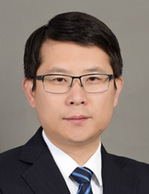 Prof. Ying Luo received his Ph.D. degree with a joint-Ph.D program of South China University of Technology (China) and Utah State University (USA) in Control Theory and Engineering, in 2009. He is currently a Professor at School of Automation Science and Engineering, South China University of Technology, China. His work combines fractional calculus theory with mechatronics, industrial and intelligent robotics, high precision servo system, and more, exploring new ideas and methods for optimizing and controlling fractional-order systems. He has published nearly 70 SCI papers in international journals such as Automatica, IEEE Transactions series and ISA Transactions. In total, he has published over 120 research papers, with over 4,000 citations on Google Scholar and an H-index of 30. He has authored and co-authored two English academic monographs “Fractional Order Motion Controls”, and “Fractional Order PID and ADR Controls”. In recent years, He serves as the Executive Chair of the IEEE/ASME International Conference on Mechatronics and Embedded Systems Applications (MESA), a committee member of the Fractional-Order Systems and Control Professional Committee of the Chinese Association of Automation, and holds editorial positions as Associate Editor or Guest Editor for several SCI international journals. In 2019, he won the Best Paper Award at the 1st International Conference on Fractional-Order Systems and Control, and in 2022, he received the Best Paper Presentation Award at the International Conference on Mechanical and Electronic Engineering.