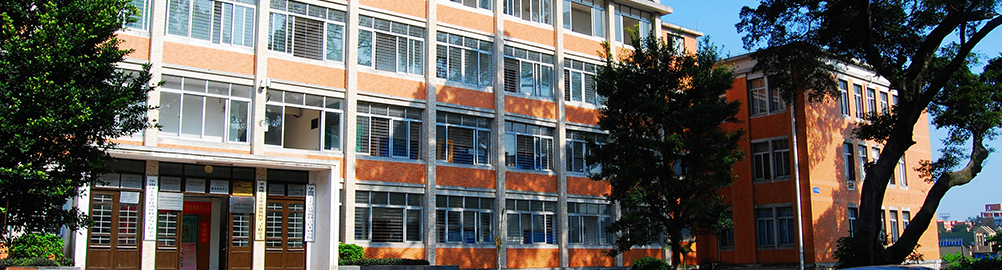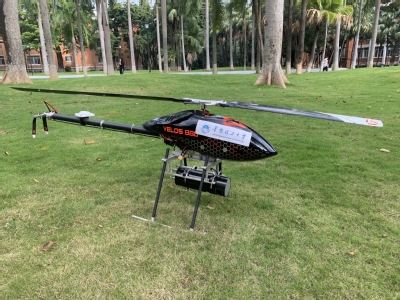
The Key Laboratory of Autonomous Systems and Network Control of the Ministry of Education, under the joint support of the Ministry of Education and South China University of Technology, is based on the discipline of Control Science and Engineering of the School of Automation Science and Engineering of South China University of Technology, and is dedicated to the basic theoretical research of networked unmanned autonomous systems and the development of related application systems. Professor Tianyou Chai, the academician of the Chinese Academy of Engineering and working in Northeastern University, is the director of the lab academic committee, and Professor Lei Guo, the academician of the Chinese Academy of Sciences and working in Beihang University, is the deputy director of the lab academic committee. Most of the staffs have overseas study and research backgrounds, which helps to introduce the latest international cutting-edge theories and methods of the discipline, innovate professional and technical work, promote the innovative development of the lab in the interdisciplinary fields of low-altitude technology, intelligent robots and brain-computer interfaces, and inject strong impetus into the lab's scientific research.
The lab focuses on major national strategic tasks, is oriented towards the layout of emerging industries such as the low-altitude economy of the country, and centers on several key technical demands for economic construction and social development in the Guangdong-Hong Kong-Macao Greater Bay Area. It sets up four research directions: autonomous behavior and autonomous control of unmanned systems, coordination and control of multiple autonomous systems in network environments, sensing and driving of autonomous control equipment, and intelligent perception and learning. The main research focuses on the fundamental theories of autonomous behaviors such as intelligent perception and learning, decision-making and control, coordination of multiple autonomous systems, and swarm intelligence of unmanned systems in complex network environments. It also aims to tackle key core technologies in the design of typical unmanned systems such as low-altitude carrier unmanned aerial vehicles and intelligent robots.
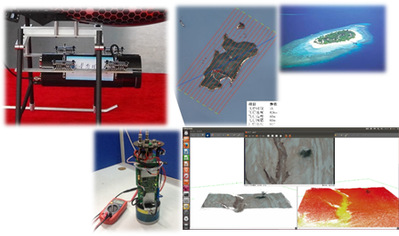
The lab has carried out distinctive research in the fields of low-altitude carrier unmanned aerial vehicle (UAV) system design and application, intelligent robots, and brain-machine intelligence. It has undertaken multiple major and key national research projects and has exerted profound domestic and international academic influence in advanced UAV configuration design and flight control, autonomous equipment drive, and intelligent learning and perception. Continue to cultivate a large number of high-end professional talents in the field of autonomous systems, and promote the application and development of autonomous system research in national defense science and technology and intelligent industrial economy.
The lab actively promotes the transformation of achievements and is currently supporting and leading the technological and economic development of industries and fields such as low-altitude economy, independent intelligent equipment manufacturing, smart healthcare, and smart cities in the Guangdong-Hong Kong-Macao Greater Bay Area.