



资讯中心


 2026-11-09
 1074
报告题目:Isotopologue Coordination Chemistry: First-Time Report on Optically-detected Nuclear Magnetic Resonance (OD-NMR)
报告人:Mario Ruben 教授
邀请人:蒋尚达 教授
时间:2026年11月10日 14:00-16:00
地点:华南理工大学广州国际校区 C2a-207
欢迎广大师生踊跃参加。
报告摘要:
The synthetic engineering of the nuclear spin degree of freedom in lanthanide molecules will be shown with the goal to make the respective isotopologue complexes accessible as quantum registers in quantum protocols.[1-2] Therefore, we report on the implementation of lanthanide (III) metal complexes into spintronic and optical devices. The Hilbert space spanned by the nuclear spins in different ALn(III) isotopologues will be addressed electrically [3-11] and optically [12-14], partially at the single-molecule level. The main motivation is to realize long-sought coherent photon-nuclear-spin interfaces for superposition and entanglement of larger qubit ensembles, even non-locally distributed. Thereby, it was demonstrated that ultra-narrow optical linewidths in separately synthesized molecular lanthanide crystals of 151Eu(III) and 153Eu(III) isotopologues enable the optical addressing of nuclear spins levels in mono- and dinuclear complexes. [12-13] The first-time observation of an optically detected Nuclear Magnetic Resonance (OD-NMR) experiment in a 151Eu(III) complex will be reported (Figure 1). [14]
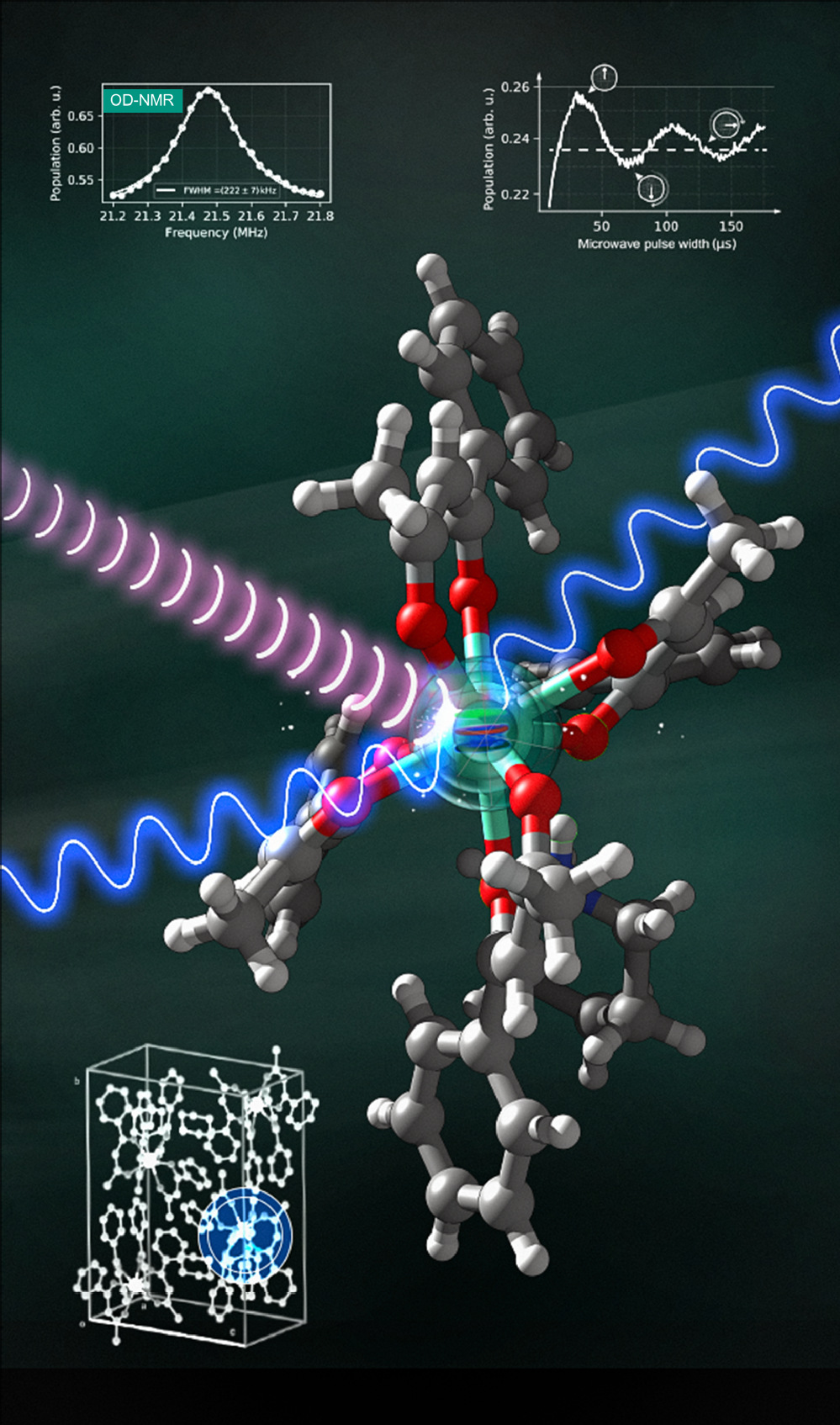
Figure 1. Representation of the structure and the optically addressing and read-out of an 151Eu(III) isotopologue qubit in an OD-NMR experiment. [14]
References:
[1] W. Wernsdorfer, M. Ruben, Adv. Mater. 2019, 31, 1806687.
[2] E. Moreno-Pineda et. al. Chem. Soc. Rev. 2018, 47, 501.
[3] M. Urdampilleta et al. Nature Mater. 2011, 10, 502-506.
[4] R. Vincent et al. Nature 2012, 488, 357-360.
[5] M. Ganzhorn et al. Nature Nano. 2013, 8, 165–169.
[6] M. Ruben et. al. Nature Nano. 2013, 8, 377–389.
[7] S. Wagner et. al. Nature Nano. 2013, 8, 575–579.
[8] S. Thiele, et al. Science 2014, 344, 1135-1138.
[9] M. Ganzhorn, et. al. Nature Commun. 2016, 7, 11443.
[10] C. Godfrin et al. PRL 2017, 119, 187702.
[11] H. Biard et. al. Nature Commun. 2021, 12, 4443.
[12] S. Kuppusamy et. al. Nature Commun. 2021, 12, 2152.
[13] D. Serrano et al. Nature 2022, 603, 241.
[14] E. Vasiliev et al. Nature Mater. 2026, 25, 1154–1159.
报告人简介:
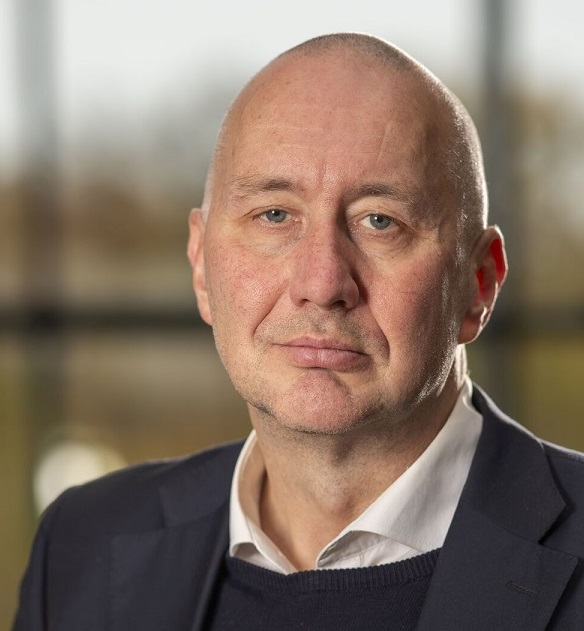
Mario Ruben obtained his Ph.D. in 1998 from the University of Jena, Germany. During a DAAD post-doctoral fellowship, he worked in the research group of the Nobel Prize Winner Prof. J.-M. Lehn at the ISIS in Strasbourg, France. In 2001, he moved to the Institute of Nanotechnology in Karlsruhe and in 2010, he accepted a position as Professor at the University de Strasbourg, France. In 2013, he became Full Professor for Molecular Materials at the Institutes of Inorganic Chemistry and of Nanotechnology at the KIT. His research interests involve the design, synthesis, and physical characterization of functional molecules and their implementation and integration into operational nanosystems for molecular spintronic and quantum devices. Since 2026, he is holding the ERC Advanced Grant “Hilbert Molecules”. He published more than 360 papers with an H-index of 81 (Google Scholar).
电话:020-81181677
邮箱:spinx@scut.edu.cn
地址:广州市番禺区兴业大道东777号华南理工大学国际校区C2a楼
邮编:511442

2022 © 华南理工大学 版权所有 粤ICP备05084312号

