



资讯中心


 2025-12-10
 1059
1059
报告题目:Topological Spin Structures & Spin-Orbitronics in 2D: from van der Waals systems to multilayers
报告人:Mathias Kläui 教授
邀请人:吴锐 教授
时间:2026年10月11日16:00-17:30
地点:华南理工大学广州国际校区 B1-c101
欢迎广大师生踊跃参加。
报告摘要:
Novel spintronic devices can play a role in the quest for GreenIT if they are stable and can transport and manipulate spin with low power. Devices have been proposed, where switching by energy-efficient approaches is used to manipulate topological spin structures that are stable in multilayers [1] but also in 2D van der Waals systems [2].
We combine ultimate stability of topological states due to chiral interactions [3,4] with ultra-efficient manipulation using novel spin torques [3-5]. In particular orbital torques increase the switching efficiency by more than a factor 10 [6]. Going towards 2D van der Waals systems, we explore bulk spin – orbit torques resulting from the particular symmetry [7] and orbitronics can enhance the interactions [8]. In such 2D heterostructures of ferromagnets and antiferromagnets, also enhanced exchange bias is observed allowing one to control the switching [8,9].
References:
[1] K. Everschor-Sitte et al., J. Appl. Phys., vol. 124, no. 24, 240901, 2018.
[2] M. Schmitt et al., Comm. Phys. vol. 5, 254, 2022.
[3] S. Woo et al., Nature Mater., vol. 15, no. 5, pp. 501–506, 2016.
[4] K. Litzius et al., Nature Phys., vol. 13, no. 2, pp. 170–175, 2017. K. Litzius et al., Nature Electron., vol. 3, no. 1, pp. 30–36, 2020.
[5] M. Bhukta et al., Nature Phys., (2026) DOI:10.1038/s41567-026-03383-4.
[6] S. Ding et al. Phys. Rev. Lett., vol. 125, 177201, 2020; Phys. Rev. Lett., vol. 128, 067201, 2022.
[7] F. Martin et al., Mater. Res. Lett., vol. 11, 84, 2023; T. Saunderson et al., Phys. Rev. Res., Vol. 4, L042022, 2022.
[8] C. Schmitt et al., Science 393, 76, 2026.
[9] A. Puthirath Balan et al., ACS Nano 18, 8383, 2024.
[10] A. Puthirath Balan et al., Adv. Mater. 36, 2403685, 2024.
报告人简介:
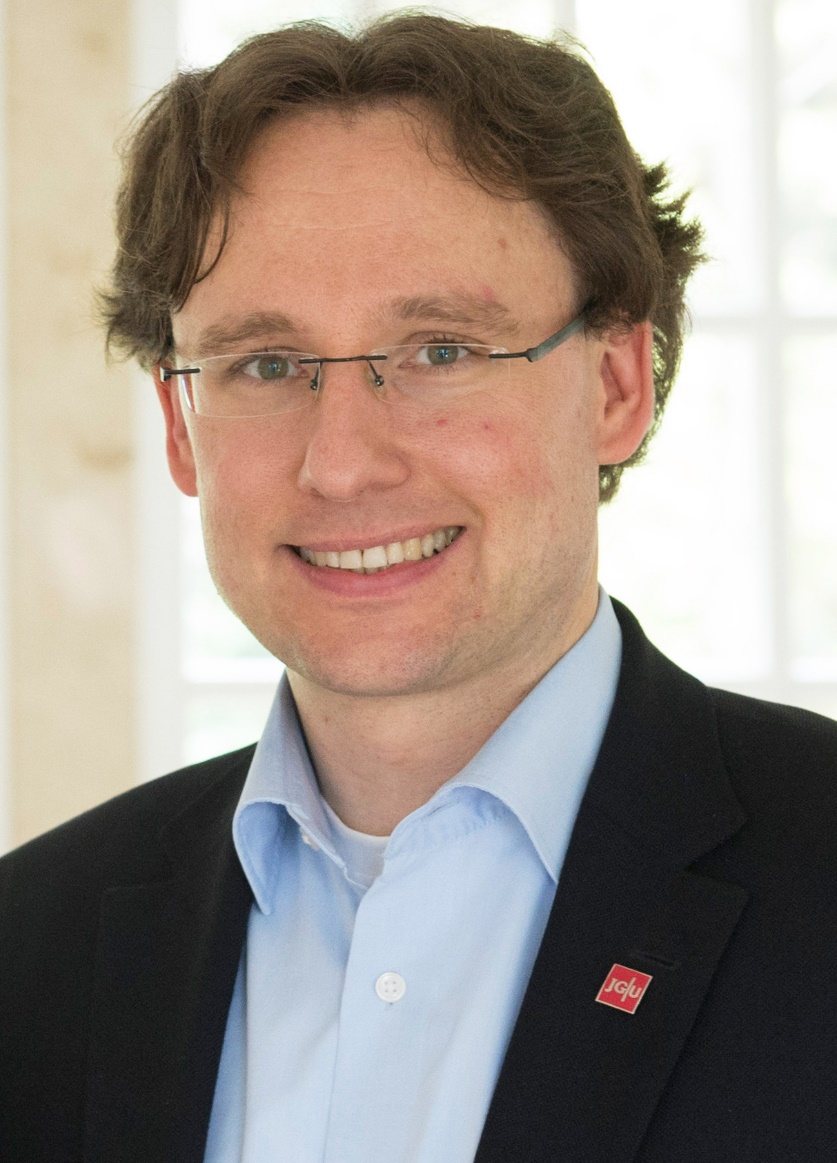
Mathias Kläui is professor of physics at Johannes Gutenberg-University Mainz and adjunct professor at the Norwegian University of Science and Technology.
He received his PhD at the University of Cambridge, after which he joined the IBM Research Labs in Zürich. He was a junior group leader at the University of Konstanz and then became associate professor in a joint appointment between the EPFL and the PSI in Switzerland before moving to Mainz. His research focuses on nanomagnetism and spin dynamics on the nanoscale in new materials. His research covers from blue sky fundamental science to applied projects with major industrial partners. He has published more than 400 articles and given more than 250 invited talks. He is a Fellow of the IEEE, IOP and APS, the European Academy of Sciences and the German National Academy of Science and Engineering and has been awarded a number of prizes and scholarships. He has been one of the 2020/2021 IEEE Magnetics Society Distinguished Lecturers.
Contact details and more information at www.klaeui-lab.de
电话:020-81181677
邮箱:spinx@scut.edu.cn
地址:广州市番禺区兴业大道东777号华南理工大学国际校区C2a楼
邮编:511442

2022 © 华南理工大学 版权所有 粤ICP备05084312号

