Theroundtable forum
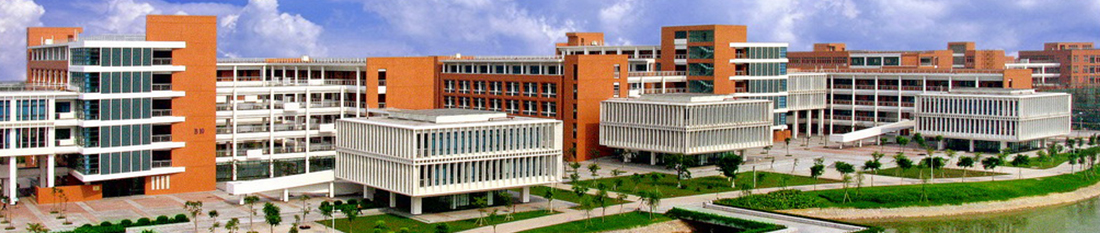
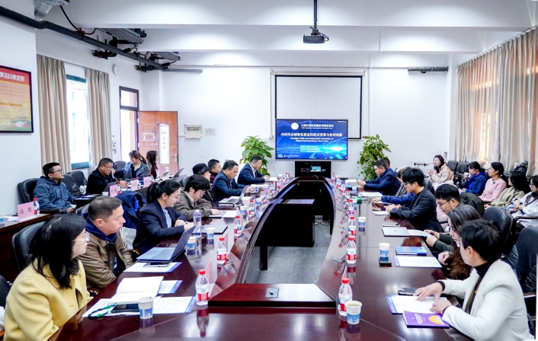
On the morning of January 10, the second session of the “GBAInternational Communication Roundtable Forum,” hosted by the School ofJournalism and Communication at South China University of Technology andorganized by the Guangdong-Hong Kong-Macao Greater Bay Area Institute forInternational Communication and the Guangdong Research Center for Digitalizedand Targeted International Communication, was successfully held at theUniversity Town Campus of South China University of Technology. Under the theme“Paradigm Transformation and Collaborative Innovation in Global Fact-Checkingin the Age of AI,” the forum brought together experts from academia, media,platforms and fact-checking organizations at home and abroad. Participantsexchanged views on theoretical research, technological pathways, collaborationmechanisms and governance frameworks for fact-checking in the AI era, jointlyexploring future directions for global fact-checking. Qiucheng Li, DeputyDirector of the Department of Social Sciences of South China University ofTechnology, and faculty and student representatives from the School ofJournalism and Communication attended the forum.
01 Building Consensus andStrengthening the Platform
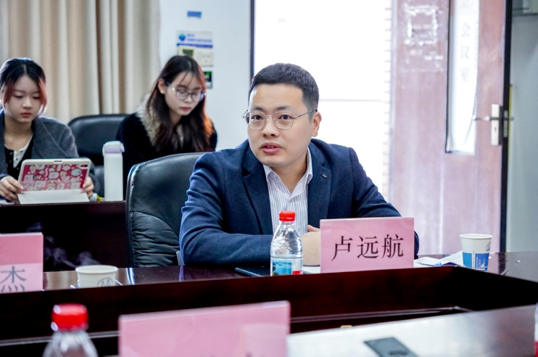
AssociateProfessor Yuanhang Lu chairedthe forum
At the beginning of the forum, Yuanhang Lu, Associate Professor atthe School of Journalism and Communication of South China University ofTechnology and Director of the Intelligent Computing and Innovation Center forInternational Communication at the Guangdong-Hong Kong-Macao Greater Bay AreaInstitute for International Communication, welcomed the guests and introducedthe forum agenda and participants. Experts from academia and industry gatheredfor the forum, laying the foundation for cross-sector dialogue on fact-checkingin the age of AI.
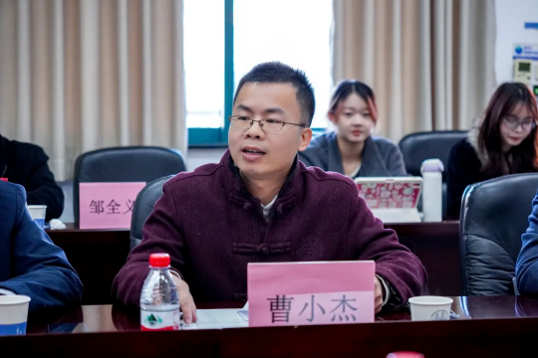
AssociateDean Xiaojie Cao deliveredwelcome remarks
Xiaojie Cao, Associate Dean of the School of Journalism andCommunication at South China University of Technology, delivered the welcomeremarks. He noted that the forum was the School’s first forum of 2026 andcarried important practical significance amid the intensifying spread ofmisinformation and the increasing complexity of fact-checking actors andstandards. Focusing on technological change, global contexts and collaborativegovernance, the forum aimed to promote the transformation of fact-checking fromisolated responses to systematic capacity building. Associate Dean Cao alsointroduced the School’s disciplinary development features, which advanced theintegration of humanities and engineering under the framework of New LiberalArts development.
02 Theoretical Guidance:Fact-Checking Paradigms and Trust Reconstruction from a Global Perspective
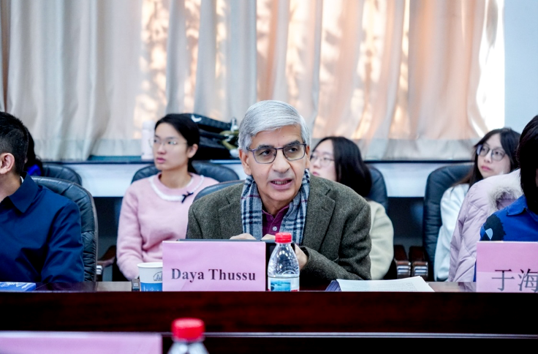
ProfessorDaya Thussu spoke
In the academic expert session, Professor Daya Thussu, President ofthe International Association for Media and Communication Research andProfessor at the School of Communication of Hong Kong Baptist University,delivered a presentation titled “Checking the Fact-checkers.” He reviewed thecurrent development of global fact-checking organizations and pointed out thatfact-checking systems still showed a certain Western-centric tendency. Heemphasized that AI would further amplify the spread of misinformation, makingit urgent for fact-checking to improve transparency and auditability in orderto enhance public credibility.
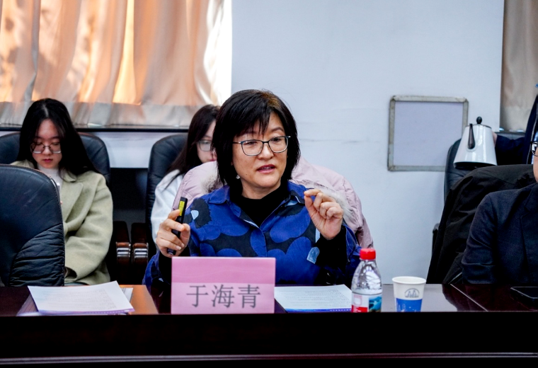
ProfessorHaiqing Yu spoke
Professor Haiqing Yu from the School of Media and Communication atRMIT University began with the question of “what a rumor is” and pointed outthat rumors are fundamentally a matter of trust. While generative AI canimprove efficiency, it remains constrained by standards and data sources. Thekey issue, she argued, is who endorse AI-based fact-checking. She proposedthree paradigms: technology, governance and digital literacy, and called forembedded fact-checking, appeal mechanisms, and cross-platform and transnationalcollaboration networks to institutionalize trust.
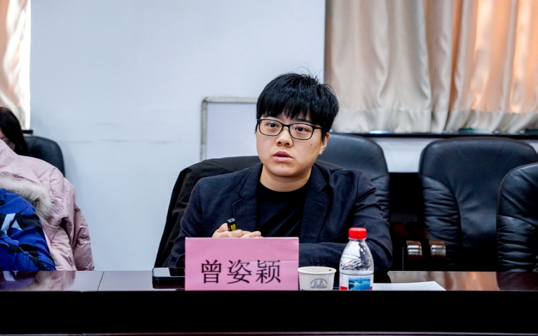
AssociateProfessor Ziying Zeng spoke
Associate Professor Ziying Zeng, Director of HKBU Fact Check andAssociate Professor at the School of Communication of Hong Kong BaptistUniversity, introduced the ecology of fact-checking organizations in Hong Kong.She noted that the increase in AI-generated misleading content had broughtchallenges such as difficulty in tracing sources, high explanation costs anddelayed correction. She emphasized that fact-checking was not merely atool-related issue, but also concerned the public’s ability to understandinformation and make value judgments. She also shared practical experience inimproving public digital information literacy through training, education andpublic exhibitions.
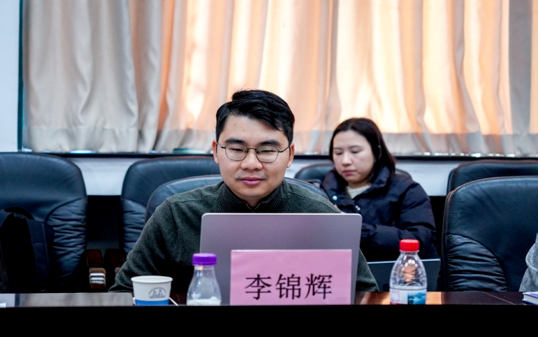
ProfessorJinhui Li spoke
Professor Jinhui Li from the School of Journalism and Communicationat Jinan University shared his research findings on the dissemination andgovernance of false health information in the intelligent era. His researchfound that exposure to false information might producemisleading effects, though such effects were not inevitableand varied across different groups. Short-video environments were morelikely to facilitate dissemination through promotional mechanisms. To reducedeviation in correction, he emphasized the need to improve source credibilityand adopted a moderate tone of expression.
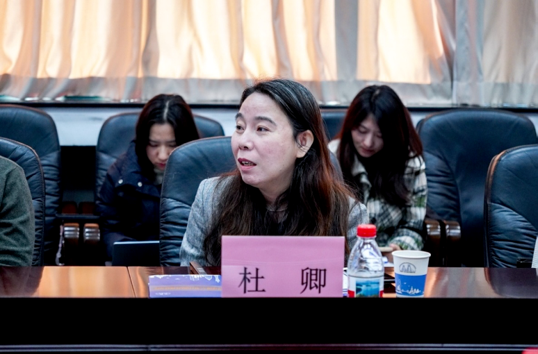
AssociateProfessor Qing Du spoke
Associate Professor Qing Du from the School of Software Engineeringat South China University of Technology pointed out that current technologiesfor identifying AI-generated content mainly relied on analyzinggeneration patterns, statistical features and model fingerprints. However,passive detection alone could easily fall into an adversarial cycle. Sheproposed moving technology toward ecosystem building, using trusted elementssuch as implicit watermarks and traceable metadata to strengthen authenticityassurance. She also advocated building fact-checking networks throughmulti-source scanning, contradiction localization and evidence visualization,combined with data sharing and cross-language collaboration.
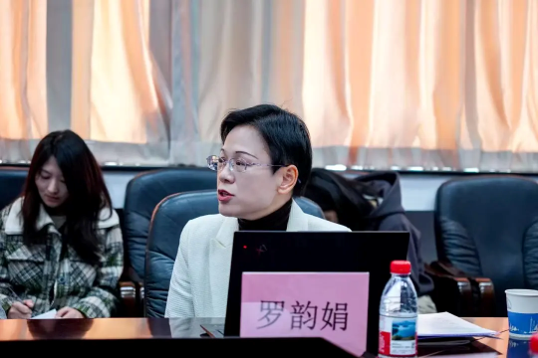
ProfessorYunjuan Luo spoke
Professor Yunjuan Luo from the School of Journalism andCommunication at South China University of Technology, who also served asAssociate Dean of the Guangdong-Hong Kong-Macao Greater Bay Area Institute forInternational Communication, discussed fact-checking from the perspective ofthe Global South. She noted that fact-checking practices should be examined bycomparing institutional systems and knowledge structures in the Global Southand the Global North. Through empirical research, she compared differences infact-checking topics and verification technologies between the two and pointedout that global fact-checking was gradually moving toward a multi-centerednetwork, calling for a more balanced and diverse collaborative system.
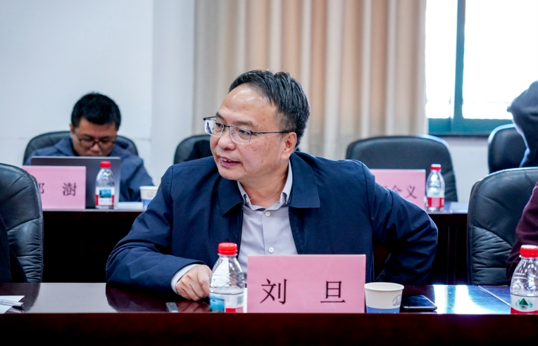
LiuDan spoke
DanLiu, head of the Guangzhou Daily Digital Institute (GDI Think Tank),pointed out that fact-checking ran through different stages of communication.Its key lied in being guided by humanistic values and promoting coordinatedgovernance among government, law and industry. The governance focus offact-checking should not be reduced to platform-related issues, but shouldreturn to content production and communication mechanisms themselves, withsustainable verification and correction processes established.
03 Frontline Practice:Exploring Human-AI Collaborative Fact-Checking Mechanisms and InnovationPathways
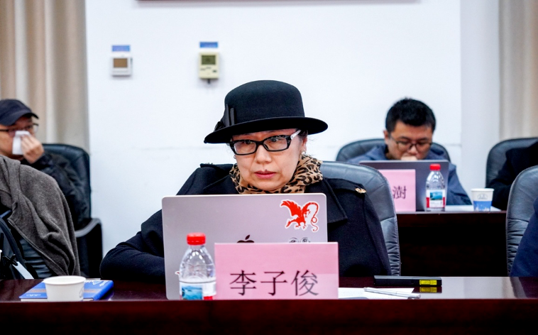
ZijunLi spoke
Zijun Li, Deputy Director of the International Communication Centerof Guangdong Radio and Television, introduced how her team’s English currentaffairs commentary column, Current Affairs in Focus, brought togethermulti-channel viewpoints and presents diverse perspectives through videos andimages, guiding audiences to form verifiable judgments. She shared theapplication of AI in topic discovery, information aggregation and assistedanalysis, and emphasized that mainstream media should make full use of theirown strengths, face the challenges brought by AI and promote efficient,transparent and responsible AI-assisted fact-checking.
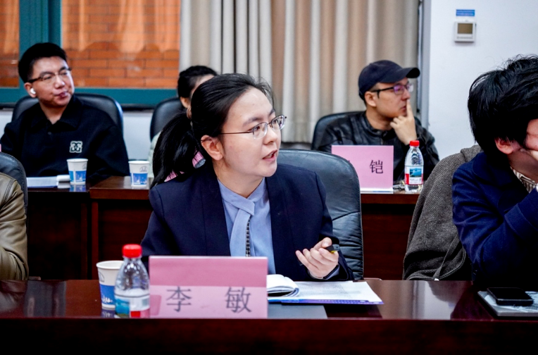
MinLi spoke
Min Li, head of Tencent News’ Jiaozhen fact-checking platform,pointed out that AIGC had made AI-related rumors highly realistic,low-threshold, partially true and more concealed. Truth, she argued, wasshifting from a binary distinction between true and false towardconfidence-based trust assessment. She proposed strengthening monitoring andearly warning, developing intelligent verification tools and collaborativeverification systems, while also building trusted-source knowledge bases andimproving public media literacy to promote multi-stakeholder governance.
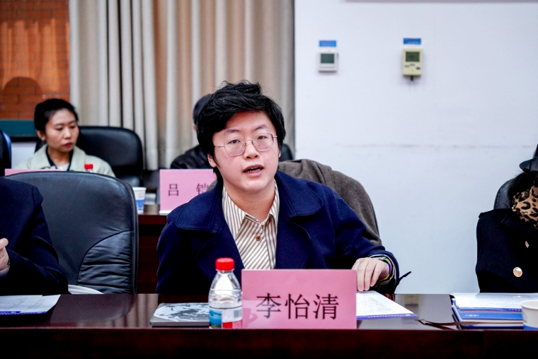
YiqingLi spoke
Yiqing Li, producer of The Paper’s Mingcha Fact-Checking Studio,drew on the practice of “The Paper Mingcha” and noted that the column haspublished more than 900 fact-checking items since its launch in 2021. It had alsopromoted a shift from text-and-image reporting to video production, focusing onChina-related topics and global hot issues while adding AIGC as a new area ofattention. She emphasized that fact-checking in international communicationshould balance speed with the integrity of evidence chains and called for amore open fact-checking community.
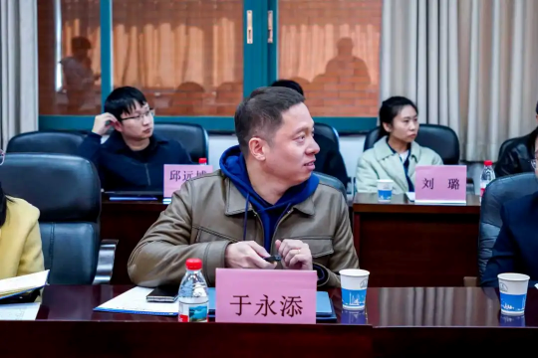
YongtianYu spoke
Yongtian Yu, Chief Advisor of Chuanguan Think Tank and DistinguishedResearch Fellow at the Institute of HSS Development and Governance of TheChinese University of Hong Kong, analyzed the issue from a corporateperspective. Through case analysis, he noted that AI has enabled misinformationto spread through low-cost, large-scale and emotion-driven mechanisms.Governance, he argued, should not focus only on technology, but should involvecomprehensive assessment across channels, content and environmental contexts.He proposed systematic strategies such as proactive defense, cross-verificationand communication intervention.
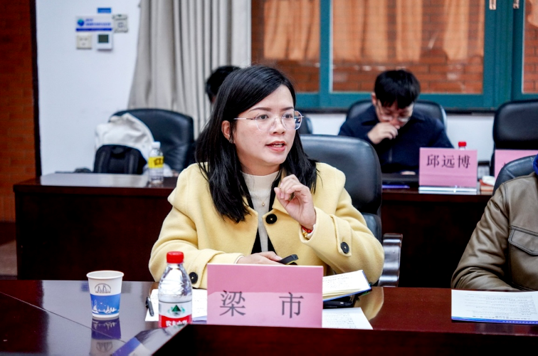
LiangShi spoke
ShiLiang, head of the Public Opinion Think Tank Team at theInternational Communication Center of Guangzhou Broadcasting Network, pointedout that AI-generated rumors deeply integrated emotionalmobilization with targeted communication, showing features such asassembly-line production, multi-node diffusion and algorithmic amplification.Fact-checking must move toward human-AI collaboration. To improve thecommunication effect of fact-checking, she argued, efforts should shift fromrefutation to deconstruction and empathy. She also emphasized the importance ofrapid risk notification, mutual recognition of labels and cross-bordercollaboration.
04 Conclusion: PromotingFact-Checking Mechanism Building through Collaborative Innovation
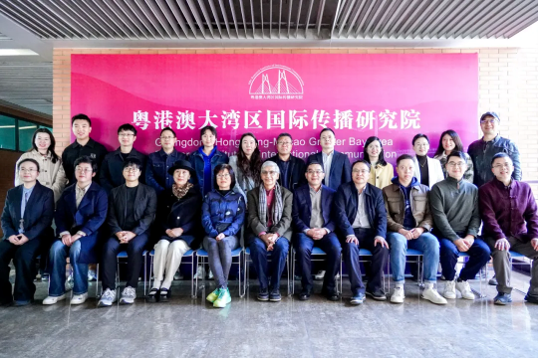
Groupphoto of the forum participants
With global fact-checking as its central theme, this roundtableforum fostered multi-dimensional dialogue across academia and industry ontechnological upgrading, institutional reconstruction and literacy cultivationin the AI era. Participants generally agreed that fact-checking wasexpanding from “instrumental correction” into a more systematic capacityframework. Its effectiveness depended not only on the iteration of detectiontechnologies, but also on cross-platform, cross-institutional, cross-languageand cross-context collaboration mechanisms, as well as executable and traceableprocesses and standards.
Moving forward, the School of Journalism and Communication at SouthChina University of Technology will continue to rely on platforms such as theGuangdong-Hong Kong-Macao Greater Bay Area Institute for InternationalCommunication and the Guangdong Research Center for Digitalized and TargetedInternational Communication to promote collaborative innovation among academia,industry, research and media. The School will continue to build platforms forexchange, support the connection between research and practice, and contributeto theoretical development and practical experience in related areas.