

Fromsmartphone screens to aircraft windows, organic glass has become an essentialtransparent material widely used across modern industry and daily life.However, traditional polymer-based organic glass has long faced a fundamentalchallenge: it is difficult to simultaneously achieve strength, hardness, andtoughness. When a material is designed for higher surface hardness, themobility of polymer chain segments is restricted, often leading to reducedtoughness and diminished impact resistance. Conversely, enhancing toughness byincreasing chain mobility tends to compromise surface hardness. This inherentlimitation, rooted in the chain-like structure of polymers, has become aperformance ceiling restricting the application of organic glass inhigh-end fields. To overcome this, both academia and industry have continuouslyexplored strategies, including incorporating nanofillers to create compositesand constructing supramolecular interactions between molecular chains. Whilethese approaches have optimized material performance to some extent, they haveremained within the fundamental framework of polymer chains, leaving the coredilemma of you can't have your cake and eat it too unresolved. So,what if we moved beyond traditional polymer chains and built glass in acompletely different way?
Thinkingoutside the box, Professor Yin Panchao’s team at South China University ofTechnology adopted a novel strategy, replacing polymer chains with rigid molecularparticles. They selected rigid molecular particles less than one nanometer insize—polyhedral oligomeric silsesquioxane (POSS)—as the basic building blocks.These feature precisely controllable atomic structures, as stable and regularas Lego bricks. Furthermore, the team utilized reversible dynamicboronate ester bonds as intelligent connectors to precisely assemblethese nanoparticles into a three-dimensional network. This strategy not onlyovercomes the performance limitations of traditional organic glass but alsoestablishes a new design paradigm: while retaining high mechanical strength andtransparency, it achieves a balanced enhancement in hardness, adhesion,processability, and impact resistance.
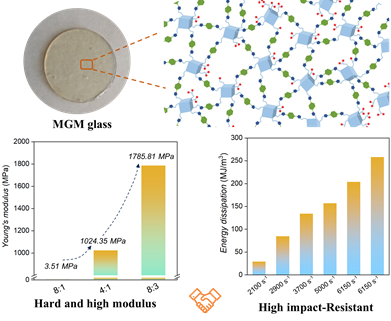
Experimental results demonstrate thatthis material exhibits comprehensive and superior performance:
High Transparency: Light transmittance exceeds 89.5%, with visual clarity comparable to traditional optical glass.
High Hardness and Strength: Elastic modulus reaches 1.79 GPa, hardness reaches 0.36 GPa, combining wear resistance with rigidity.
Excellent Impact Resistance: Energy dissipation capability reaches 258.14 J cm⁻³, surpassing typical polymers.
Good Processability: Can be processed by simple hot pressing into ultra-thin films with a thickness of only 1.3 μm.
Strong Adhesion: Benefiting from abundant B-O bonds and hydroxyl groups, the lap shear strength to glass substrates is as high as 8.20 MPa.
Specifically, the constructionstrategy for this new type of organic glass is clear and ingenious: using POSSmolecular clusters carrying eight ortho-dihydroxy groups as structural unitsand 1,4-benzenediboronic acid as the crosslinker, dynamic boronate ester bondsare formed between them, connecting the discrete nano-Lego bricksinto a three-dimensional network. The researchers confirmed the successfulformation of dynamic covalent bonds through NMR and infrared spectroscopy,while small-angle X-ray and neutron scattering techniques further revealed themicrostructure: the crosslinked POSS cores remain intact and are uniformlydispersed within the network, with the original POSS aggregates disassembled,laying the structural foundation for the excellent macroscopic mechanicalproperties. The study also found that when the PBA content is too high, someunreacted PBA crystallizes out, providing clear guidance for optimizing thematerial composition.
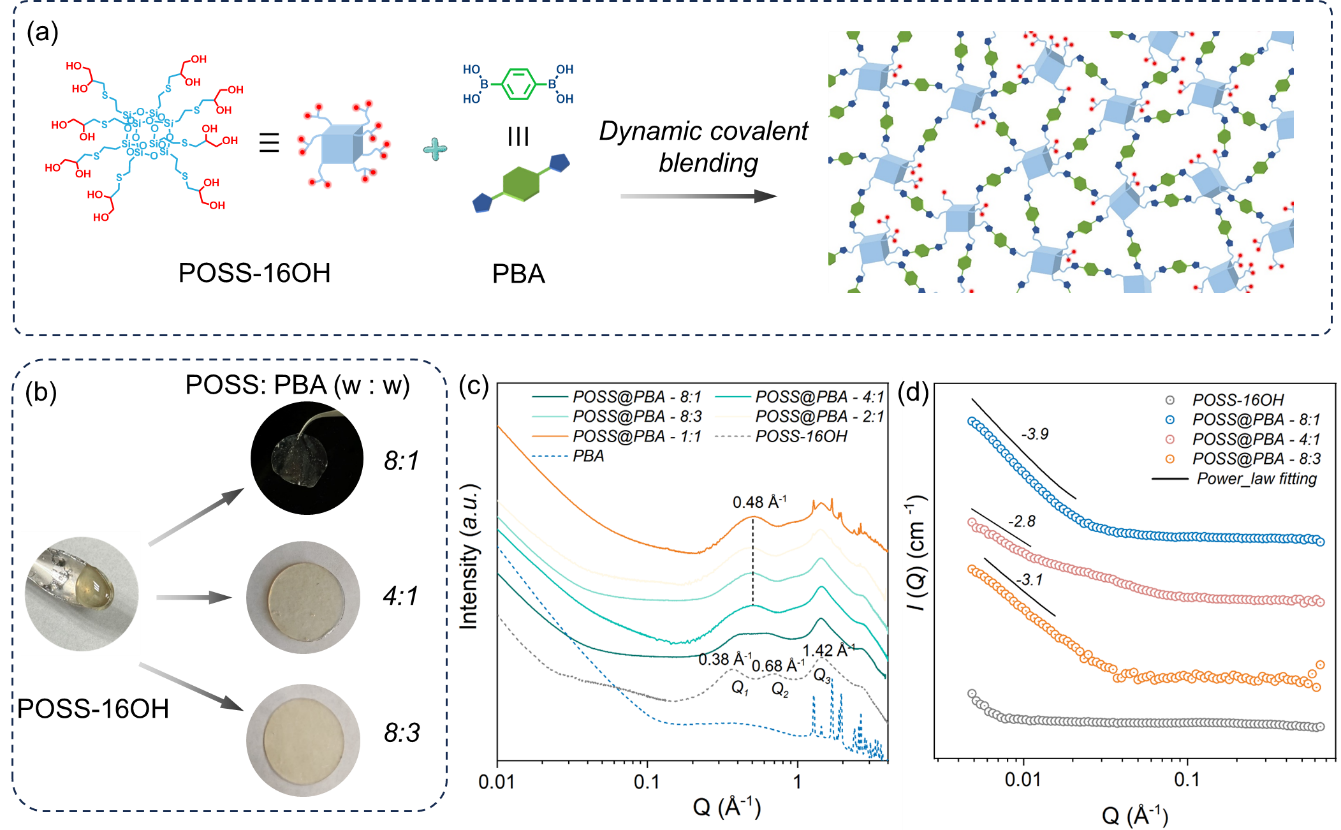
Figure 1. Design strategy andstructural characterization of the molecular cluster glass.
POSS@PBA powder can be processed into arbitrary shapes undermild conditions (60 °C) and even formed into ultra-thin films as thin as 1.3μm, demonstrating excellent processing adaptability. Optical tests show lighttransmittance exceeding 89.5%, comparable to quartz glass and PMMA, withtransparency slightly decreasing as PBA content increases; excessive PBA leadsto opacity due to phase separation and microcrystal formation. Mechanicalproperties can be tuned over a wide range with PBA content: at low content, thematerial is soft and stretchable (modulus 3.51 MPa), while at high content, ittransitions into a rigid glass (modulus 1.79 GPa, an increase of nearly 500times), with shear modulus maintained at the GPa level over a wide temperaturerange. Through remelting-re-solidification cycles, the material can fullyrecover its original performance, enabling closed-loop recycling. This resultclearly reveals the decisive influence of crosslinking density on materialproperties.
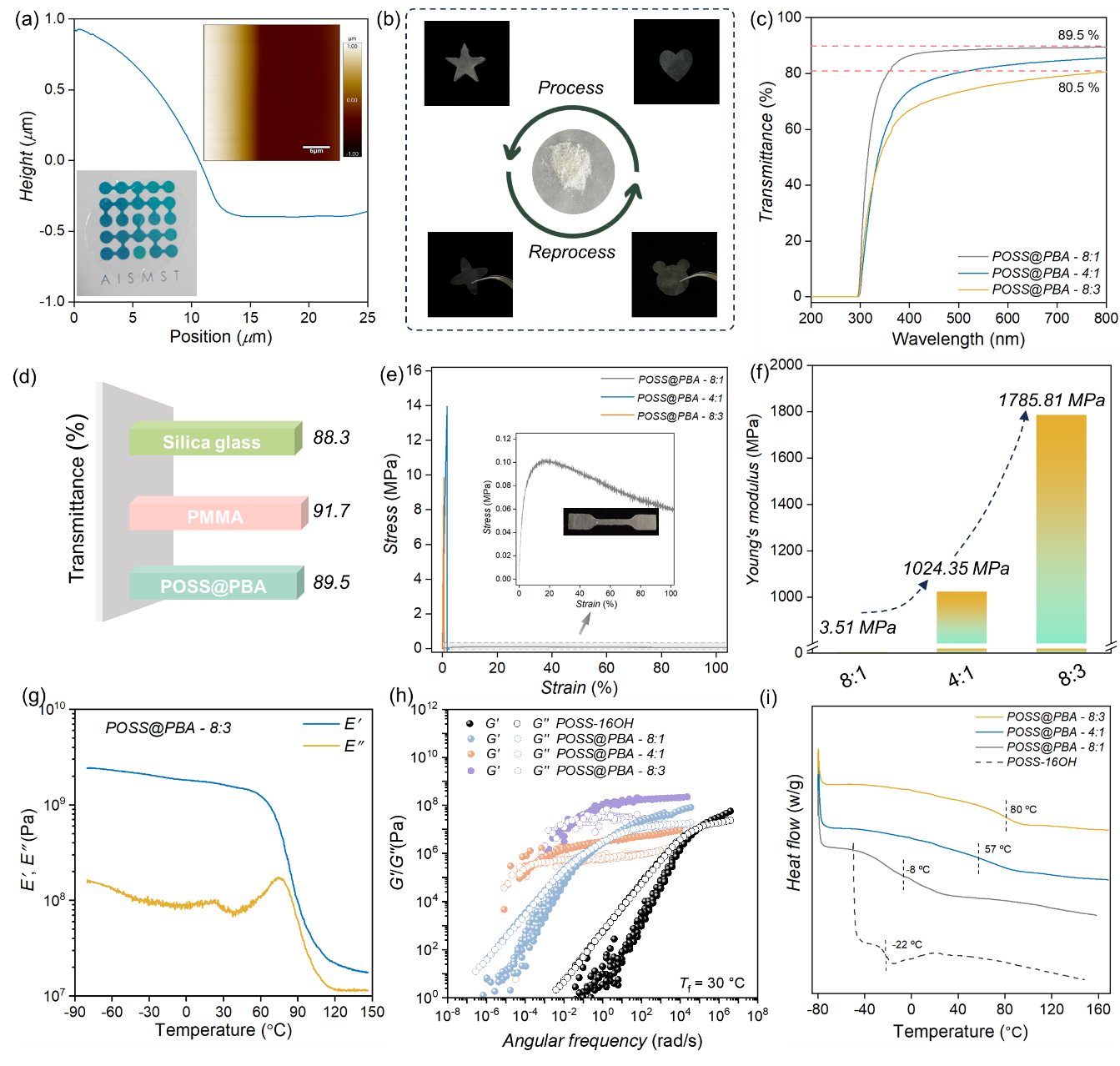
Figure 2. Processability,optical transparency, and mechanical properties of MGM glass.
Nanoindentation tests revealed the evolution of mechanicalproperties with PBA content: as PBA content increased, the elastic modulus rosefrom 1.48 GPa to 3.92 GPa, with hardness reaching 0.36 GPa, approaching levelsof polyimide or even aluminum alloy. However, excessively high PBA content ledto saturated crosslinking density due to steric hindrance, causing a plateau ordecrease in mechanical properties. Split Hopkinson pressure bar tests furtherconfirmed its outstanding impact resistance: POSS@PBA-4:1 maintained structuralintegrity under high-velocity impact, with a maximum flow stress of 695 MPa andimpact toughness as high as 258.14 J cm⁻³. This exceptional performance stemsfrom a dual synergistic mechanism—rapid hydrogen bonding for instantaneousenergy dissipation and slower boronate ester exchange for structural recovery.Furthermore, the material showed almost no degradation in mechanical propertiesafter multiple reprocessing cycles and exhibited scratch self-healing abilitynear the glass transition temperature, providing reliable performance forextreme conditions.
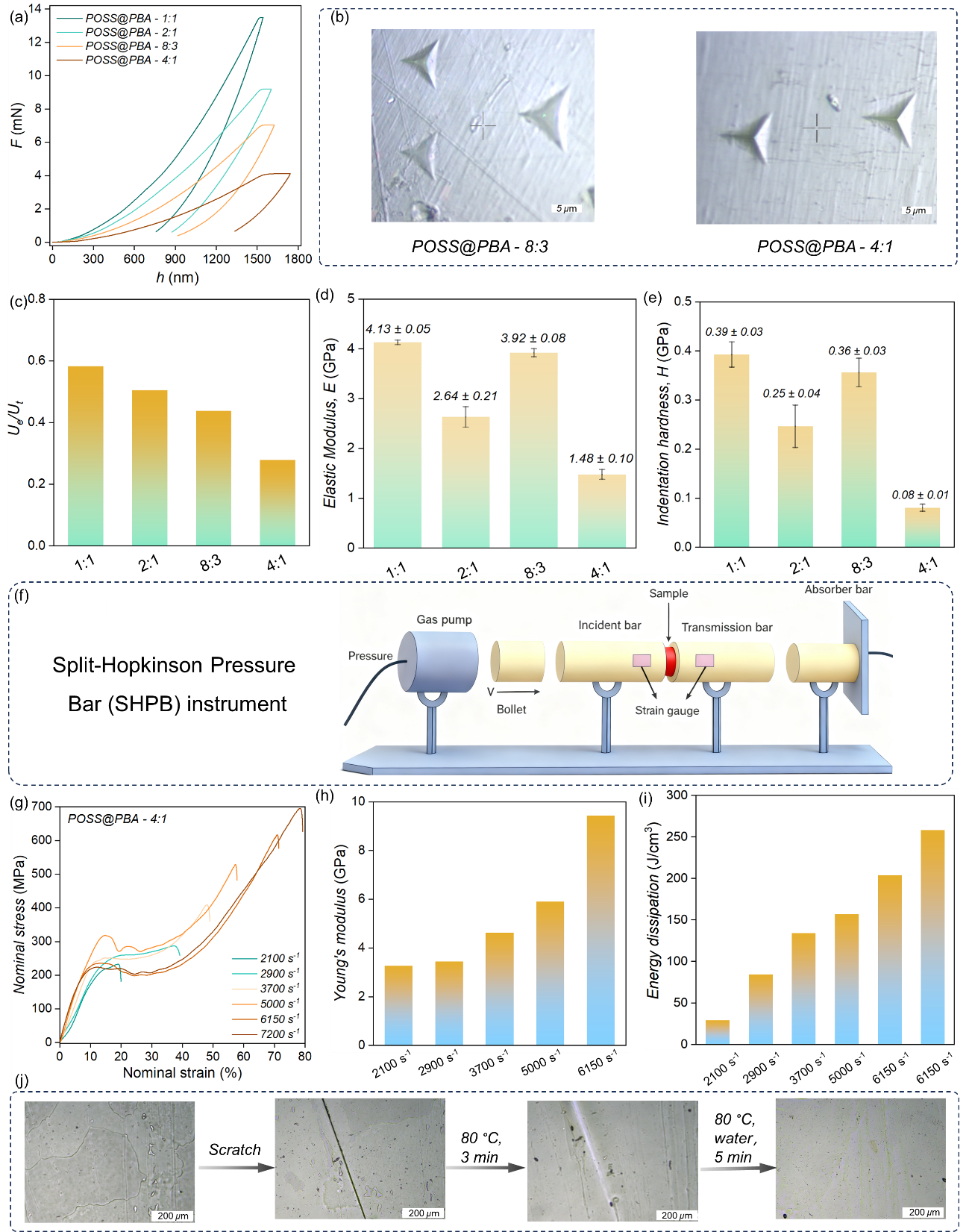
Figure 3. In-depth analysis ofthe mechanical properties of MGM glass: nanoindentation and dynamic impact.
Touncover the physical origin of its superior mechanical properties, theresearchers employed broadband dielectric spectroscopy to probe the material'sdynamics. Compared to the POSS precursor, the crosslinked POSS@PBA-8:3exhibited an additional relaxation process in the high-temperature region,attributed to the exchange dynamics of boronate ester bonds. The α and β relaxationswere significantly slowed due to structural constraints, while the γ relaxationaccelerated because PBA insertion increased the spacing between POSS cages—theretention of fast secondary relaxation provides a structural basis for highenergy dissipation under high-velocity impact. The synergistic effect ofdynamic covalent bonds and dense hydrogen bonds constructs a robust network combininghigh modulus, high hardness, and excellent impact resistance. Regardingadhesion, POSS@PBA exhibited a shear strength as high as 8.20 MPa on glasssurfaces, with cohesive failure mode, confirming that the interfacial bondstrength surpasses the material's own cohesive strength. The hydrolyticsensitivity of boronate ester bonds imparts stimuli-responsive debondingcapability, further broadening application scenarios. The cost-effectivemanufacturing process and closed-loop recyclability make this material highlycompatible with current concepts of green production and atom economy.
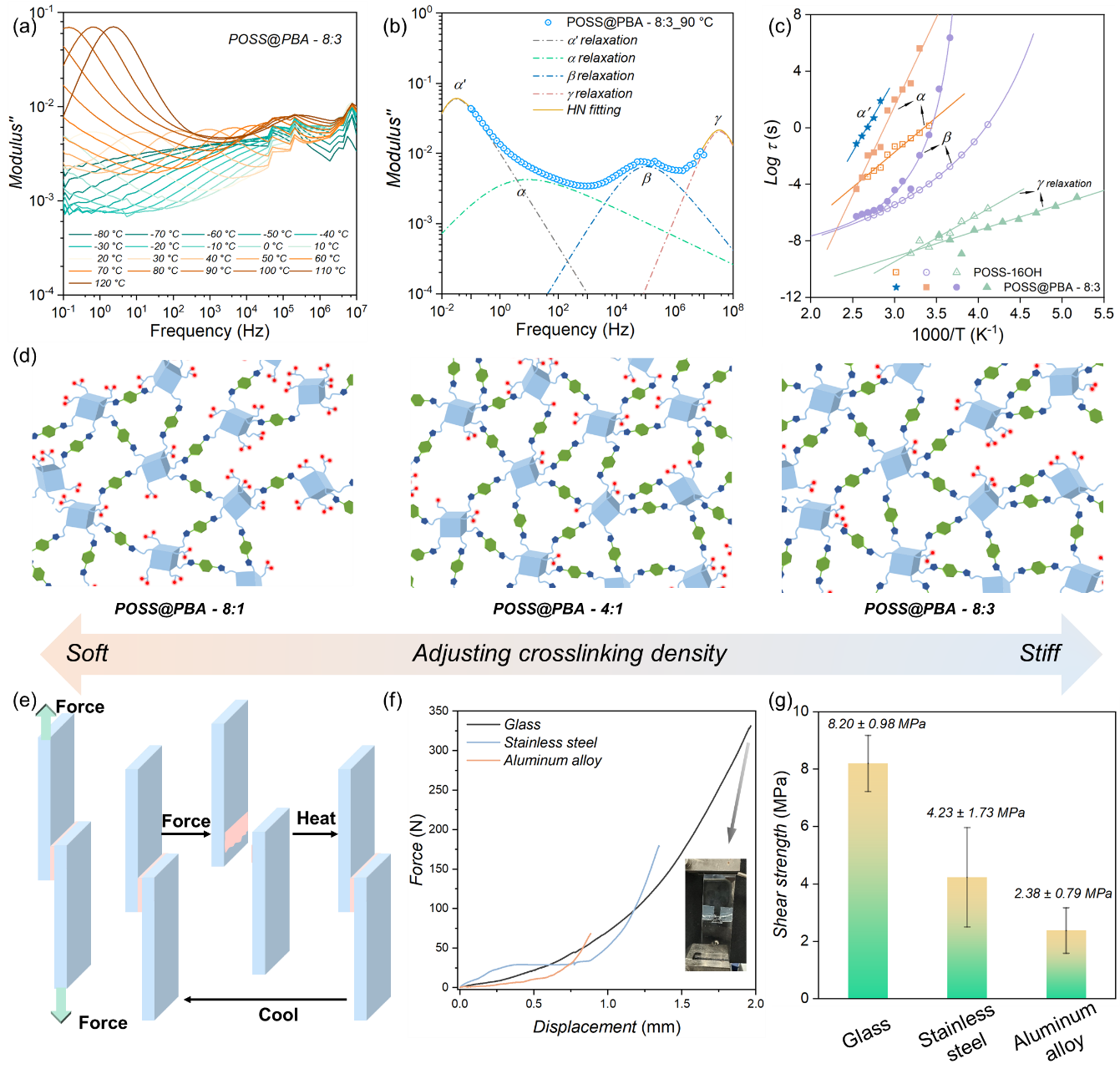
Figure 4. Multilevel dynamics and adhesion properties of MGMglass.
This worksuccessfully constructed a novel class of molecular cluster glass using dynamicboronate ester chemistry, with sub-nanometer POSS as the structural unit.Importantly, this polymer-free design strategy fundamentallyresolves the strength-toughness paradox that has challenged the materialscommunity for nearly a century. Moving from incremental improvements to afoundational redesign, the advent of molecular cluster glass may mark a newstarting point for the next generation of high-performance optical andprotective materials. The results were recently published in AdvancedScience under the title Dynamic Covalent Networks of MolecularClusters for Hard and Impact-Resistant Glass with FeasibleProcessability. The corresponding author is Professor Yin Panchao fromSouth China University of Technology.