题目:大规模自旋霍尔纳米振荡器同步及其伊辛机研究
时间:2026年2月9日14:00-15:00
地点:广州国际校区B1-c101
主讲人:Johan Åkerman
Title: Mutual synchronization of 100,000 spin Hall nano-oscillators for nano-oscillator-based Ising machines
Date: February 9th(Monday)14:00-15:00
Location: B1-c101
Speaker: Johan Åkerman
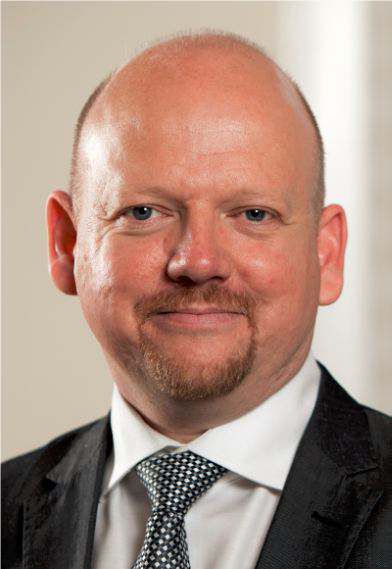
主讲人简介:
Johan Åkerman教授,瑞典皇家工程科学院院士(Fellow of The Royal Swedish Academy of Engineering)。现任瑞典哥德堡大学教授、瑞典皇家理工学院客座教授及日本东北大学教授,同时作为自旋电子学领域领军学者,担任高科技企业NanOsc AB与NanOsc Instruments AB的创始人兼首席执行官,并为美国物理学会会士(APS Fellow)。其学术生涯始于瑞典皇家理工学院博士学位,后于加州大学圣迭戈分校从事博士后研究,并曾任职摩托罗拉(Motorola)与飞思卡尔半导体公司(Freescale Semiconductor)高级科学家,兼具深厚产业经验。Åkerman教授深耕电子自旋技术研究逾三十年,累计发表学术论文350余篇,其中包含《Science》《Nature Nanotechnology》《Nature Materials》《Science Advances》《Nature Physics》等顶级期刊成果,谷歌学术引用量逾18,000余次;主持欧盟及瑞典国家级科研项目十余项;组织国际学术会议十余次,吸引全球学者近万人次参与。其核心研究聚焦自旋电子学器件与应用开发,尤其在自旋扭矩振荡器(Spin-Torque Oscillator)、自旋霍尔纳米振荡器(Spin Hall Nano-Oscillator)、类脑计算芯片(Brain-Inspired Computing Chip)及伊辛机(Ising Machine)等前沿方向取得突破性进展,为自旋电子学的基础理论创新与产业化转化做出了系统性重要贡献。
Short Bios:
Professor Johan Åkerman, Fellow of the Royal Swedish Academy of Engineering Sciences, currently serves as Professor at the University of Gothenburg, Sweden, Visiting Professor at the Royal Institute of Technology (KTH), and Professor at Tohoku University, Japan. As a leading scholar in spintronics, he is also the Founder and CEO of high-tech companies NanOsc AB and NanOsc Instruments AB, and holds the distinction of being an American Physical Society (APS) Fellow. His academic journey began with a Ph.D. from the Royal Institute of Technology in Sweden, followed by postdoctoral research at the University of California, San Diego. He subsequently served as a Senior Scientist at Motorola and Freescale Semiconductor, bringing extensive industrial expertise to his work. Professor Åkerman has dedicated over three decades to spin electronics research, publishing more than 350 academic papers. His work has appeared in top-tier journals including Science, Nature Nanotechnology, Nature Materials, Science Advances, and Nature Physics, with over 18,000 citations on Google Scholar. He has led over ten EU and Swedish national research projects. He has organized more than ten international conferences, attracting nearly 10,000 global scholars. His core research focuses on spintronic device and application development, achieving breakthroughs in cutting-edge areas such as Spin-Torque Oscillators (STOs), Spin Hall Nano-Oscillators, Brain-Inspired Computing Chips, and Ising Machines, making groundbreaking contributions to both fundamental theoretical innovation and industrial translation in spintronics.
Abstract:
Mutually synchronized spin Hall nano-oscillators (SHNOs) can be used for neuromorphic computing. However, the number of mutually synchronized SHNOs remains limited to 50 in chains and 64 in 2D arrays. To synchronize larger arrays, one must increase the oscillator coupling strength, for example, by packing them more closely, which requires smaller SHNOs. Here, we present our ongoing progress on how to shrink the width of nano-constriction SHNOs to allow us to synchronize orders of magnitude more oscillators. An initial hurdle was the realization that significant current shunting through the Si substrate becomes problematic at extreme miniaturization, resulting in poor scaling below 50 nm. We, therefore, investigated the use of different seed layers and found that an ultra-thin (3 nm) AlOx layer between the Si substrate and the W layer in W/CoFeB/MgO-based SHNOs provided a dramatic improvement. Using further optimization of the spin-orbit torque, replacing W with a W88Ta12 alloy, we demonstrated 10 nm SHNOs operating at threshold currents as low as 26 uA. Armed with these new state-of-the-art SHNOs, we then fabricated very large SHNO arrays and found that we can synchronize over 100,000 SHNOs. We have also demonstrated how we can control the sign and phase of the coupling between SHNOs using a combination of spin-wave-mediated coupling and voltage-controlled magnetic anisotropy. Taken together, these results pave the way towards numerous applications within neuromorphic computing, one example being SHNO-based Ising machines.