December1-3: The First Development and Disease Symposium and Inaugural Ceremony of theMinistry of Education's Innovation Center for Basic Research in Development,Disease, and Medicine was held at the Sixth Affiliated Hospital of South ChinaUniversity of Technology (Nanhai District People's Hospital of Foshan). Theevent was co-organized by the Developmental Biology Branch of the ChineseSociety for Cell Biology and the Ministry of Education's Innovation Center forBasic Biomedical Research in Development and Disease, and hosted by the SixthAffiliated Hospital.
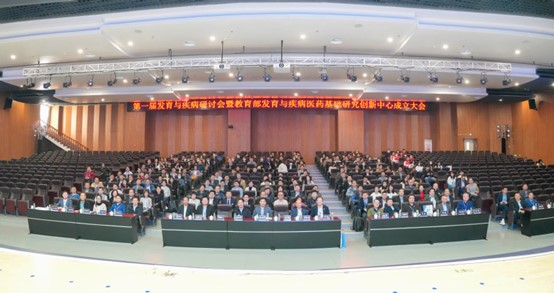
First Symposium on Development andDisease & Inauguration of Ministry of Education Innovation Center for BasicBiomedical Research in Development and Disease Held at SCUT Sixth AffiliatedHospital
The Innovation Center for BasicBiomedical Research in Development and Disease was approved for establishmentby the Ministry of Education in May 2023. As the first high-level integratedinnovation platform in the medical field initiated and approved under theleadership of the School of Medicine at South China University of Technology,it follows a model of “clinical needs-driven research, breakthroughs in basicscience, and translation into clinical applications.” The center aims to build acomprehensive, world-class hub for research, application, and translation inthe study of developmental disorders.
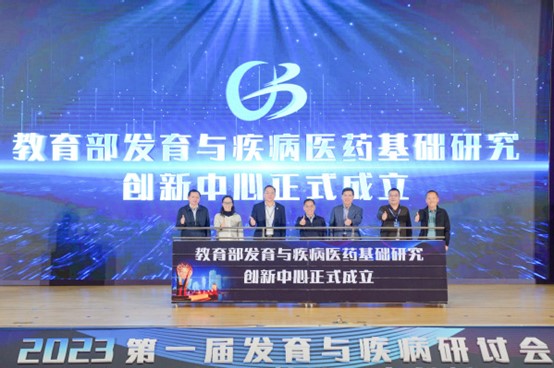
Ministry of Education's Innovation Centerfor Basic Biomedical Research in Development and Disease Officially Inaugurated
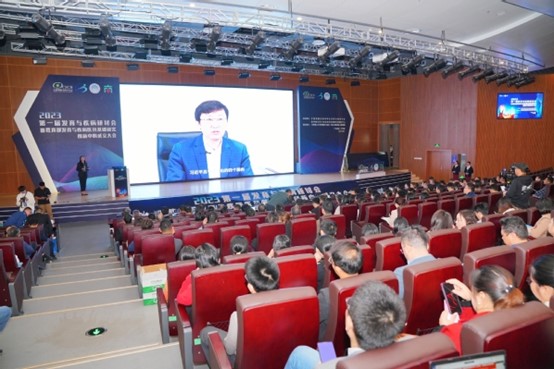
Video Address by South China Universityof Technology President Zhang Liqun
Zhang Liqun, President of South ChinaUniversity of Technology and Academician of the Chinese Academy of Engineering,stated in a video address that the Ministry of Education's Innovation Centerfor Basic Biomedical Research in Development and Disease will provide an open,inclusive, and collaborative innovation platform. It will promote theintegration of disciplines such as science, medicine, and engineering,strengthen partnerships with innovative pharmaceutical enterprises, andcultivate a group of high-level scientific leaders with distinctive expertiseand interdisciplinary capabilities. The center is poised to advance thetranslation and application of research outcomes, contributing moresubstantially to socio-economic development.
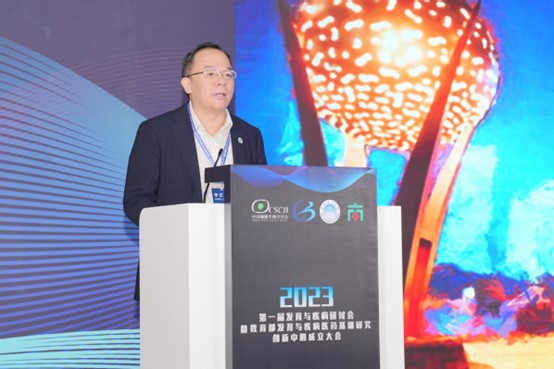
Vice President Li Zheng of South ChinaUniversity of Technology delivered a speech
LiZheng, Vice President of SCUT, expressed his hope that leaders and expertswould continue to support the development of the Ministry of Education'sInnovation Center for Basic Biomedical Research in Development and Disease. Hecalled for joint efforts to achieve new milestones on the stage oftechnological innovation, injecting fresh momentum into the growth of SouthChina University of Technology.
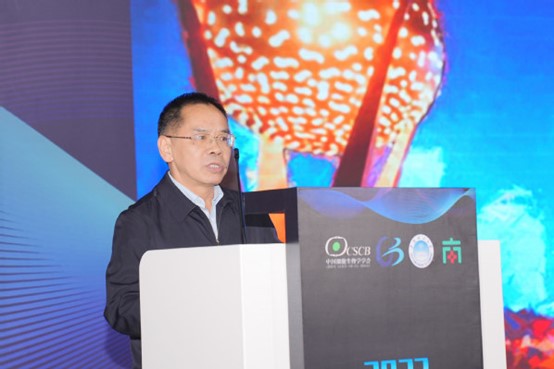
AcademicianMeng Anming of the Chinese Academy of Sciences and a Fellow of The WorldAcademy of Sciences delivered a speech.
TheInnovation Center represents a pioneering initiative for advancing medical andbiomedical education, fully embodying the spirit of interdisciplinarycollaboration, said Meng Anming, Academician of the Chinese Academy ofSciences and Fellow of The World Academy of Sciences, in his address. Heemphasized that the key to the center's development lies in fosteringinnovation at its source. With the strong support of Guangdong's talent‑focused policies, he called forcomprehensive efforts in the field of developmental diseases, aiming to scalenew heights and achieve breakthrough results at the earliest opportunity.
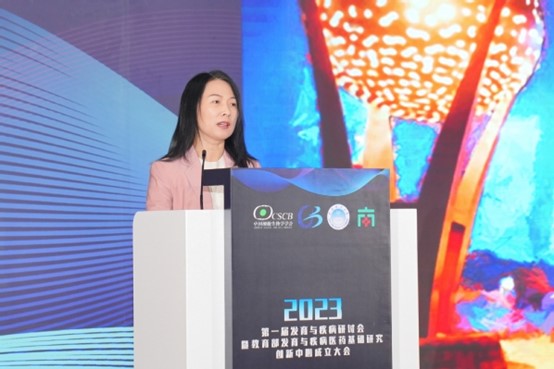
Deputy District Mayor Kong Xiaoyan ofNanhai District, Foshan City, delivered a speech.
Focusingon People’s Life and Health, Nanhai Continues to Advance in Science andTechnology Innovation. “The Sixth Affiliated Hospital of South China University ofTechnology becoming a key part of the Innovation Center is another milestonefor Nanhai,” said Kong Xiaoyan, Deputy District Mayor of Nanhai District,Foshan City. She expressed hope that the hospital will leverage the innovationplatform and resources of South China University of Technology to acceleratethe development of a high-level, research-oriented hospital integratingmedicine and engineering, leading the advancement of the medical industryacross the district. Moving forward, Nanhai District will also rely on theInnovation Center, using the District Health Industry and Medical Service Allianceas a breakthrough point to deepen collaboration between medical institutionsand enterprises, strengthen industry interaction, and promote the coordinateddevelopment of “production, education, research, and application.” This willfacilitate the translation and implementation of more clinical researchprojects in Nanhai, contributing to the building of a Healthy Nanhai.
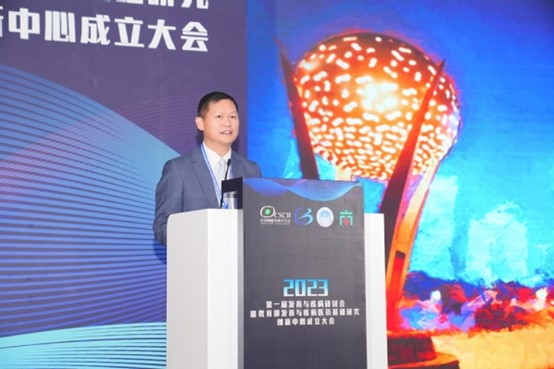
Wu Zuqiang, Secretary of the PartyCommittee of the Sixth Affiliated Hospital of South China University ofTechnology, delivered a speech.
Thelaunch ceremony of the Ministry of Education's Innovation Center for BasicBiomedical Research in Development and Disease held at the Sixth AffiliatedHospital of South China University of Technology (Nanhai Hospital) marks asignificant step in advancing the hospital’s comprehensive development inmedical care, education, research, and clinical application. Looking ahead, WuZuqiang, Secretary of the Party Committee of the Sixth Affiliated Hospital(Nanhai Hospital), stated that the hospital will take the establishment of theInnovation Center as a new starting point. Efforts will focus on enhancingscientific research innovation, service quality, and management efficiency,adhering to the principle of “research serving clinical practice, research advancingclinical work, and research driving clinical progress.” By elevating medicaltechnology standards through innovation-driven strategies, the hospital aims toachieve all-around, high-quality, and leapfrog development, moving steadilytoward the goal of becoming a high-level research-oriented hospital and theflagship affiliated hospital of South China University of Technology.
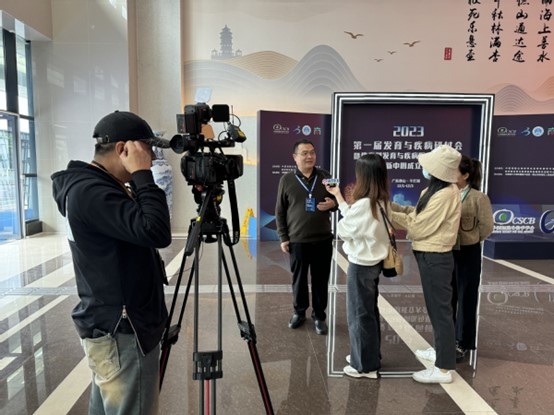
WangQiang, President of the Developmental Biology Branch of the Chinese Society forCell Biology and Head of the Ministry of Education's Innovation Center forBasic Biomedical Research in Development and Disease, gave an interview to themedia.
ProfessorWang Qiang, President of the Developmental Biology Branch of the ChineseSociety for Cell Biology, Head of the Ministry of Education's Innovation Centerfor Basic Biomedical Research in Development and Disease, and faculty member ofthe School of Medicine at South China University of Technology, stated that inthe future, the Innovation Center will focus on addressing clinical needs suchas embryonic development and birth defects. It aims to make solid breakthroughsin both fundamental research and clinical diagnosis and treatment, whileleveraging resources from affiliated hospitals like the Sixth AffiliatedHospital of South China University of Technology to further enhance thescientific research and clinical care capabilities of the hospital.
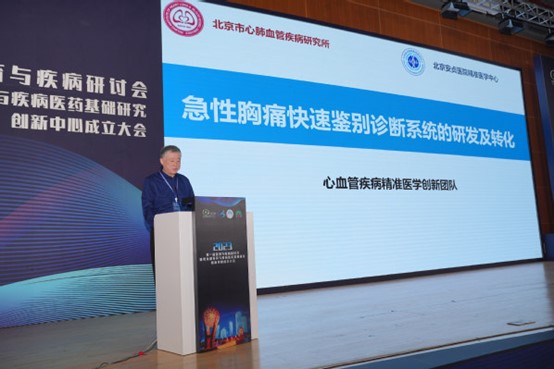
ProfessorDu Jie from Beijing Anzhen Hospital delivered a keynote report titledTranslational Medical Research on Cardiovascular Acute Chest Pain.
TheSymposium on Development and Disease, coupled with the inauguration ceremony ofthe Ministry of Education's Innovation Center for Basic Biomedical Research inDevelopment and Disease, brought together esteemed academicians including MengAnming, Gao Shaorong, and Yang Zhenglin from the Chinese Academy of Sciences,as well as experts and scholars from across the nation. Participants engaged inprofound discussions on fundamental research in developmental biology anddisease-related medicine, collectively committing to advancing the high-qualitydevelopment of health and medical endeavors.
Theconference, centered on the theme Abnormalities in Cell Structure andFunction and Disease Pathogenesis, featured over 40 lectures during whichparticipating experts shared the latest scientific advances, educationaltechnologies, methodologies, and research outcomes in the field of medicaldevelopmental biology. The insightful presentations and dynamic on-sitediscussions provided attendees with an intellectual feast encompassingdisciplinary development, scientific innovation, and clinical research.
Thissymposium served as a platform for building consensus and fostering targeteddialogue, effectively promoting interdisciplinary and cross-regionalcollaboration. It injected new momentum into fundamental research indevelopmental biology nationwide, advancing the translation of scientificachievements into clinical applications and contributing to the realization ofthe Healthy China initiative.