

SCUT Medical Faculty’s Popular Science Article on the Brain Science of Loneliness Featured in People’s Daily
Date:
2026-04-24
View:
10
Recently, a popular science article by Dr. Zhuo Wang, Associate Professor at the School of Medicine, South China University of Technology (SCUT), was published in People’s Daily and Life Times. Using plain language and vivid analogies, the article translates cutting-edge research in brain science into accessible knowledge for the public. It offers a compelling explanation of the potential harms of loneliness on the brain and the underlying biological mechanisms, sparking widespread public interest and highlighting SCUT’s strength in brain science and mental health research.
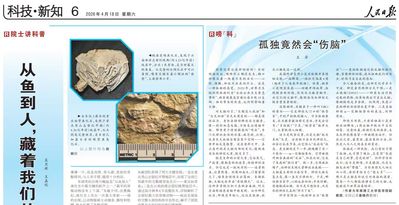
As an early-career researcher at SCUT’s School of Medicine specializing in neuroscience and neuro-metabolism, Associate Professor Wang has long focused on the link between social isolation and brain health. In collaboration with Zhejiang University and Southern Medical University, his team has published original findings in Cell Metabolism (Impact Factor: 30.9). The People’s Daily and Life Times articles are based on this core research, transforming specialized discoveries into relatable science to help the public better understand loneliness and protect brain health. This work has also been covered by English-language media, including China Daily in an article titled “Elevated iron levels key to social anxiety” (https://www.chinadaily.com.cn/a/202603/03/WS69a64079a310d6866eb3b473.html).
The article opens by tapping into a universally recognized experience: the unexplained unease and irritability that follow prolonged solitude. Citing the World Health Organization’s 2023 declaration of loneliness as a “global public health emergency,” it notes that loneliness can be as harmful to health as smoking 15 cigarettes a day—making it clear that loneliness is not mere self-pity but a serious health risk. The piece then breaks down complex mechanisms using simple analogies, comparing chronic loneliness to “working overtime every day” to show that both are forms of chronic stress. Persistent release of stress hormones triggers a hidden change in the brain: a marked increase in iron levels in neurons of the ventral hippocampus.
Iron is essential for neural activity, but while a small amount is beneficial, excess is toxic. The article explains that such abnormal iron deposition had previously been seen only in the brains of patients with Parkinson’s or Alzheimer’s disease. However, the team’s mouse experiments show that even young individuals can develop this condition after prolonged loneliness. By comparing group-housed mice with those subjected to four weeks of social isolation—equivalent to several years of loneliness in humans—the researchers found that isolated mice not only showed clear signs of anxiety but also had significantly higher iron levels in their ventral hippocampal neurons.
To uncover the underlying cause, the article further explains the “iron plasticity” mechanism discovered by the team. Loneliness-induced stress hormones activate specific receptors, causing a protein called TfR1—the “iron gatekeeper” at the neuronal membrane—to malfunction. This allows excessive iron to flood into the cells. Excess iron then activates α-synuclein, which prompts neurons to fire excessively, leading to anxiety symptoms such as palpitations and insomnia. This newly proposed mechanism directly links brain iron dysregulation with mood disorders, opening a new window into the metabolic roots of mental illness.
Encouragingly, the study shows that these brain changes are reversible. Associate Professor Wang describes how the team achieved significant results with two interventions: first, administering deferoxamine (DFO) intranasally for two weeks restored normal neural activity in anxious mice; second, inhibiting α-synuclein expression also relieved anxiety. Even without drugs, returning isolated mice to a social environment for four weeks led to a natural decline in brain iron levels. This suggests that the distress caused by loneliness might one day be treated as precisely as a common cold, offering a new approach to managing mental health issues linked to social isolation.
“Loneliness is not weakness—it is an alarm signal from the brain,” the article concludes. It calls on the public to recognize the health risks of loneliness and to understand the brain’s deep need for human connection. Ultimately, genuine human closeness remains the most effective and gentle way to alleviate loneliness and protect brain health. The publication of this popular science article not only brings cutting-edge neuroscience into the public eye but also provides scientific guidance for addressing widespread issues such as social isolation, loneliness, and anxiety.
In recent years, SCUT’s School of Medicine has advanced its strategic focus on “Med-Engineering Integration” and “AI for Life and Health Sciences,” producing a series of internationally influential research outcomes. Associate Professor Wang’s popular science article reflects both the team’s scientific excellence and the School’s active commitment to social responsibility and public science education. Moving forward, the School will continue to encourage its researchers to translate scientific discoveries into broader societal benefit, ensuring that more cutting-edge medical knowledge reaches the public and contributing to the health of all communities.
Click Here
QUICK ENTRY
Address:B2 Building, South China University of Technology, Guangzhou University Town, Panyu District, Guangzhou City, China
postcode:510006
Phone(TEL):+86 (0) 20 81182623(Office) 81182620(Enrollment)SCUTYXY@EDU.EN
2009-2014Copyright 2015 South China University of Technology. All Rights Reserved. 粤ICP备05084312号
